Unity in Diversity

The wind blew in and doors slammed.  According to my phone, the temperature drop was 28 degrees.  We’re back to what we perceive as normal here along the coast.  

I stand outside in the dark, hair stroked, and think of emotions, trends, relationships, and politics, and how the wind blows through.

I come to Richard Rohr and he reminds me of these words of Thomas Merton from Conjectures of a Guilty Bystander. Merton is standing on a crowded street corner in the midst of an ordinary day when …

In Louisville, at the corner of 4th [now Muhammad Ali Blvd.] and Walnut, in the center of the shopping district, I was suddenly overwhelmed with the realization that I loved all those people, that they were mine and I theirs, that we could not be alien to one another even though we were total strangers. . . . This changes nothing in the sense and value of my solitude, for it is, in fact, the function of solitude to make one realize such things with a clarity that would be impossible to one completely immersed in other cares. . . . My solitude, however, is not my own. It is because I am one with them that I owe it to them to be alone, and when I am alone, they are not “they” but my own self. There are no strangers. . . . If only we could see each other that way all the time. . . . But this cannot be seen, only believed and “understood” by a peculiar gift. . . . 

“A peculiar gift”, and yet I, too, have felt this at times, or perhaps been opened to it, or immersed, or embraced, and perhaps not so directly and articulately, but yes there will be a digestive squirt and swirl, as though yes, there is no division between you and me, in and out, solitude and togetherness, and of course as Walt Whitman says, “Do I contradict myself? Very well, then I contradict myself, I am large, I contain multitudes.”

How do we balance these multitudes?  That is the joy and task.

Rohr continues:  “In October of 1968, just minutes before his death, Merton told a large audience of Asian monks at a Calcutta conference: “My dear brothers, we are already one. But we imagine that we are not. What we have to recover is our original unity. What we have to be is what we are.””

Why is that so challenging, and yet, as I sit here, waiting for dark to turn to light, I see that as my carrot for the day, my mantra. I trust in permeability, and the touch of the wind as it vibrates through unity in diversity. I trust in parts as whole.

Last Saturday night this snake was one of the Animal Ambassadors for Wildcare. I remember the first time I held a snake. They are not slimy. They are beautiful. Enjoy the strength and resilience in the movement of scales.

And we, too, coil, twine, and untwine, together and apart


Morning Light

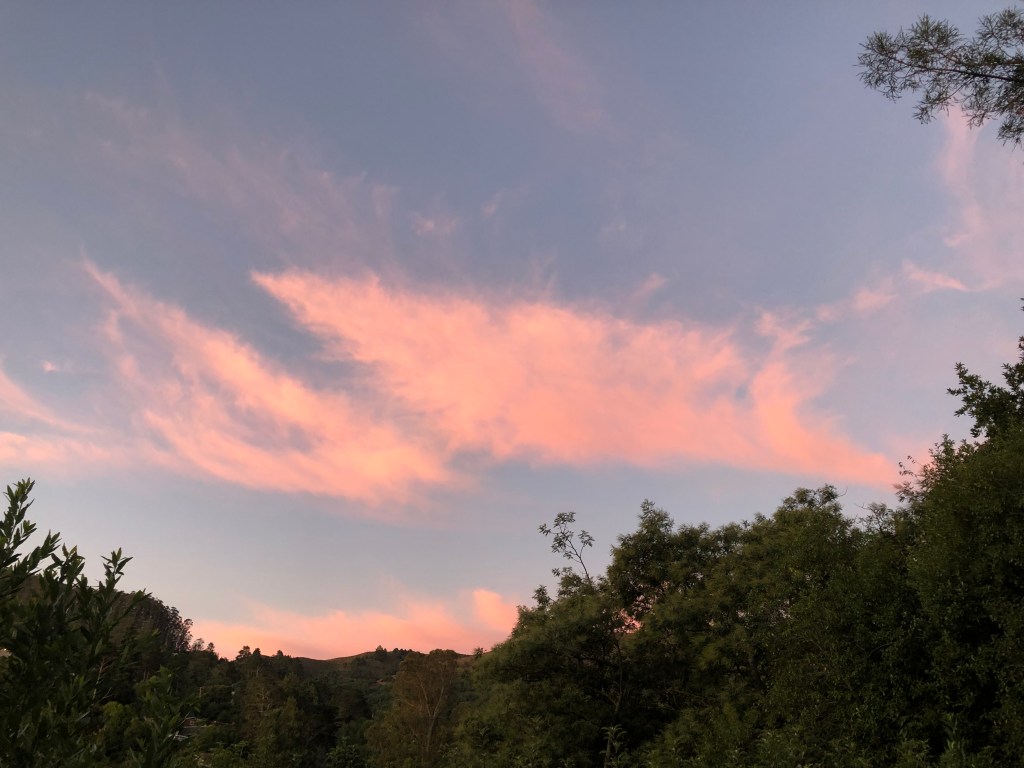
The birds are singing as though it’s spring, and perhaps it is.  I had dreams of Halloween, and then I woke to a symphony outside my open door.  I looked out to rose-pink and thought of the moments, each one divided into seasons when we notice, when we’re awake.

Yesterday when I walked toward the bay, I saw a seal frolicing and doing somersaults, but when I sat on the rocks to watch, no seal was visible, only two gulls sitting with me, and the magic in the water shifting, moving, just like all that makes up living in me.

Gratitude is a symphony, and I sit lifted on the chords as I ground on the garbage truck’s deep rumbling as it gathers and recycles what’s been used.

Sitting by the bay could be a painting by Monet


Morning Sky Lift

Here comes the sun

Softened clarity


Nature Rules

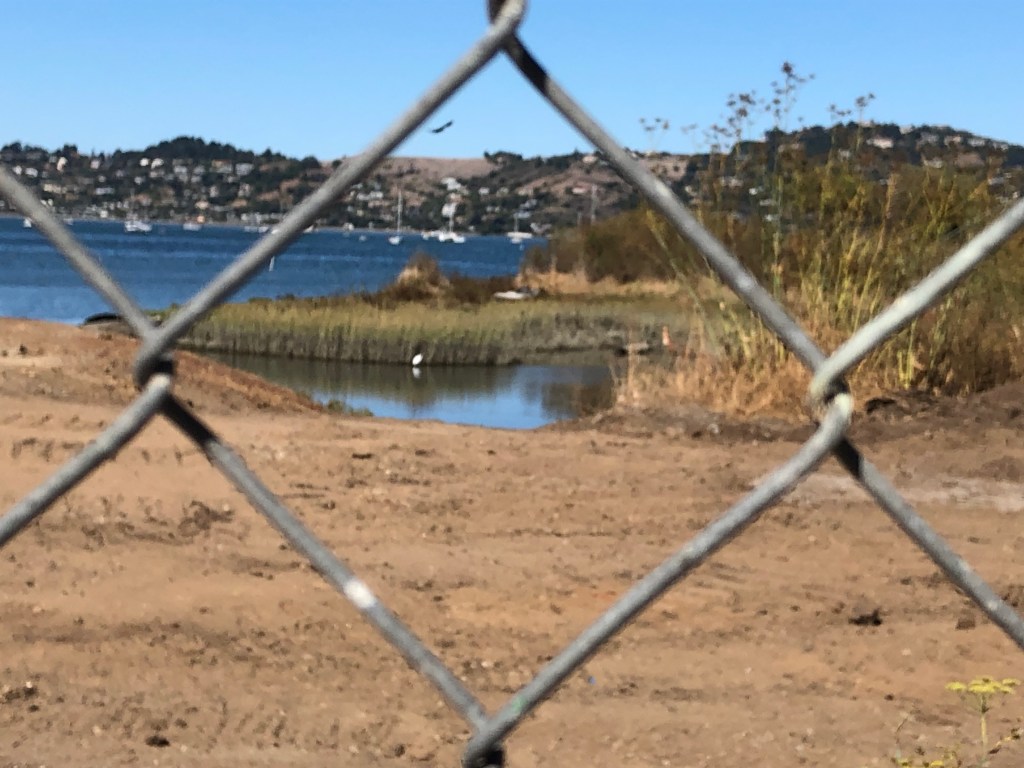
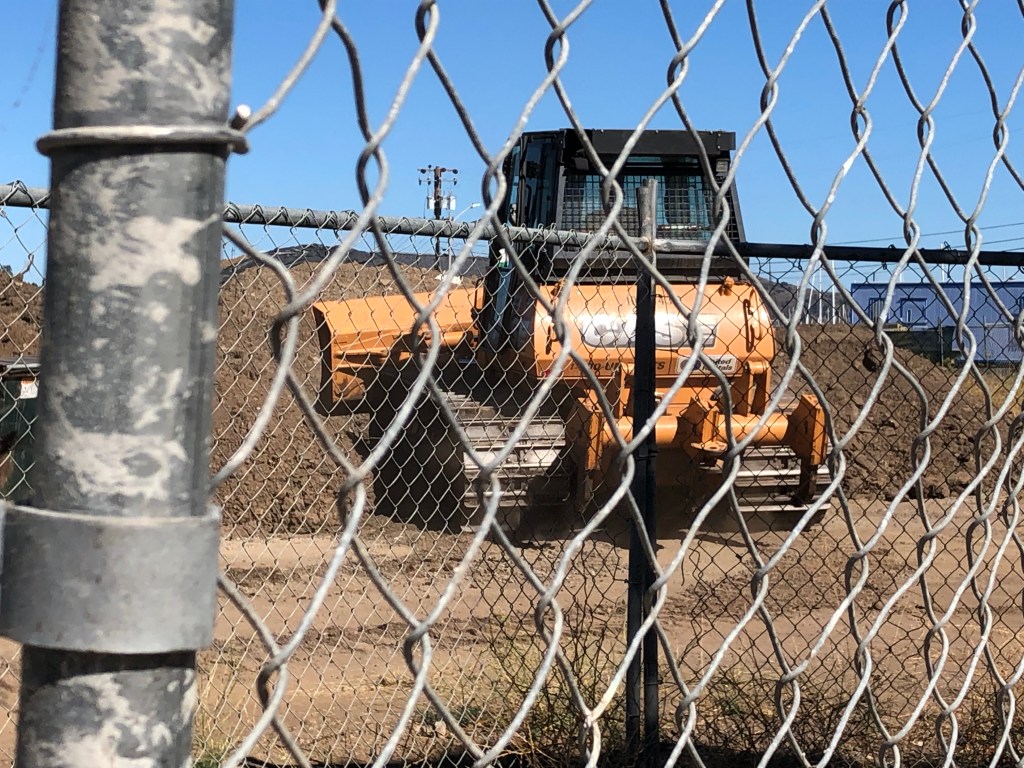
Today I watched this egret through a fence.  He/she’s the white spot in the middle of the metal square. A bulldozer bulldozed nearby, very near, and yet, the egret was calm and content to continue its look for food.

Though small, the egret stays with its task.


This bulldozer is rumbling to the right of the egret


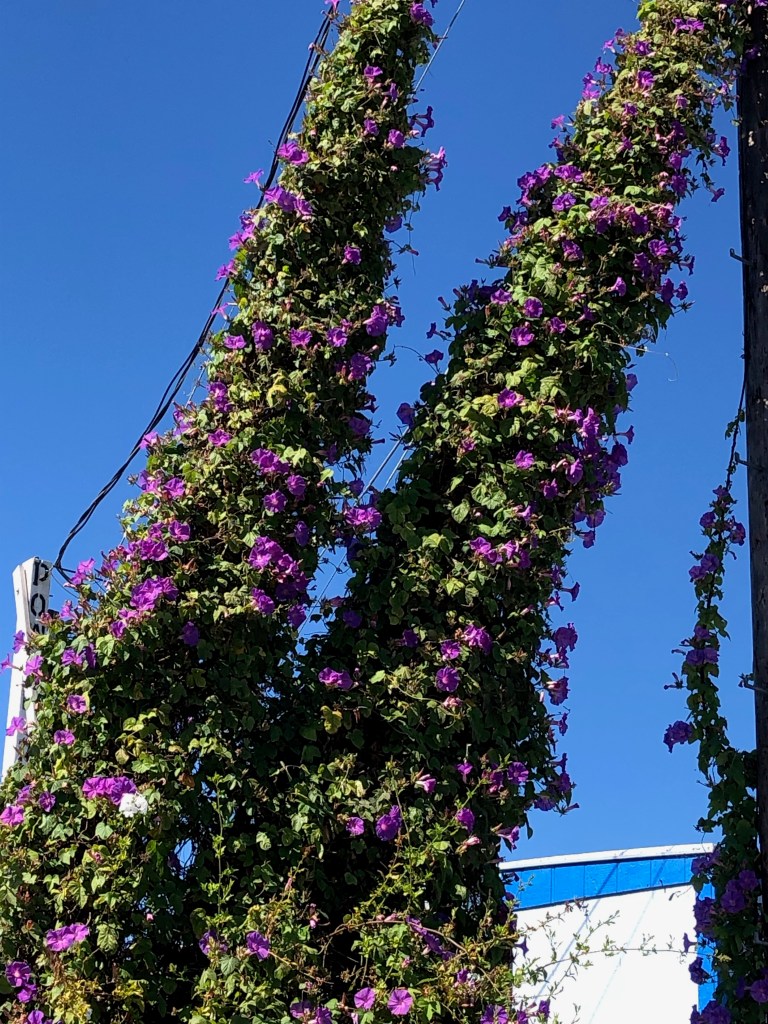
Then I saw this vine climbing up two poles.  Nature is amazing. We are nature. Our democracy is threatened right now and we can ignore what distracts and keep climbing toward the nourishment of the sun, which when the skies aren’t polluted, we see. Clean air. Yum!

Vines twine and climb


Like a Swan

Today like the trees dropping leaves, I realize it’s time to clear off my desk so I can see the surface and feel the way I branch.

I uncover an article by John A. Baron, my Alexander Technique instructor.

He asks students to “experiment with their use by holding themselves in deliberate tensions, then collapsing, while continuing to stay with the piece”, the poemThe Swan” by Rainer Maria Rilke.

He continues, “One could also experiment with opening and closing physically with relative ease, or with drifting into movement, then into stillness.”

The poem is this.

The Swan by Rilke

This laboring of ours through what is still undone, 

as though, legs bound, we hobble along the way,

is like the awkward walking of the swan.

And then dying to let go, releasing ourselves

from the very ground in which we stand – 

is like the way he hesitantly lowers himself

into the waters, which receive him gently and,

as though with reverence and joy,

flow back beneath him, as wave follows wave,

while he, now wholly serene and sure,

with regal composure, and ever more indifferent,

he allows himself to glide.

I’m with this now, this opening and closing, and drifting into movement, then stillness, as I watch Greta Thunberg as she speaks today before the United Nations General Assembly. She is a force we cannot ignore. She’s proof one person speaking out can change the world. May it not be too late as we lower ourselves into the truth of what she says as wave follows wave.

Receive

It’s the first official day of Fall, and where I live this day begins wrapped in fog, a habitat, that for me rings tender and safe.   

I feed the kitties and meditate, start with something I read yesterday that leads to this: 

Inhale: Receive.  Exhale: Fluidity.   

Two simple words propel and anchor my breath: Receptivity and Fluidity.

I open Pir Elias Amidon’s book, Free Medicine, to this:

“When Robert Kennedy lay dying from an assassin’s bullet, his blood spreading across a kitchen floor, he opened his eyes and asked, “Is everyone all right?” I like to believe that question eased his homecoming. At least it taught me this counter-intuitive calculus: when you are in need, give.”  

That brings me to reflect on leaves.  In fall, the days shorten and night lengthens with a yawn and a stretch.  Time for rest.

Temperatures cool.  Leaves stop making food.  Chlorophyll breaks down, and green disappears, giving way to red, orange, and yellow.  A breeze blows through and leaves drop to decompose, nourishing and protecting the ground, Mother Earth. 

With increasing light and the vibratory call of birds, new leaves return in spring. 

Living, dying, giving, receiving, all cycles as One.

Yesterday morning when the fog returned leaving one tree on the high ridge exposed.
Now today, a more complete wrap, no trees.


Bonding and Nurturing with Care

When my youngest son was five, I signed up to train as a Terwilliger Nature guide.  We led children into nature at Muir Woods, Muir Beach, Richardson Bay, the Mill Valley Marsh, and Ring Mountain.  Ring Mountain was my site, my place to lead.  

Ring Mountain was the home of the Coast Miwok and we introduced children to life as it was when living with everything at hand, and how differently from that many of us live now.

Making a grocery list, we led fourth, fifth, and sixth graders up the mountain to the petroglyphs at the top.  First, we gathered Pennyroyal from the pond below, and placed it in a thermos to steep so when we came to the midden along the stream under the Buckeye tree, we sat and drank tea.

Above the midden, a place where clam shells and other garbage were tossed, a rounded hole in the rock shows where acorns were ground, to easily be leached in the stream.  Acorns are a powerful food source, and fish was plentiful in the bay below.  As far as we know, life was bountiful and peaceful, and because Ring Mountain is preserved, it is a peaceful spot, though it overlooks the high-security prison San Quentin on the other side of the bay. Being there balances even more clearly the wonder and joy of being outside and not locked up behind bars.

The Terwilliger organization which began with Mrs. T. leading groups of children has expanded to become Wildcare which is still involved with education but also  cares for and advocates for animals.

Last night I attended a fund-raising Gala for Wildcare.  Ambassador animals also attended the event. I felt for them, even as I understood their confinement is essential, and they are well cared for, nourished, and loved. Their lives are not like those at San Quentin.

I sit here now feeling how feathering compassion for all beings illuminates all our lives.

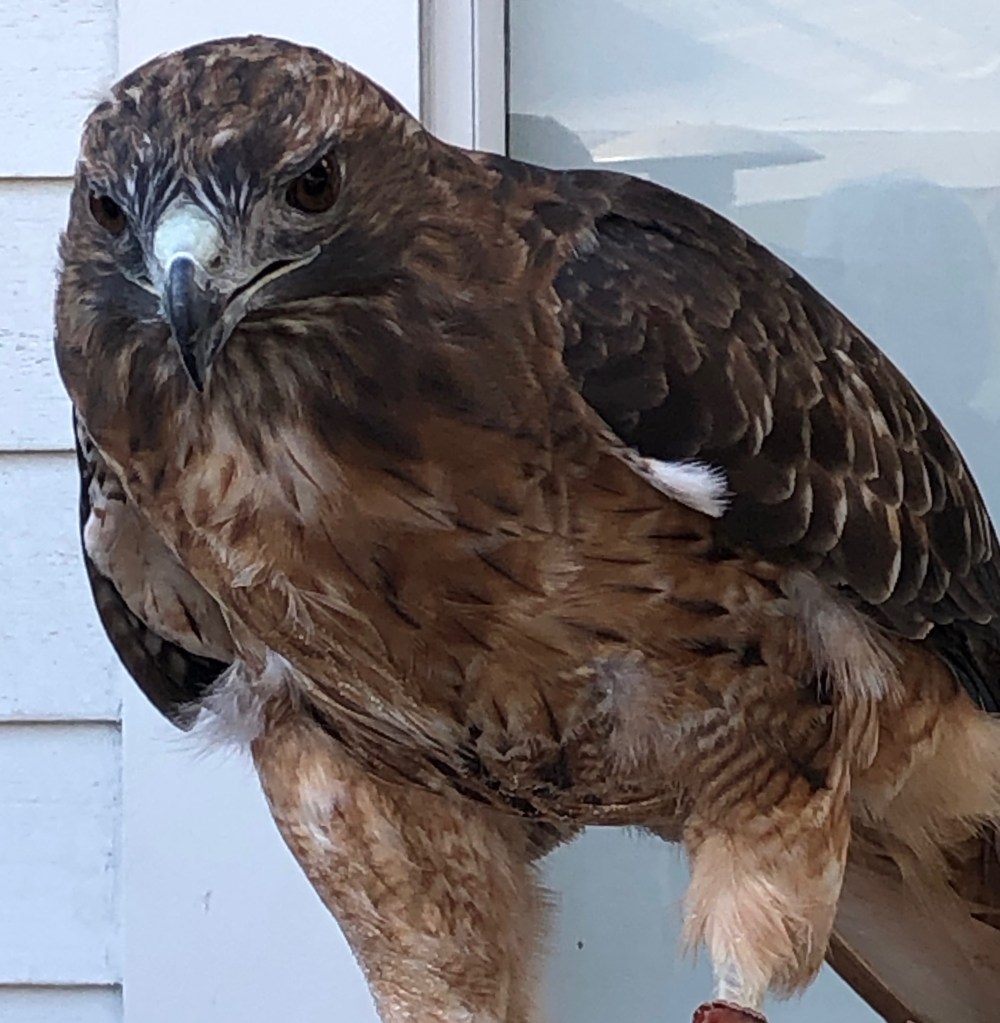
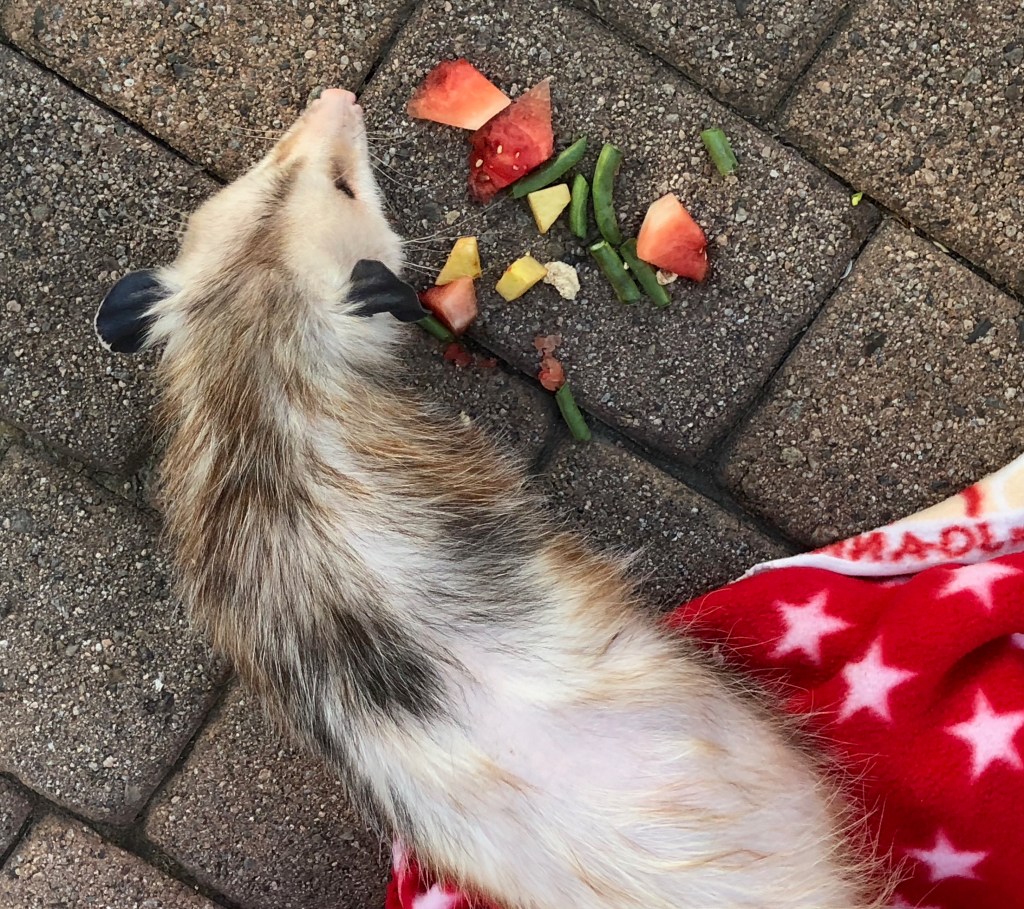
This red-tailed hawk can’t fly because of a wing fracture that didn’t heal properly.  The little opossum has no eyes.

Magnificence, Intelligence, and Strength


A view of opossums as cute


Waking Up

Around 4 million people, many of them students, but all ages, protested around the world yesterday.  They gathered to speak in protection of the planet on which we live, an organism that needs to function successfully in order for us to survive.   

On June 20, 1979, Democratic president Jimmy Carter had 32 solar panels installed on the White House roof to use the rays of the sun to heat water.

When Republican Ronald Reagan took office in 1981, he immediately had them removed.  

The United States has produced more emissions than any other country since the start of the industrial age and yet we have a president now rolling back 85 environmental regulations.

Reading the list makes me sick, so maybe we’ll expire in an ingestion of disgust so it won’t matter that our air is unbreathable and our water polluted.

Meanwhile, 16 year old Greta Thunberg has stepped out of the classroom to speak.  Our leader has risen, our Joan of Arc.

Each of us is a process; our planet is a process, a “systematic series of actions directed to some end”.  We’re not helpless; we’re here with a purpose, a community of interdependence stimulated and programmed to evolve.

On Wednesday, Greta said this to members of Congress in the House Ways and Means Committee.

“This is not the time and place for dreams, this is the time to wake up. This is the moment in history we need to be wide awake.”

“This is the biggest crisis humanity has ever faced, you cannot solve a crisis without treating it as one. Stop telling people that everything will be fine. As it looks now, everything won’t be fine.”

“If it continues like that we’re not going to get anywhere, actually transform words into action — the action we need now.”

And on this beautiful day, as we in the Northern hemisphere tilt toward fall, the leaves are changing color, preparing to drop, and in that letting go, enrich and protect the roots in the ground.  They show us the way. We can drop into awareness of the crisis, leaving the branches of support open and clear. We’re led by nature, and the natural processes that have given us Greta. She inspires us to act.

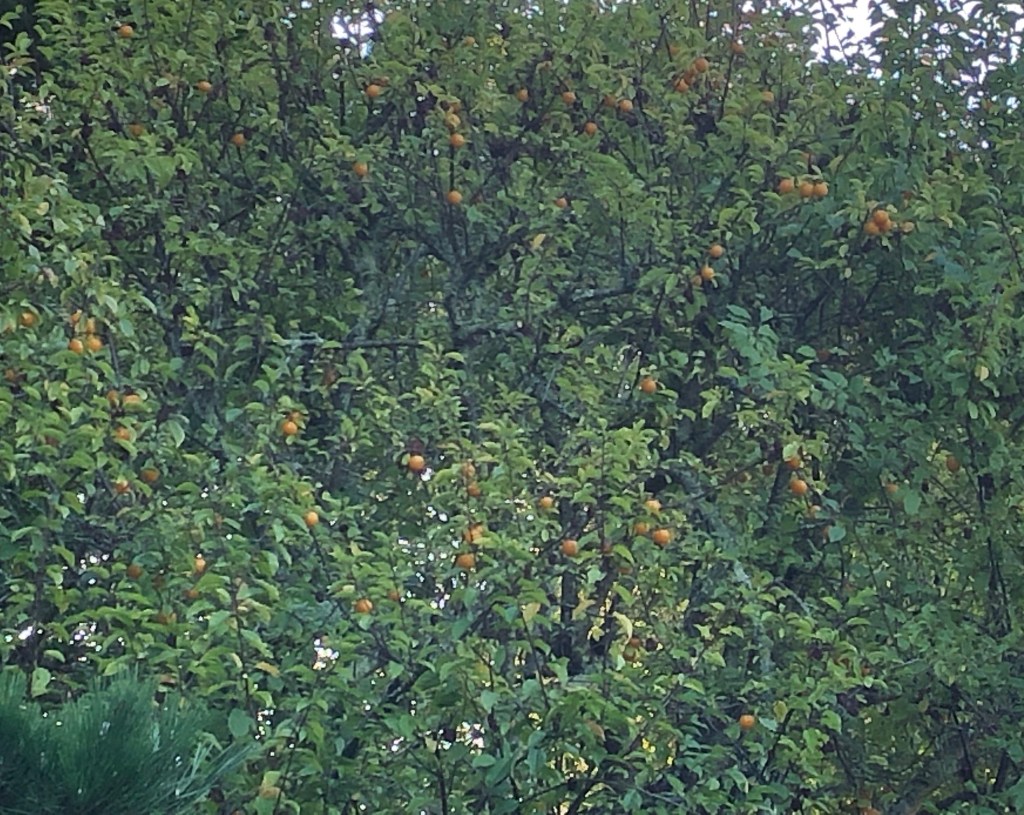
Plums drop, followed by leaves


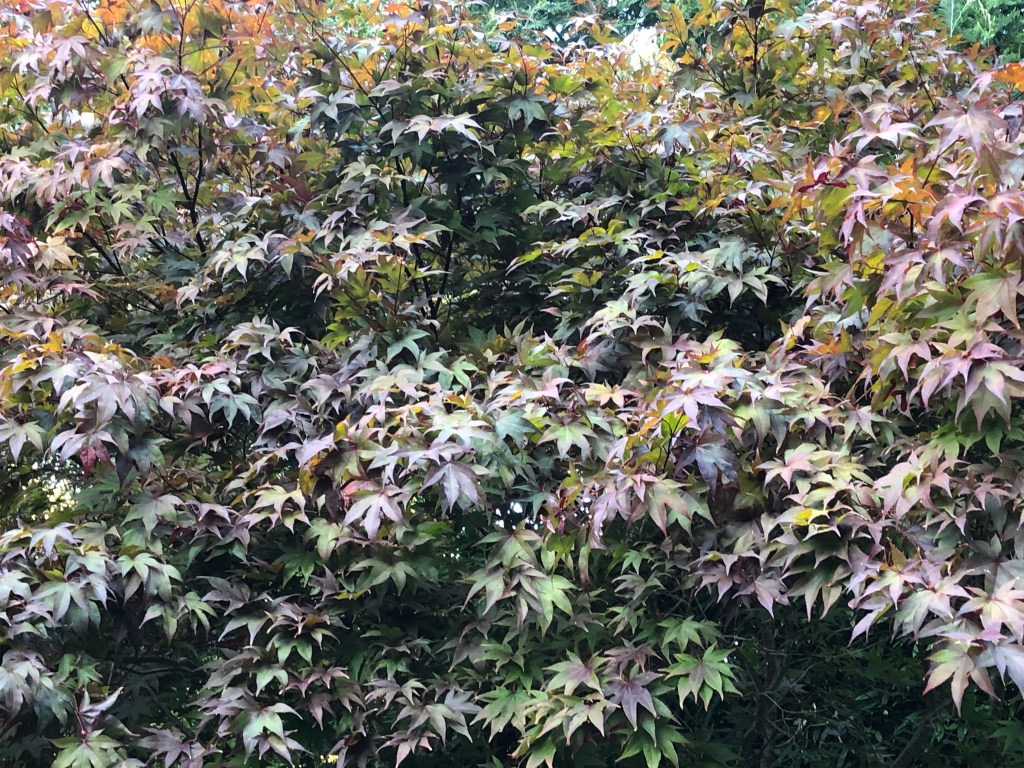
Leaves changing color before they part from their branch of the tree


Mother Earth

It’s Global Climate Strike Day.  It’s beautiful here. Mother Earth is offering her support for the day, the early morning light touched with gold.

Yesterday I walked in twilight through the forest duff of Old Mill Park to the Mill Valley library which looks out from full length windows onto redwood trees.

That might be enough for an evening but I was there to hear two poets read.  

First, Matthew Siegel read, and then,  Padraig O Tuama, an Irish poet, who headed Corrymeela for years.

Unfamiliar with it, I checked out their website: https://www.corrymeela.org

Corrymeela is Northern Ireland’s oldest peace and reconciliation organisation. We began before “The Troubles” and continue on in Northern Ireland’s changing post–conflict society.  The organisation grew organically from the original Community members, and today almost 40 full–time staff and dozens of volunteers work alongside the eleven thousand people who spend time in our residential centre every year. 

Following the reading, there was a question and answer period.  

Both men agreed that Ilya Kaminski is the poet of a century.  If you haven’t read his poetry, do.

They spoke of knowing and exploring the one thing, that one thing that each of us comes back to when we write to explore, discover, and share.  

Padraid said, Poems have a certain hunger around which they circle.  

He also said spirituality comes from the breath, that language helps us breathe, so write what people can turn to,  do things with words that help us breathe, then finalize a poem with a spark or a demand. I sit with that, no small task, though perhaps trusting the breath, it is.

Naturally politics had to come up when an Irish poet is in the room.  Right, now the world is twisted on arrogance. As you might imagine, he didn’t have anything good to say about Britain, the Tories, or Brexit.  He called the explorer Captain James Cook, a murderer. He says Ireland didn’t have a potato famine; they had a policy famine.  

They were asked if cell phones are destroying writing.  They pointed out that texting is writing. We send emails.  We are writing, and writing is about attention, and that is the point, attention.  

They both agreed they are inspired by this poem by Rilke, and by Emily Dickinson, of course.

Widening Circles

Rainer Maria Rilke

I live my life in widening circles

that reach out across the world.

I may not complete this last one

but I give myself to it.

I circle around God, around the primordial tower.

I’ve been circling for thousands of years

and I still don’t know: am I a falcon,

a storm, or a great song?

Book of Hours, I 2

Circling – vision moving in and out


That leads me to Jane Hirshfield’s poem, the perfect poem for this day. 

May our lungs breathe in the clean air of fact.

ON THE FIFTH DAY

by Jane Hirshfield

On the fifth day

the scientists who studied the rivers

were forbidden to speak

or to study the rivers.

The scientists who studied the air

were told not to speak of the air,

and the ones who worked for the farmers

were silenced,

and the ones who worked for the bees.

Someone, from deep in the Badlands,

began posting facts.

The facts were told not to speak

and were taken away.

The facts, surprised to be taken, were silent. 

Now it was only the rivers

that spoke of the rivers,

and only the wind that spoke of its bees,

while the unpausing factual buds of the fruit trees

continued to move toward their fruit.

The silence spoke loudly of silence,

and the rivers kept speaking,

of rivers, of boulders and air. 

In gravity, earless and tongueless,

the untested rivers kept speaking.

Bus drivers, shelf stockers,

code writers, machinists, accountants,

lab techs, cellists kept speaking.

They spoke, the fifth day,

of silence.

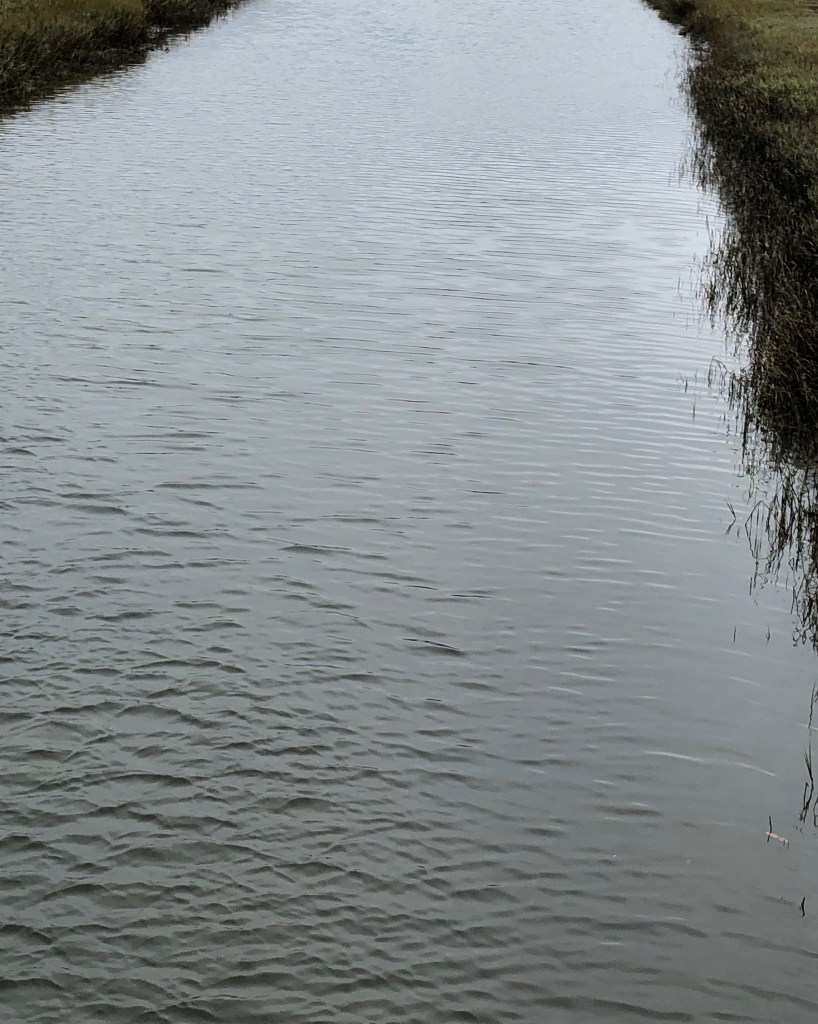
The tides move in and out of the marsh – view from a rickety bridge


Celebration

I’m out early this morning, the moon still up, already moving to close itself to half, and the stars shining.

A friend shares that she’s been on a seven day rafting and camping trip in the Grand Canyon, sleeping under the stars, no tent.

I look up and celebrate the luxury of enclosure in canyon walls that open to the sky.

Meanwhile I’ve looked into the stones in the bay, a different type of star.  Life dances in my chest.   

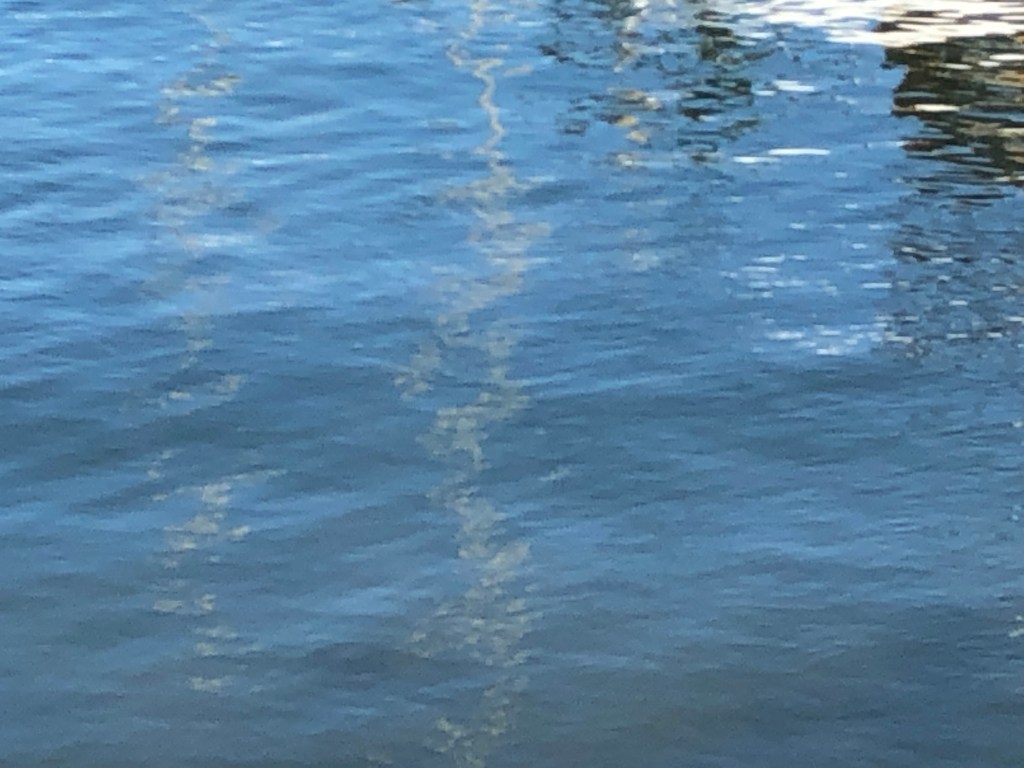
Stones sparkle in ripples of water


Great White Egret in the Marsh