Connection

From Heather Cox Richardson today:

America today is caught in a plague of gun violence. 

It wasn’t always this way. Americans used to own guns without engaging in daily massacres. Indeed, it always jumps out at me that the infamous St. Valentine’s Day Massacre of 1929, when members of one Chicago gang set up and killed seven members of a rival gang, was so shocking it led to legislation that prohibits automatic weapons in the U.S. 

Eighty-nine years later, though, in 2018, another Valentine’s Day shooting at Marjory Stoneman Douglas High School in Parkland, Florida, killed 17 children and wounded 17 others. In response, then-President Donald Trump called for arming teachers, and the Republican-dominated Florida legislature rejected a bill that would have limited some high-capacity guns. 

Our acceptance of violence today stands in striking contrast to Americans’ horror at the 1929 Valentine’s Day Massacre.

My book group met last night to discuss In the Distance by Herman Diaz.  Yes, it has violence but my understanding is it’s meant to present both a mythical and more “true” view of the Wild West.  It’s a book about loneliness, not fitting in or knowing where one is, and yes, cruelty, injustice, and violence.  

The question becomes whether the violence in the book was exaggerated.  People felt it was unrelenting. It was certainly harsh but reading the news each day feels unrelenting too. 

The time period in the book is 1849 and begins with the Gold Rush in CA and moves through peripherally to the Civil War and beyond.  It is fantastical in one way, and it’s not always easy to read, and though the author struggled to write the scenes of violence, he’s making a point and looking at a piece of history in this country.  

Growing up in the 1950’s, I was taught how amazing we were as a country, and when I went to Bastogne in Belgium, I cried as I stood in the memorial and saw and felt what the U.S. had contributed to World War II.  I know that life is complex but we are having to face that this country was founded on violence.  Can we change it now?

Heather concludes her column today with this:

In 1997, the NRA’s challenges to the Brady Bill had made their way to the United States Supreme Court. Printz v. United States brought together the idea of unfettered gun ownership and Republican government. The court held that it was unconstitutional for the federal government to require states to perform background checks. This both freed up gun purchases and endorsed states’ rights, the principle at the heart of the Republican policy of dismantling the active government that regulates business and protects civil rights. 

We are in a bizarre moment, as Republican lawmakers defend largely unlimited gun ownership even as recent polls show that 84% of voters, including 77% of Republicans, support background checks. The link between guns, cowboys, race, and government in America during Reconstruction, and again after the Brown v. Board decision, helps to explain why.

F.M. Alexander, the founder of Alexander Method said to smile like you’re smelling a rose. 

That’s my practice these days as I look out on a new day coming to light.

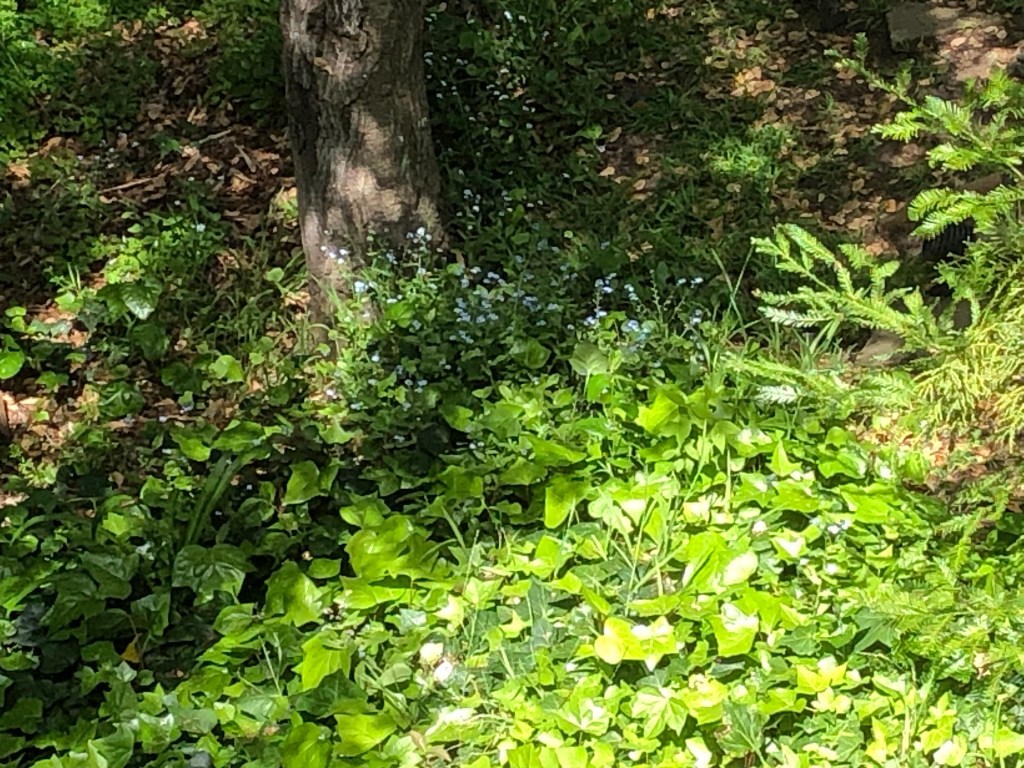
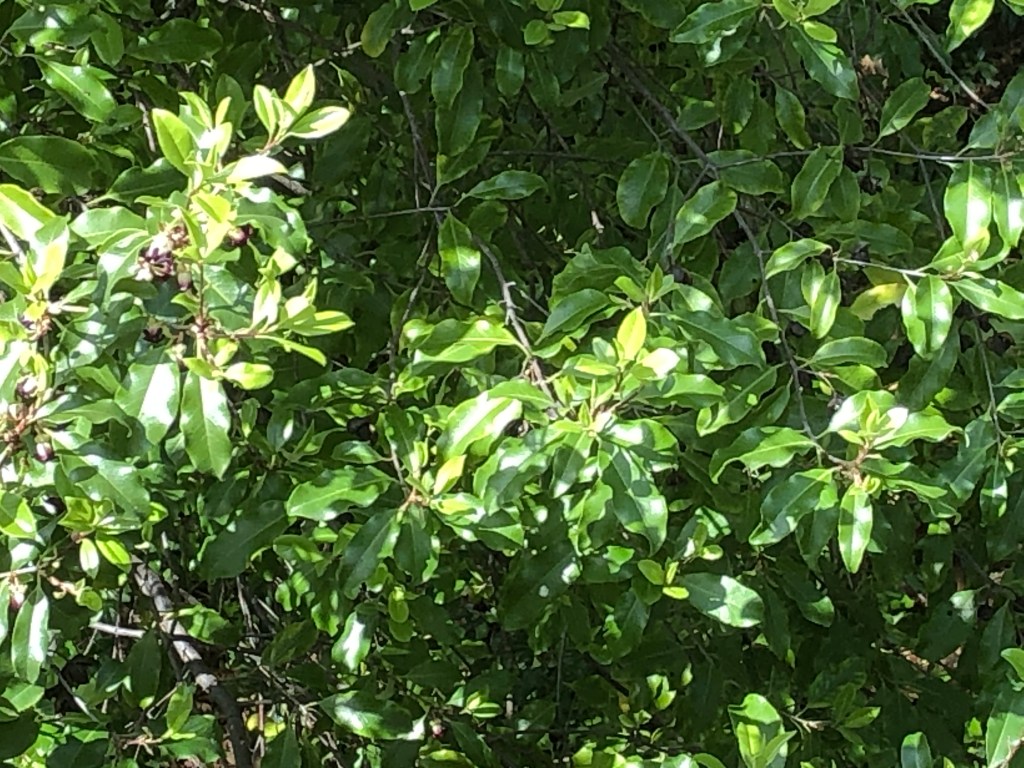
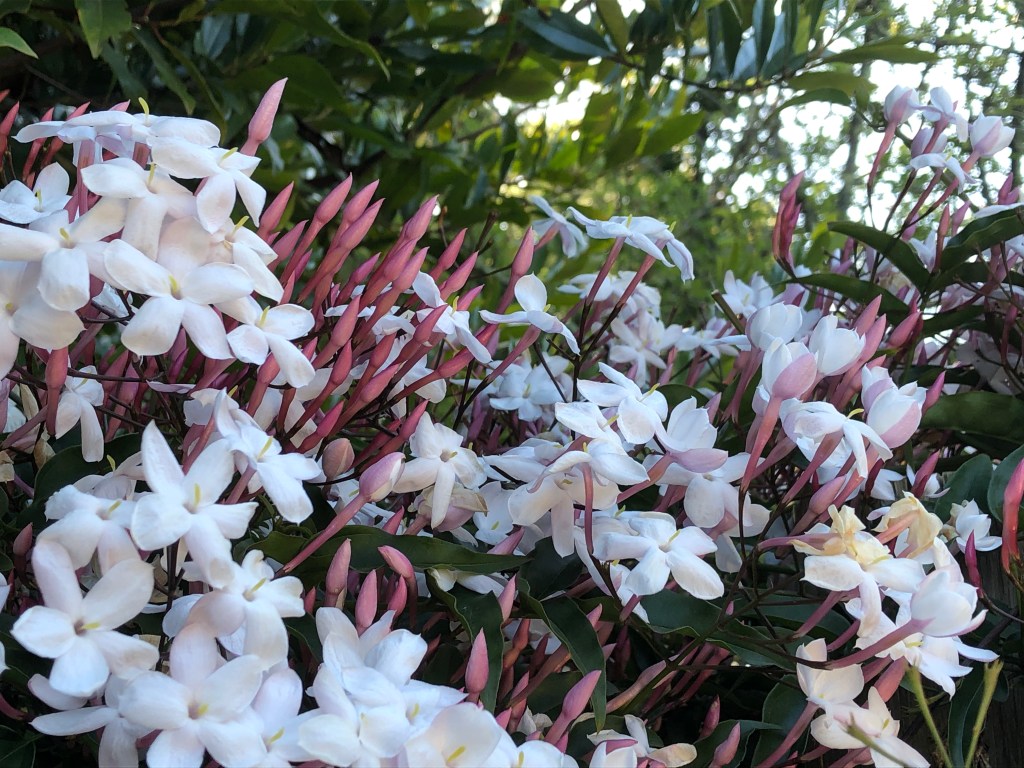
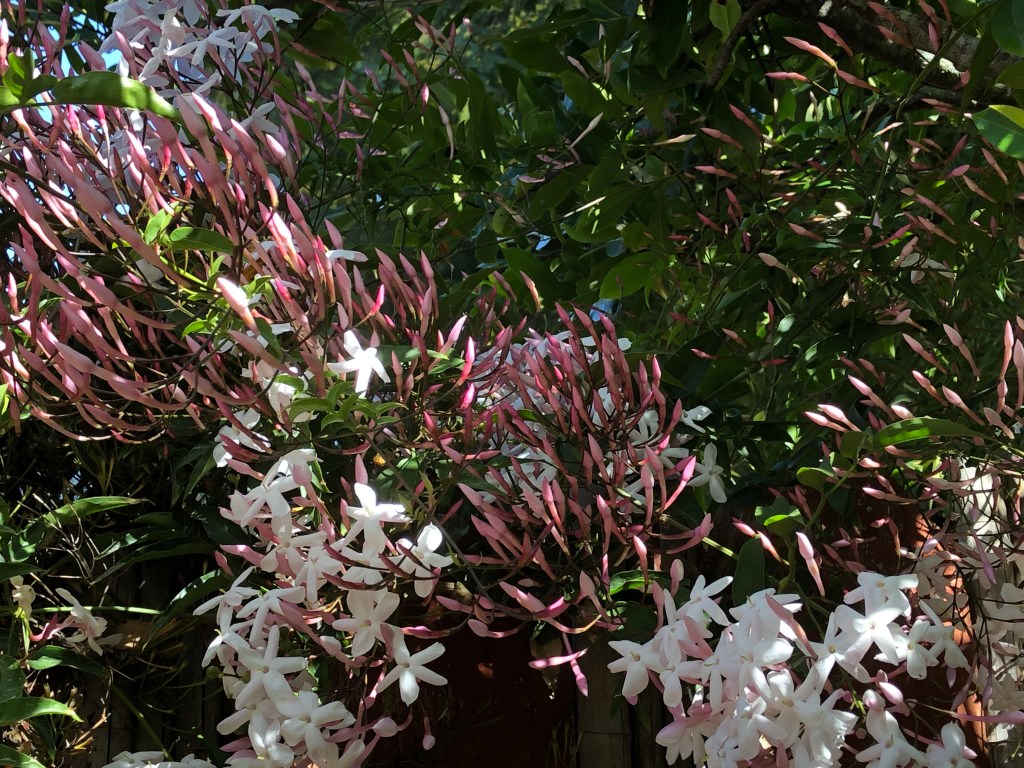
Smile like you’re smelling a rose or jasmine, pittosporum, limbs of a tree, or even your own hand.  What draws you now into the wonderful workings of the organisms we are?
Awe

I begin the day with these words of Wendell Berry: We are either beginning or we are dead.

One son and I have been discussing how to live guided by: Alertness, Mindfulness, and Ardency.

I’ve been most puzzled by the meaning of ardency but then I thought of Hildegard of Bingen and her work with “greening”.  

I’m reading Matthew Fox’s book: Julian of Norwich: Wisdom in a Time of Pandemic – and Beyond.   Julian lived 700 years ago and survived and advised through the bubonic plague that killed almost 50% of Europeans.  She is a wise and loving guide.

From Fox’s book:

“Julian holds thoughts about awe that anticipate some of the deep insights from Rabbi Abraham Joshua Hescel in the twentieth century.  For Heschel, “awe is the beginning of wisdom” and thus awe plays a prominent place in our quest not just for knowledge but for wisdom – a quest Julian also celebrates. In addition, Heschel has this to say about awe: “Wonder, radical amazement, the state of maladjustment to words and notions, is a prerequisite for an authentic awareness of that which is.”  

Fox continues: “Julian seems to bring this sense of wonder to the table in spades – as did her ancestors, Hildegard, Aquinas, and Eckhart. Awe is so stunning to our system and our consciousness, proposes Heschel, that we become “shocked at the inadequacy of our awe, at the weakness of our shock.””

Heschel warns us of what happens when we lose our sense of awe. “Forfeit your sense of awe, let your conceit diminish your ability to revere, and the universe becomes a marketplace for you.”  It is telling that both Heschel and Julian talk about the intrinsic relationship of “awe” and “reverence”. Awe gives birth to reverence, but consumerism and capitalism can abort awe.””

After twenty years of study of the brain, a  researcher at Stanford determined the right hemisphere of the brain is all about awe.

I’m reminded of Jill Bolte Taylor’s Ted Talk and book: My Stroke of Insight.

Using All Our Rooms

Yesterday a friend shared that with the pandemic and shelter-in-place, she started using her living room. It had always been kept ready for company but now with no one coming she had taken it over and the coffee table was covered with her “stuff”.  She falls asleep there, dreams.  

Another shared that when she grew up the dining room was used once a year for Passover and the rest of the time they ate in shifts in the tiny kitchen.

If our dreams symbolize how we use the rooms in our “house”, how are we using our actual rooms?  

I’m looking around now as spring is here and morning is a symphony of birds twittering and tweeting and I know it’s time to clean out.  We will be opening our homes and ourselves, and how is that for us now?

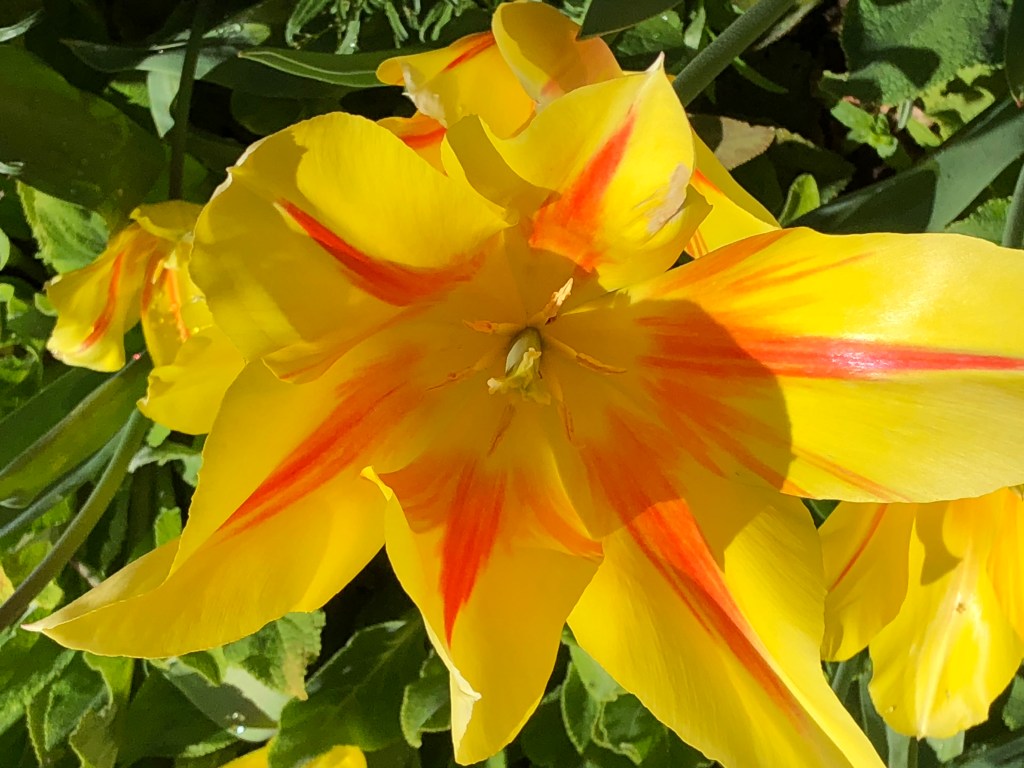
We turn with the tides and flowers offer scent as they bloom.

Reflecting

Today I listen to Alicia King sing “Lift Every Voice and Sing”, the Black national anthem.  I find it unfathomable what we’re seeing and what’s been happening to people in this country who are Black.

I’m wondering why police are carrying guns rather than using Tasers.  Isn’t a Taser enough defense for police monitoring driving and similar conditions?  Why is a gun right there at hand?  I read that the two are meant to be on opposite sides of the police person and that they are different in feel and even color.  

It seems an inexcusable mistake, and yet it’s been excused in the past. 

My younger brother, my only sibling,  passed away two years ago in April and I find myself thinking about death.  

I find comfort in these words of Rabindranath Tagore:

The butterfly counts not months but moments, and has time enough.

Being

Rainer Maria Rilke wrote: Let life happen to you. Believe me: life is in the right, always.

This weekend in a Sensory Awareness workshop with Miren Salmeron I felt the flow and connection of blood, organs, and bones, as though I was a tide pool, and all this movement and changing, flowing densities was happening within me. There was nothing for me to do, no need to orchestrate. What a relief!

It was ease, compassion, kindness, reception, Love. I am an aquarium, though as a living organism, permeable, not glass.

The experience felt like pregnancy where we allow expansion and birth.

Thich Nhat Hanh in Walk Like a Buddha wrote:  

When the Buddha walked, he walked without effort. He just enjoyed walking. He didn’t have to strain, because when you walk in mindfulness, you are in touch with all the wonders of life within you and around you.

Thich Nhat Hanh gave us this poem.

Breathing in,

I calm my body.

Breathing out,

I smile.

Dwelling in the present moment

I know this is a wonderful moment.

When we pause and spread our arms like wings on a bird, or branches of a tree, we embrace and feel embraced. We’re pumped with air, given space, and when we smile, the muscles of the face, connected to the seventh cranial nerve, change the nervous system and our relationship with air, our vital nourishment and need.

Gratitude

Tara Brach: 

Gratitude arises when we bring an open and full presence to our life, and its sweetness is a feeling of homecoming.

I read Heather Cox Richardson this morning and I’m grateful for her columns and for our President Joe Biden.  Today she looks at what Trump allowed and encouraged, and how Biden stepped in to save lives. I’m grateful for many things but this morning and last night birds are chirping away.  What a wonderful greeting of Spring.  

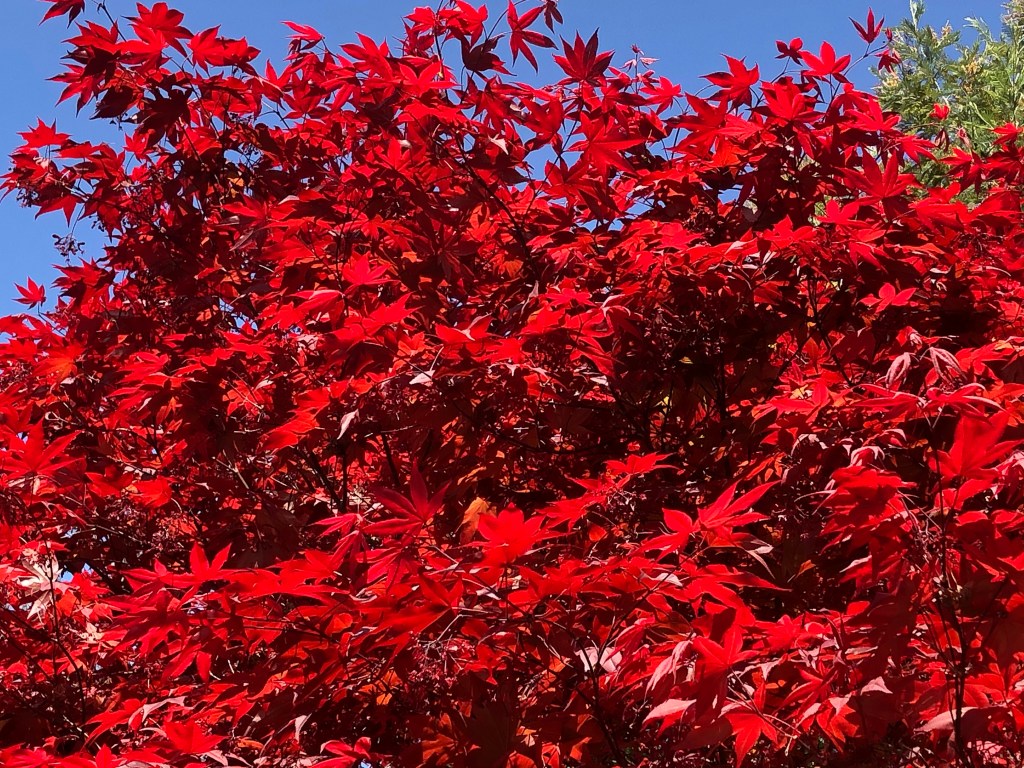
The leaves of the Maple tree return

https://heathercoxrichardson.substack.com

Creativity

I’ve been inspired by the creative responses to the pandemic. When I got my two shots of the vaccine at the Civic Center, I was reminded of the years of county fairs I attended there. When my sons were young, their various exhibits entered by the schools won prizes and ribbons. In their categories, every child won something.

Now, I read that live drive-in opera is coming to the Civic Center. The fair this year, like last year, is cancelled, but we have drive-in opera instead. My heart lifts in the notes, high and low, that carry us along.

The State of Balance and Calm

Today I read about Superconductivity.  

“Below a certain “critical” temperature, materials undergo transition into the superconducting state, characterized by two basic properties: firstly, they offer no resistance to the passage of electrical current. When resistance falls to zero, a current can circulate inside the material without any dissipation of energy. Secondly, provided they are sufficiently weak, external magnetic fields will not penetrate the superconductor, but remain at its surface”.

Reading that, I feel a resonance and understanding of the following words of Thomas Merton.

I feel how when the heat of motion, reactivity, and vibration calm, we come to “the peace of inner clarity and love”.


Thomas Merton: In a world of noise, confusion and conflict, it is necessary that there is a place of inner silence and peace, not the peace of mere relaxation but the peace of inner clarity and love.

Language

I’ve always felt the old adage that “sticks and stones may hurt my bones but words can never hurt me” was wrong, sadly and tragically wrong and untrue.

Words can hurt, and we’ve probably all flung them one way or another, at ourselves, or at others, especially those we love.

This morning I read Sharon Olds poem, “Looking South at Lower Manhattan Where the Towers Had Been”.  It took me where I didn’t expect, and when I clicked to hear her read it, I also came across her poem “Pine Tree Ode”.  I suggest you read and listen to both as a way to sink and rise even more deeply and fully into this world we share.  

Reflecting

This morning I lay in bed and felt the sinking, the need to rearrange to meet this new day – 

The words of Baal Shem Tov came:

Let me fall if I must. The one I will become will catch me.

I read Alan Watts and think of how we practice the following when we play tennis or ski or mindfully live the moments of the day.

If you expect something to come in a certain way, you position yourself to get ready for it.  If it comes in another way, by the time you reposition your energy, it is too late. So stay in the center, and you will be ready to move in any direction. 

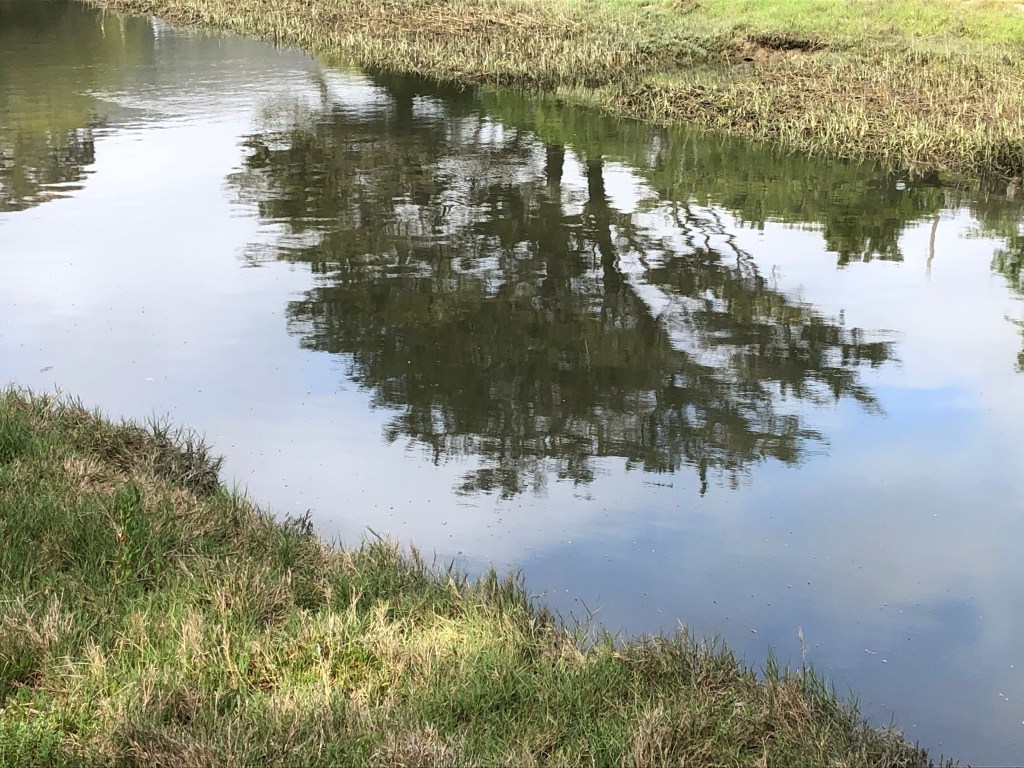
By the marsh
Looking up