In the Beginner’s Mind, there are many possibilities. In the expert’s mind, there are few.
Today as I was folding sheets, I remembered going through radiation treatment in 2006. The man who handed us our robe always made sure it was warm and said a prayer for each of us. I think of how we do anything, is how we do everything.
In that, is fulfillment and completeness, wholeness.
Nisargadatta Maharaj:
Don’t hold on, that is all. The world is made of rings. The hooks are all yours. Make straight your hooks and nothing can hold you.
At the Hiller Aviation Museum, even bears can fly!!Grandson’s new puppy – Life!
I finished the book My Head for a Tree: The Extraordinary Story of the Bishnoi, Guardians of Nature by Martin Goodman. These guardians show us how to live when we honor and value interconnectivity, oneness, wholeness, and this world we share.
I spiral on the words on my Flying Edna Desktop Calendar. “I do not go to the forest to be alone. I go to be with the ones who speak without human words.”
As we’re inundated with stories of political horror, it’s important and essential to be with the beings who give us oxygen, and share our roots and nourish our soil and soul.
At the park, I saw a little boy, perhaps two or three, laughing and waving, but I couldn’t see anyone there. Then I realized he was playing with his shadow, waving, laughing and dancing with his own image. If only we could greet all aspects of ourselves with such joy and glee, no hiding, only reception and awareness of all that’s right here for us to see, receive, and be.
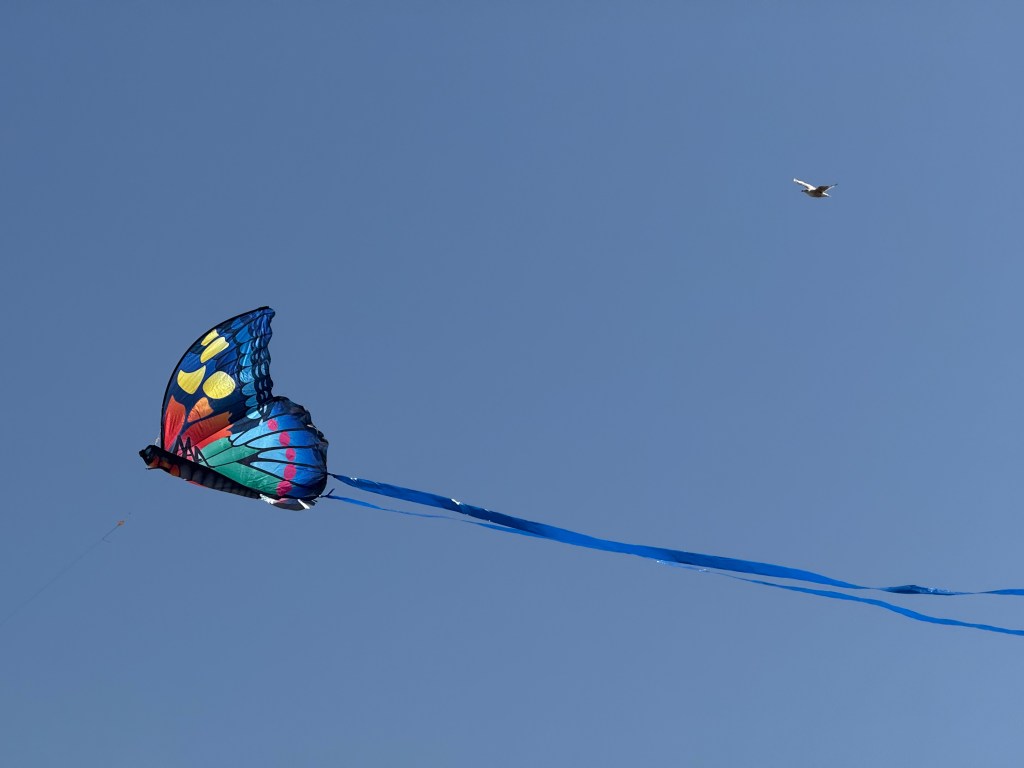
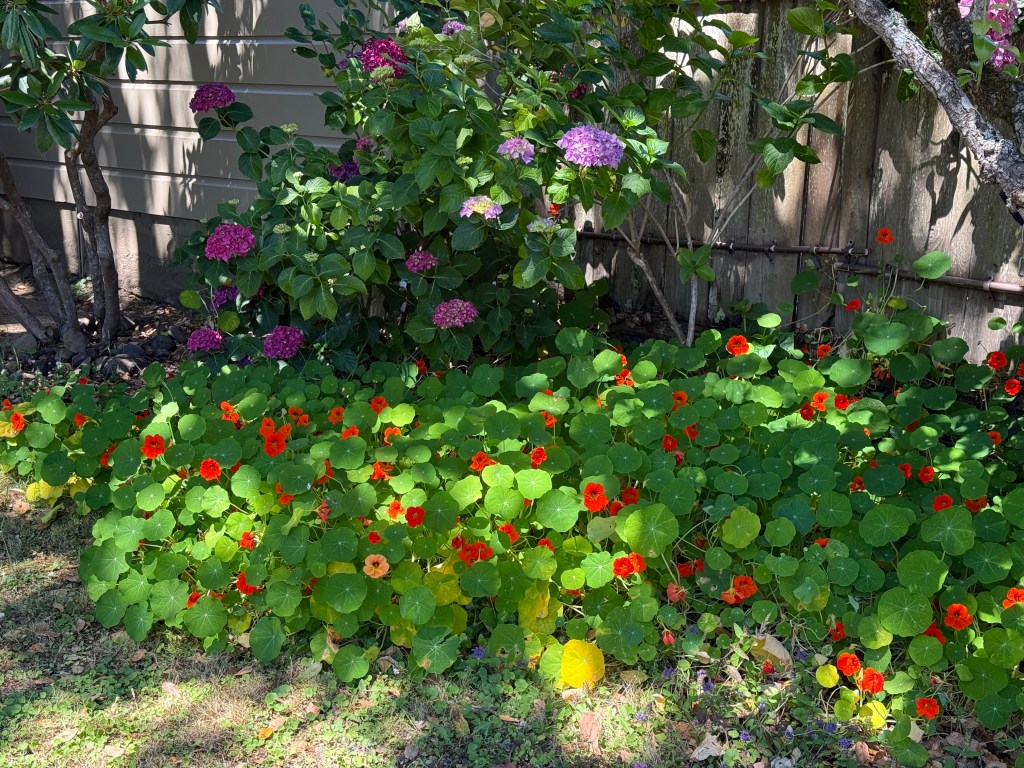
Light and DarkDancing our heart like a kite at the end of our armsReceiving and being with sun and shade
In trying to untangle the onslaught of Trump’s cruelty I read Mariann Edgar Budde’s book, How We Learn to be Brave: Decisive Moments in Life and Faith.
In an example of perseverance, she writes about a sermon she heard given by the late Harvard Chaplain Peter Gomes. He spoke of Ernest Gordon who wrote the memoir of his three-year captivity in a Japanese prison camp that was made into two films, The Bridge on the River Kwai and To End All Wars. At first Gordon and his fellow captives were very religious and prayed and expected that God would rescue them. Many died and others became disillusioned and stopped praying and believing, but then, “something shifted as they responded to the needs of their fellow prisoners, as they cared for and protected them and witnessed others sacrificing their lives in love.”
They began to speak about God in their midst. “This was not a revival of religion in the conventional sense, but rather the discovery that faith was not what you believed but what you did for others when it seemed you could do nothing at all.”
Budde then writes about Reinhold Niebuhr who wrote what we now know as the Serenity Prayer.Niebuhr also wrote:
Nothing worth doing can be achieved in a lifetime; therefore we must be saved by hope. Nothing that is true or beautiful or good makes complete sense in any immediate context of history; therefore we must be saved by faith. Nothing that we do, however virtuous, can be accomplished alone; therefore we are saved by love.
David Whyte writes about courage.
Courage is the measure of our heartfelt participation with life, with another, with a community, a work, a future. To be courageous is not necessarily to go anywhere or do anything except to make conscious those things we already feel deeply and then to live through the unending vulnerabilities of those consequences. To be courageous is to stay close to the way we are made.
This evening I entered The Dictionary of Obscure Sorrows by John Koenig. He introduces the book with this:
“This is not a book about sadness – at least, not in the modern sense of the word. The word sadness originally meant “fullness” from the same Latin root, satis that also gave us sated and satisfaction. Not so long ago, to be sad meant you were filled to the brim with some intensity of experience. It wasn’t just a malfunction in the joy machine. It was a state of awareness – setting the focus to infinity and taking it all in, joy and grief all at once. When we speak of sadness these days, most of the time what we really mean is despair; which is literally defined as the absence of hope. But true sadness is actually the opposite, an exuberant upwelling that reminds you how fleeting and mysterious and open-ended life can be. That’s why you’ll find traces of blues all over this book, but you might find yourself strangely joyful at the end of it. And if you are lucky enough to feel sad, well, savor it while it lasts – if only because it means that you care about something in this world enough to let it under your skin.”
I’m in a group where we’re studying Satipatthana meditation. This module has been on death, so inhaling as though this is our last breath and exhaling into rest. It’s very useful when the temperature of anger arises, to consider what if this is my last breath, and feel a cooling down. It’s a practice, so of course, not always an immediate response. Some of us struggle with attachment to self-righteousness.
Yesterday’s discussion led to dying with dignity and the importance of an advance medical directive. We have our medical directives, but learning about Five Wishes, I see there is more that might be conveyed as to our wishes, my husband and mine.
I just read Kara Swisher’s book, Burn Book: A Tech Love Story. I recommend it because I think it’s important to know the history of what most of us use every day, and many times a day. It’s shocking to realize how quickly we’ve gone from typewriters to word processing to such a full and compelling integration of the internet. It’s not a dry read as she gives an intimate, and often cynical look at the players. Nero may have gone down in history as watching Rome burn, but some like Zuckerberg and the devolvingMusk may be aiming for a three-way tie. There are good guys too, like Steve Jobs and Apple.
With all of this,I’m with the last lines of Thich Nhat Hanh’s translation of the Five Remembrances.
My actions are my only true belongings. I cannot escape the consequences of my actions. My actions are the ground on which I stand.
The moving and revitalizing groundHard and SoftWe live and die in, and as, a Melange
I had never heard of The Moth but a friend recommended the book How To Tell A Story and now I’m intrigued. I read the Foreword and stopped to contemplate, and then, the Introduction, and another pause. I was caught on the alignment that occurs when we tell and listen to a story, and discover and uncover the theme.
“Sometimes you have to figure out who you’re not before you can become who you are.”
Those words affirm my belief that we’re here in a testing ground, exploring, interacting, responding, and learning the steps to climb to higher ground.
Reading the stories, I thought I had no story to tell but then I read: What are the moments from your life, big or small, that stick with you?
Immediately I was in Mexico City at the age of 19 when I learned my beloved, healthy father had died in a motorcycle accident. Alive, then dead.
There’s a saga in the challenges of my return, and a three month break from school as my mother, brother, and I navigated logistics and loss.
Even now, 55 years later, my heart swells with the increasing moisture of love and tears come.
At the time, and even now when someone I love dies, I feel space open up as though life here is a matte painting, and they are showing me what’s beyond container and containment.
There is much for me to explore in continuing with this book, and so I ask you now:
What moments come to you that you want to examine and share, with yourself, and perhaps in that, with others?
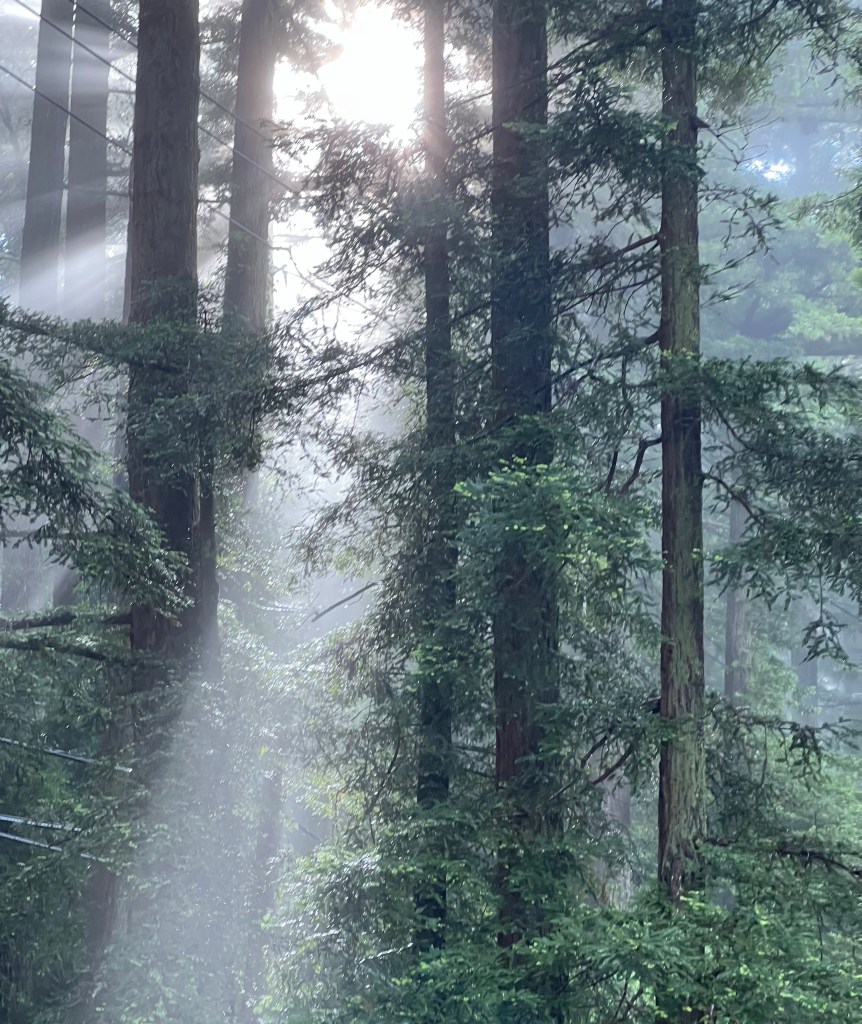
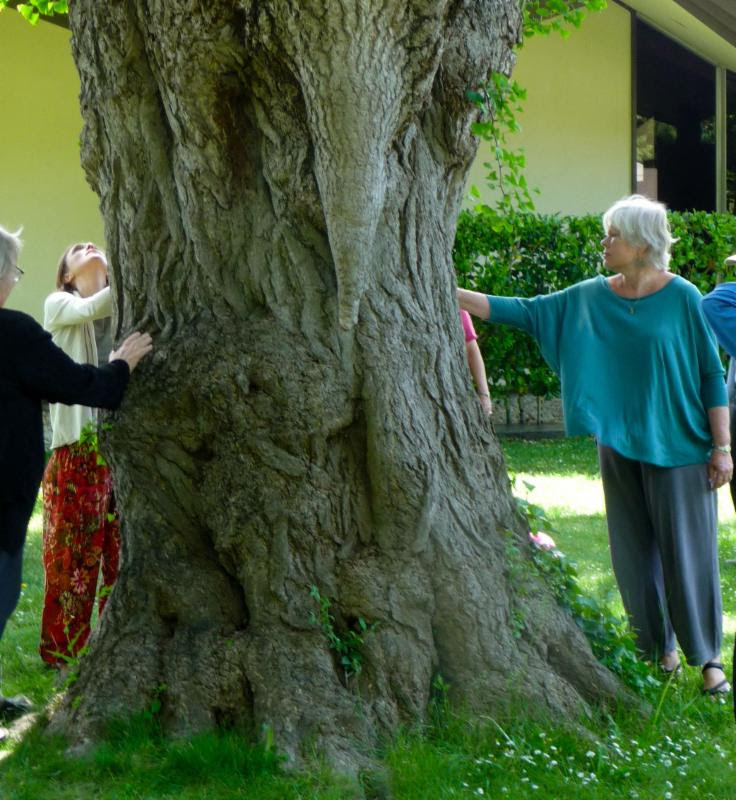
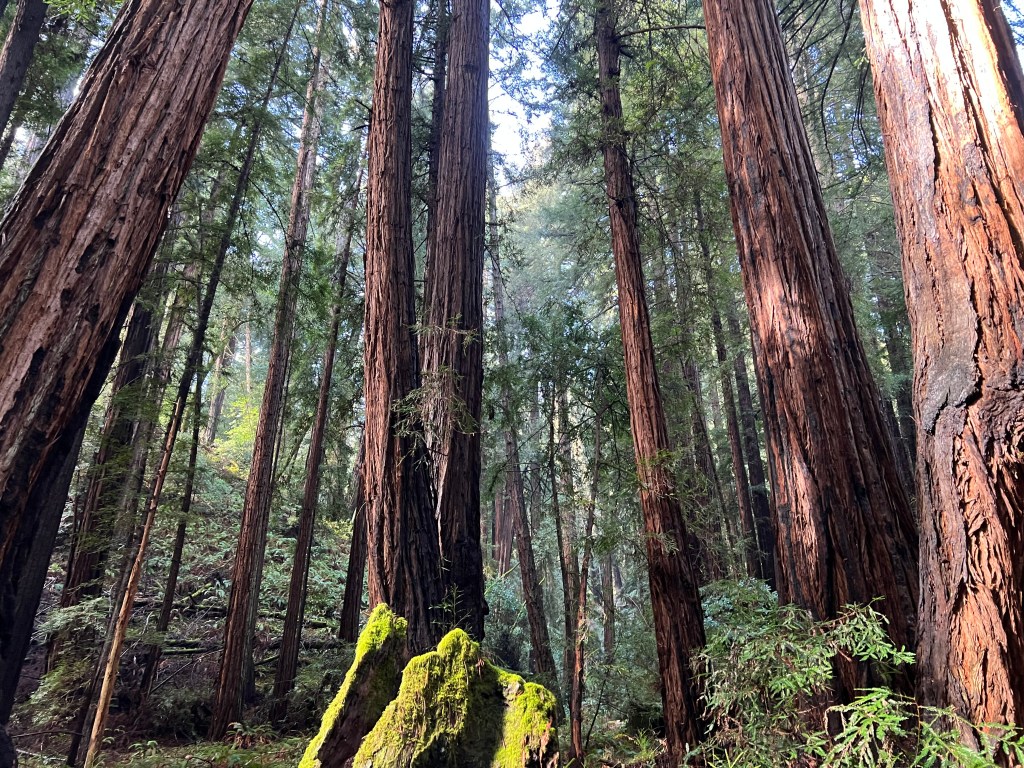
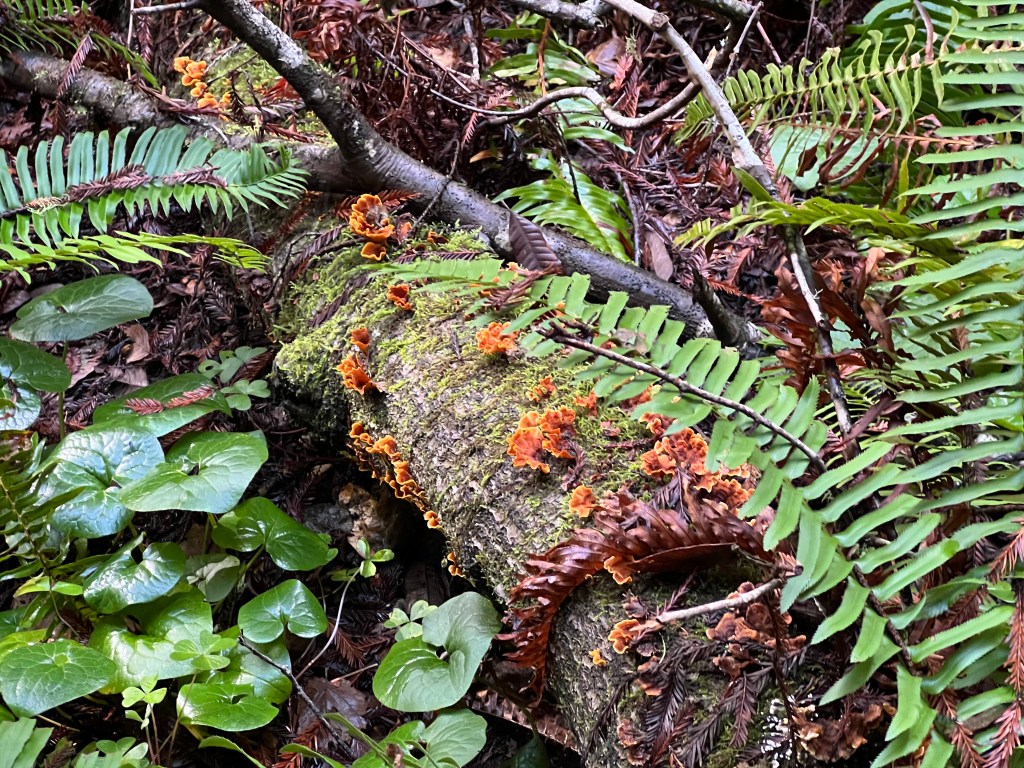
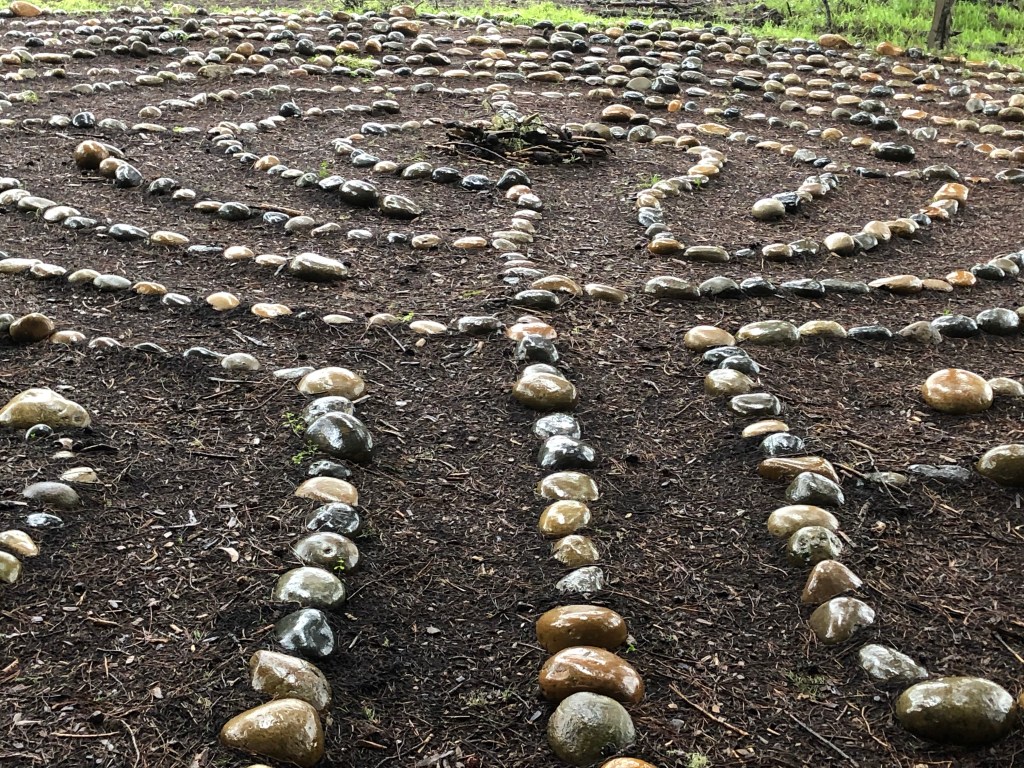
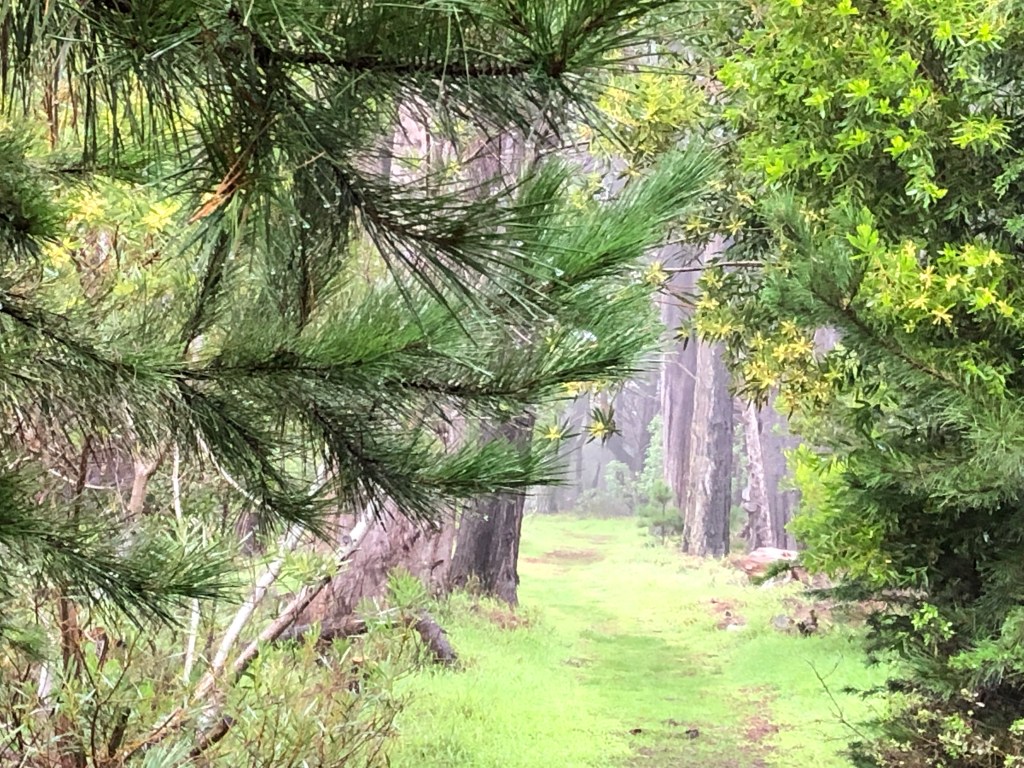
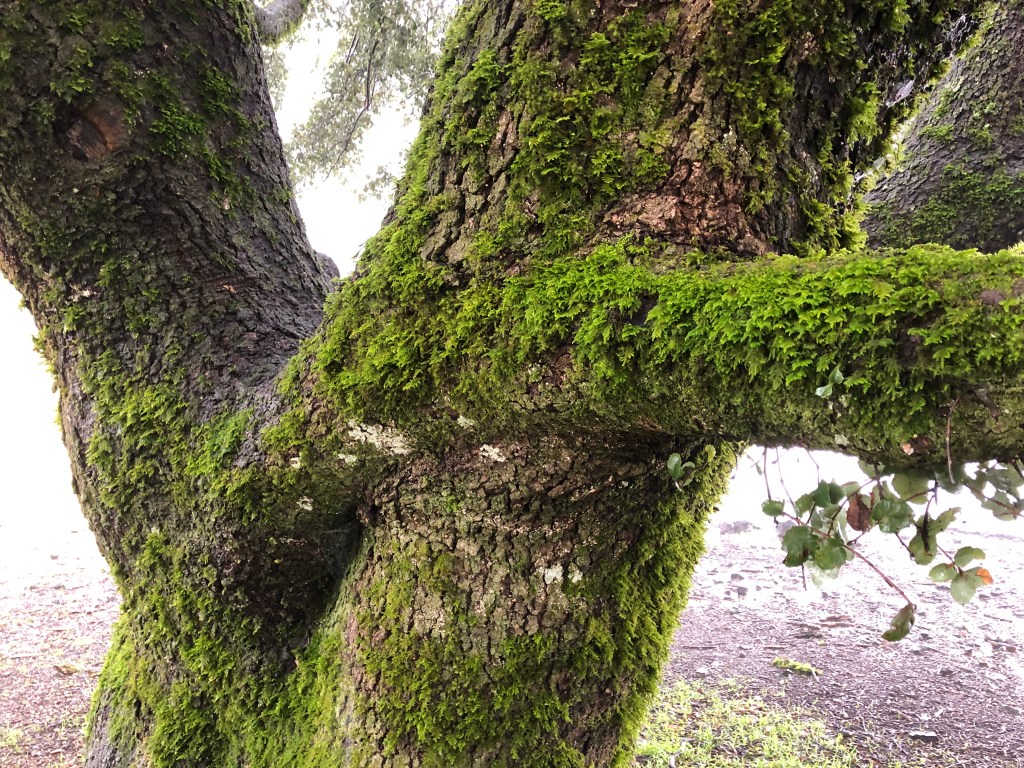
Opening the veil The labyrinth at Commonweal: January 7, 2022Above and BelowThrough the treesMagic and Healing at CommonwealBranching











 Cathy's Blog!