Resonating

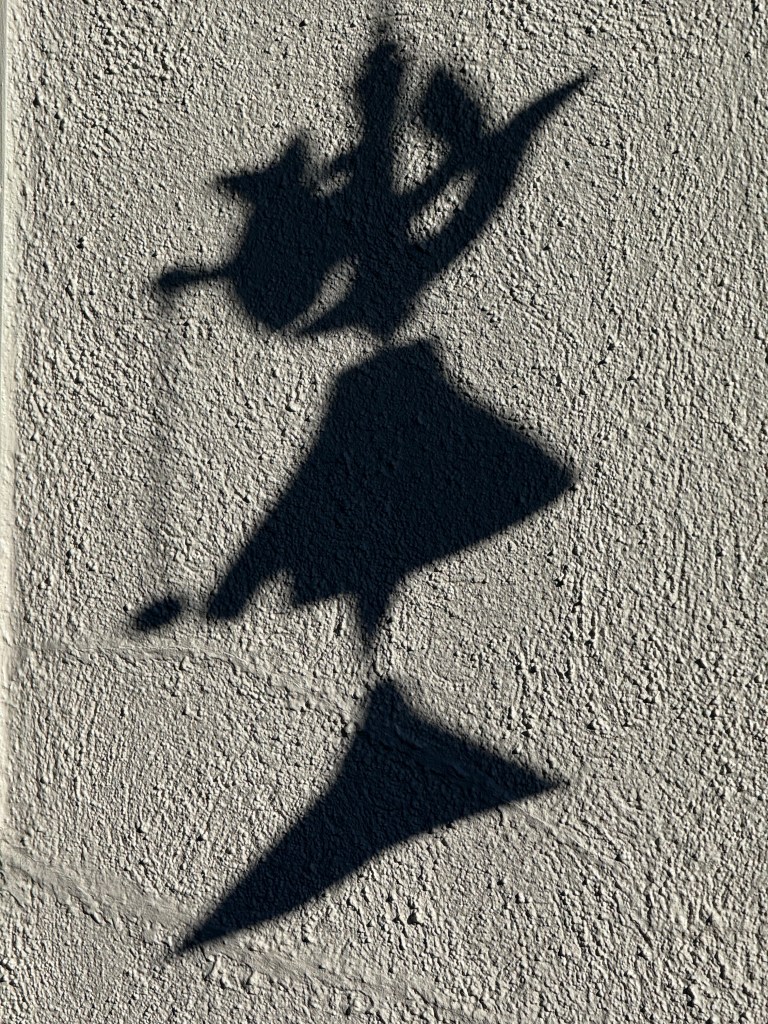
The sun was shining on Tuesday and I took a photo of the shadow of a hand-made windchime we bought at Arcosanti in Arizona.  In the photo I see a Chinese character, and though the Chinese character for poetry is often translated as “speech temple”, I find myself with these words of Carl Sandburg: Poetry is an echo asking a shadow to dance.

What do you see and feel? What chimes in you?


Blessings

This is the last stanza of William Stafford’s poem “Grace Abounding”.

I’m saved in this big world by unforeseen

friends, or times when only a glance

from a passenger beside me, or just the tired

branch of a willow inclining toward earth,

may teach me how to join earth and sky.

Bridging

The Garden Path

I rise at four, meditate and open Arthur Sze’s poetry book, The Glass Constellation, to these lines in the poem “The Flower Path”.

You must learn to see a pond in the shape of the character mind,

Walk through a garden and see it from your ankles;  

Wondering what the shape of the character mind is I ask AI who responds: 

The primary Chinese character for “mind” is 心 (xīn), which looks like a stylized, simple drawing of a physical heart, with a central vertical line, two curved strokes on the sides, and a dot at the bottom, representing the ancient belief that the heart is the seat of thought and emotion, often translated as “heart-mind”.  

And then I wonder if AI is a who, which brings me to Dr. Seuss’s book Horton Hears a Who!, and the words “a person’s a person no matter how small”, and as the mind curves in the shape of a heart, I think of how tragic it is that we have people leading our country who’ve never read Dr. Seuss.  

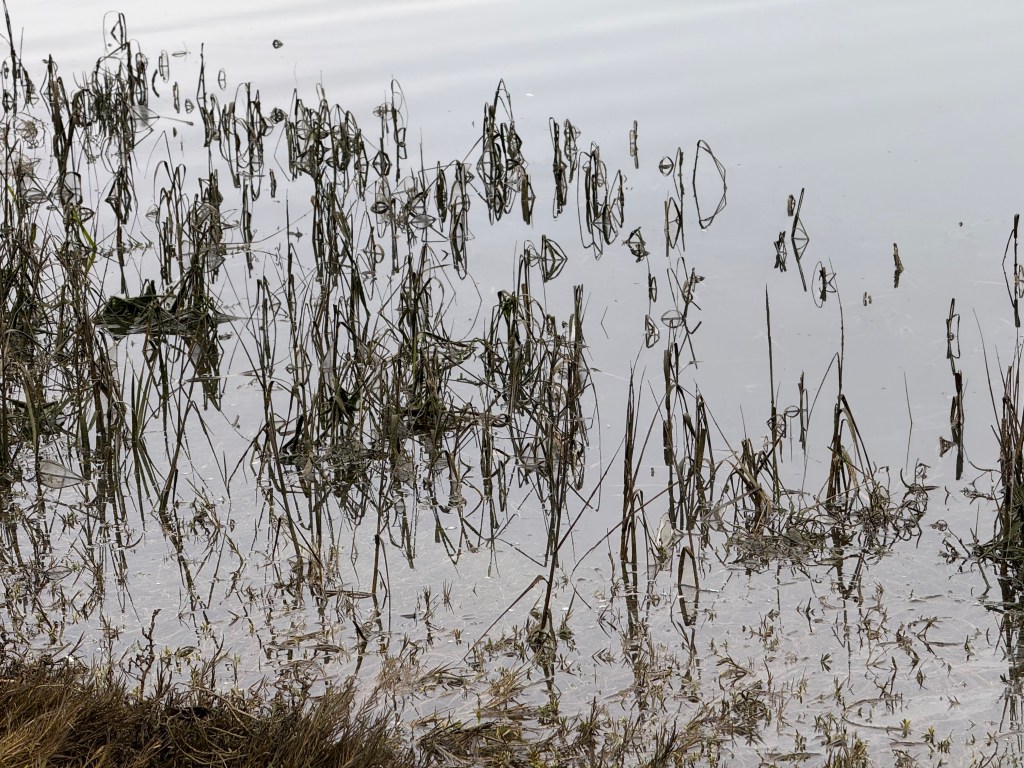
By the Marsh

A Pause

Today, I’m again overwhelmed with a president who, on an ever-changing whim, goes against the constitution to levy tariffs that affect each one of us and everyone in the world, and that is just one thing he does daily. Therefore, I opened Stay Inspired, Shelter in Place, 2020.  It’s an expensive book but 100% of the profits are donated to NO KID HUNGRY.

This book is the inspiration of Lisa Dolby Chadwick, who is the founder of the Dolby Chadwick Gallery.  You can order the book through the gallery.  It’s a collection of poetry and art.  Open to any page and find beauty and comfort, perhaps even laughter.

In Dean Young’s poem “Whale Watch”, I smile and recognize these words:

… I have seen books with pink slips

marking vital passages

but this i do not recommend

as it makes the book appear foolish 

like a dog in a sweater.

Here’s the last line of Rilke’s poem “Sunset” translated by Robert Bly.

one moment your life is a stone in you, and the next, a star.

Again, I recommend Naomi Shihab Nye’s poem, “So Much Happiness” which can be found at poets.org.

Ken Wilber:

Great art suspends the reverted eye, the lamented past, the anticipated future: we enter with it into the timeless present; we are with God today, perfect in our manner and mode, open the riches and glories of a realm that time forgot, but that great art reminds us of: not by its content, but what what it does in us: suspends the desire to be elsewhere. And thus it undoes the agitated grasping in the heart of the suffering self, and releases us – maybe for a second, maybe for a minute, maybe for all eternity – releases us from the coil of ourselves.

This book is great art and releases us from the coil of ourselves.

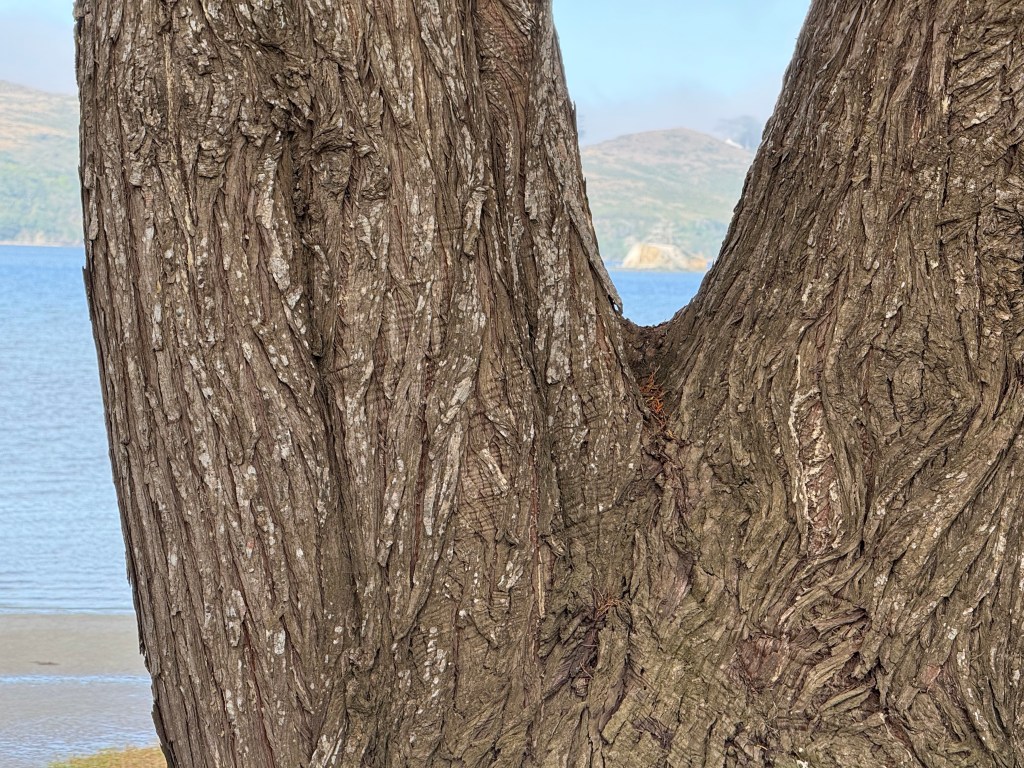
Look through the trunks of trees
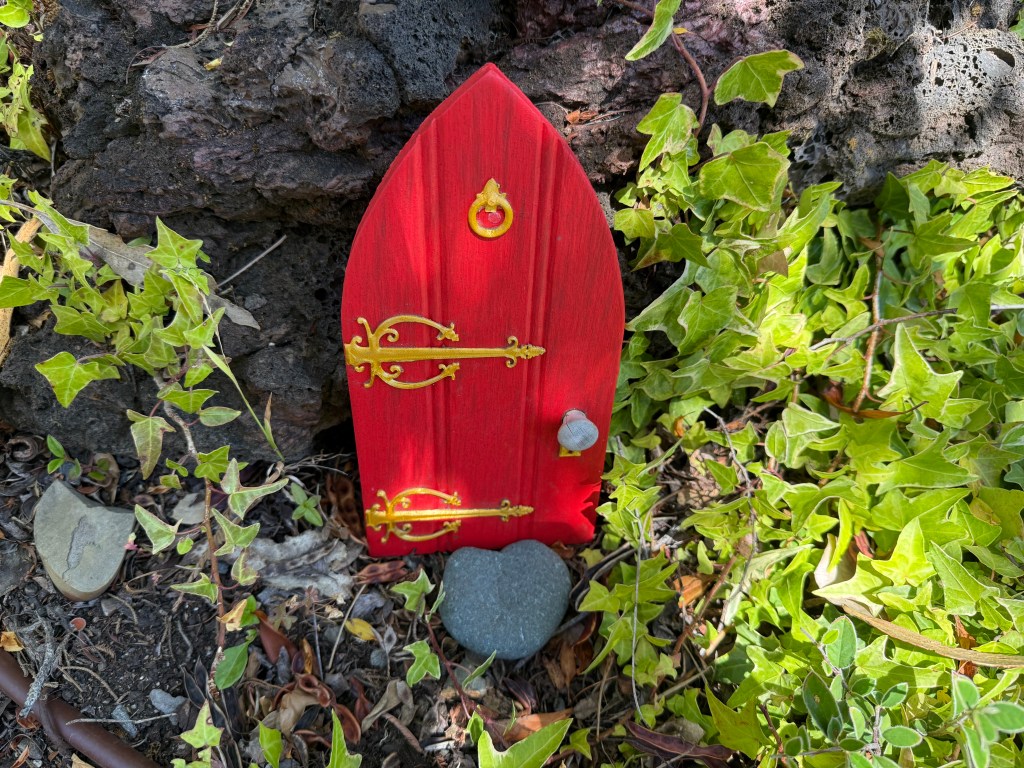
Open Fairy Doors
Greet the morning with a swim in Angel Lake

Centering

I come to these words from M.C. Richards book, Centering in Pottery, Poetry, and the Person, and center inspired.   

M.C. Richards:

Centering the clay on the potter’s wheel and then using it to make whatever shape one makes; hearing the poem in the exactitude of its words and syllables and lines and in the economy of its total fusion – these are the same story.  To bring universe into personal wholeness, to breathe in, to drink deep, to receive, to understand, to yield, to read life.  And to spend wholeness in act, to breathe out, to give, to mean, to say, to write, to create life.  It is the rhythm of our metabolism and may not easily be put into words.

TO FEEL THE BEAT OF LANGUAGE AND THOUGHT AND FEELING AND PERCEPTION WORK IN US, PULSE, PERISTALSIS, RHYTHMIC PRESSURE AND ACCUMULATION OF MUSCULAR MOTION, WAVELIKE, STEADILY WORKING IN US, LEADING FORTH OUR ENERGY AND CONVERTING IT – CONVERTING, THAT IS TO SAY, OUR WILL.  WE LIVE IN OUR BODIES. WE EMBODY SPIRIT IN ALL THE CELLS OF OUR BODIES, AWAKEN IT, LIVE IN THE FLOW OF CHANGE AND TURNING, AWAKE TO OUR ENERGY, AWAKE TO OUR MOBILITY AND EVOLVING FORMS OF SPIRIT-SUBSTANCE.

This is high-flown and idle rhetoric unless we study to experience in fact the invisibilities of substance.  We may become awakened to Word and what it is, to what the gestures of body-breath are which sound the vowels and consonants, to what we do when we speak to one another or singPerhaps Word is the magic stone.  Lapis.  The philosopher’s stone, the transforming agent in a daily alchemy.  

The sense of Word, the sense of Form, the sense of Breath, pneuma, spirit. It is like being rocked by the great sea herself, and all the waves traveling through us and making us resound, words ourselves, larynx, outcry, stillness which is itself audible to the clear-hearing ear.  Do you know about the microphone which magnifies the sound of the voice box before the vibrations reach our lips?  And the microphone that picks up the sound of wood and rock?  Music is an element of nature; do we forget in what a mighty organism we share?  Man listens to it as a voice from inner-outer worlds. When we begin to understand how we are formed by sound and how we give off messages whether we speak or not, we will live each moment with a heightened sense of poetic privilege.

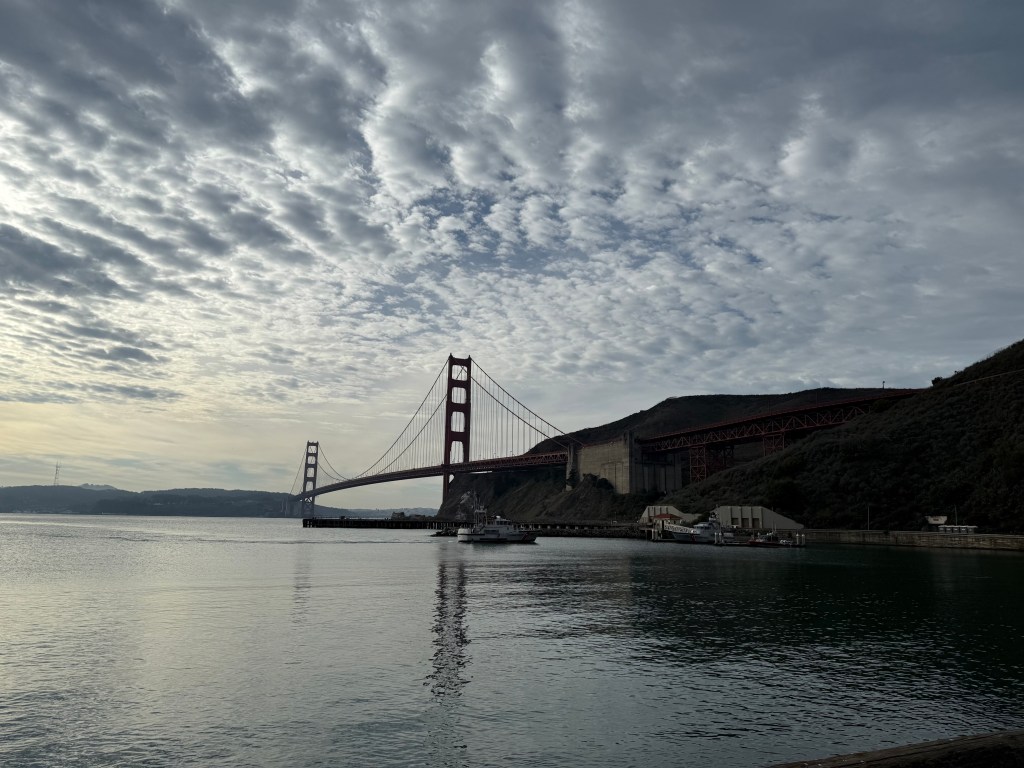
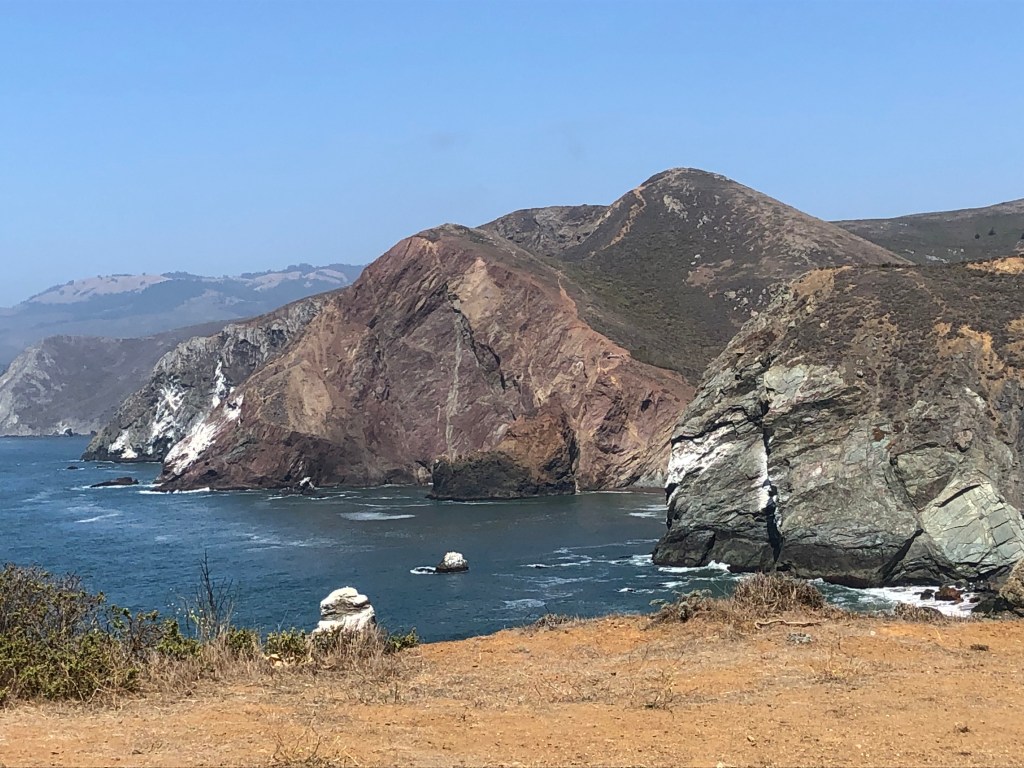
Looking north from the Marin Headlands

Language

I’ve always felt the old adage that “sticks and stones may hurt my bones but words can never hurt me” was wrong, sadly and tragically wrong and untrue.

Words can hurt, and we’ve probably all flung them one way or another, at ourselves, or at others, especially those we love.

This morning I read Sharon Olds poem, “Looking South at Lower Manhattan Where the Towers Had Been”.  It took me where I didn’t expect, and when I clicked to hear her read it, I also came across her poem “Pine Tree Ode”.  I suggest you read and listen to both as a way to sink and rise even more deeply and fully into this world we share.  

April is Poetry Month

It’s poetry month and I’m reading ways to celebrate.  One way is to choose a poem and read it outdoors.  I think of what the trees and birds might want to hear today and come to balancing on weaving waves of silence.  I listen to the leaves unfold as the birds draw them outwards with their notes.  

The notes I handle no better than many pianists.  But the pauses between the notes — ah, that is where the art resides.

 – Artur Schnabel 

The only thing we have to bring to community is ourselves, so the contemplative process of recovering our true selves in solitude is never selfish. It is ultimately the best gift we can give to others.

– Parker Palmer 

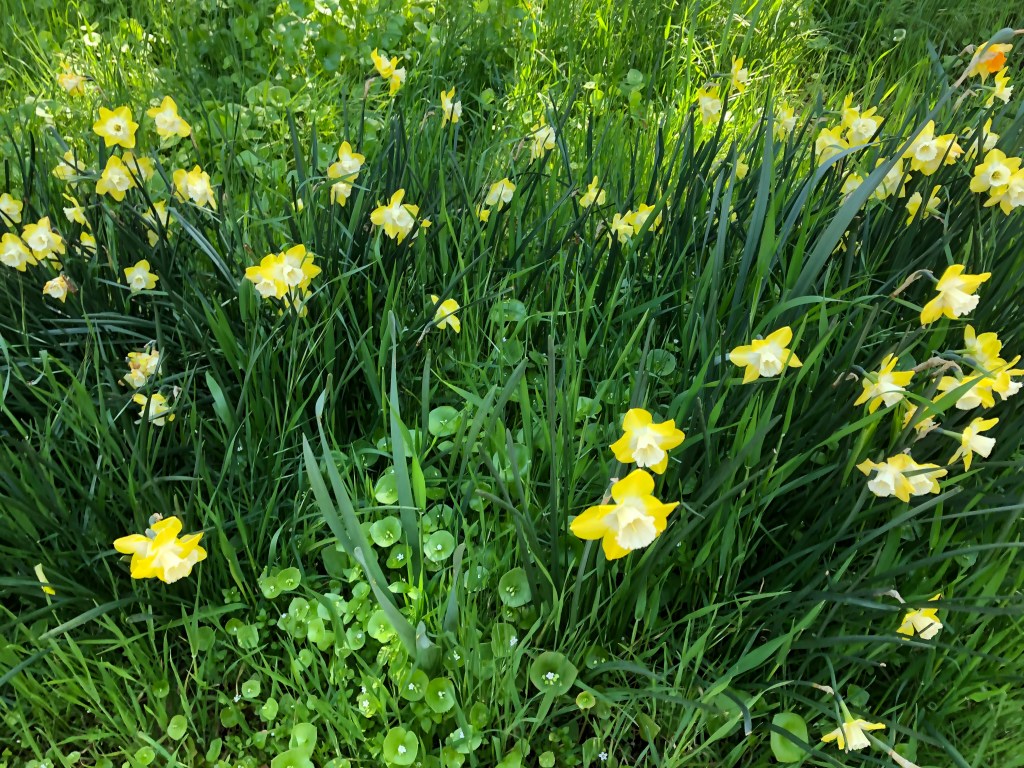
It’s spring and flowers sing!!