Journeying

I’m going through bins of notes and writing.  I’m back in 1990.  

I come across this from the book Arctic Dreams by Barry Lopez and think of the fires in my area right now, the smell, fear, and destruction in ash and smoke.  Can I see it like this?

Barry Lopez: “To the explorer, the land becomes large, alive like an animal; it humbles him in a way he cannot pronounce. It is not that the land is simply beautiful but that it is powerful. Its power derives from the tension between its obvious beauty and its capacity to take life. Its power flows into the mind from a realization of how darkness and light are bound together within it, and the feeling that this is the floor of creation.”

A Moment


Full Moon Eve

Yesterday I journeyed to Muir Beach, only ten minutes away by car, and an hour or so walking, and yet another world I haven’t visited in over five months.  I walked to the sand and sat leaning against a log, soothed by soft waves and a few others there in the fog.  

I released on the political news which is sobering.  

Steve and I met a few days over fifty years ago and woke early to discuss how we might celebrate.  So much is closed.  Again, we’re asked to go within even as we connect as we can.  

May change come as fog and smoke move in and out, and nature heals all wounds.

Looking up from the path to and from Muir Beach

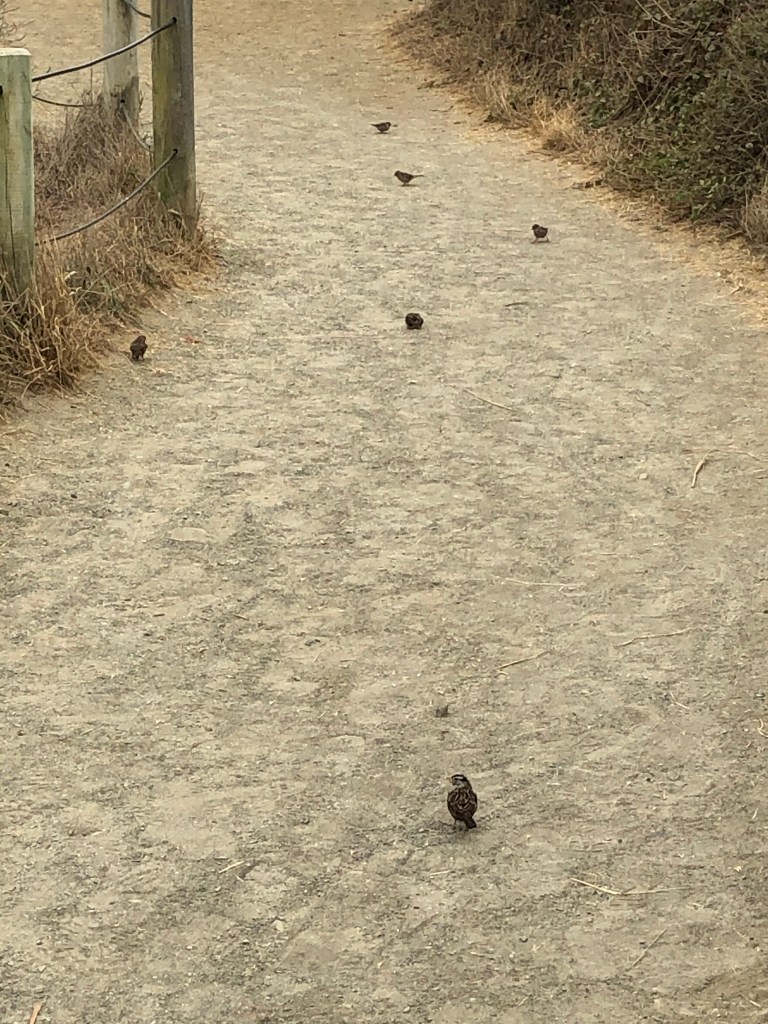
Birds on the path

From Above

Guidance

These words of John Lewis are my guidance for this day, the last day of August, a dip into the last third of the year.

You are a light. You are the light. Never let anyone—any person or any force—dampen, dim or diminish your light. Study the path of others to make your way easier and more abundant. Lean toward the whispers of your own heart, discover the universal truth, and follow its dictates. […] Release the need to hate, to harbor division, and the enticement of revenge. Release all bitterness. Hold only love, only peace in your heart, knowing that the battle of good to overcome evil is already won. Choose confrontation wisely, but when it is your time don’t be afraid to stand up, speak up, and speak out against injustice. And if you follow your truth down the road to peace and the affirmation of love, if you shine like a beacon for all to see, then the poetry of all the great dreamers and philosophers is yours to manifest in a nation, a world community, and a Beloved Community that is finally at peace with itself.

― John Lewis

Peace!

Reflecting

I read the news, the dangers of Trump suppressing Russia’s interference in the election, and try to stay calm.

I find comfort in this poem by Denise Levertov.

WITNESS

Sometimes the mountain

is hidden from me in veils

of cloud, sometimes

I am hidden from the mountain

in veils of inattention, apathy, fatigue,

when I forget or refuse to go

down to the shore or a few yards

up the road, on a clear day,

to reconfirm

that witnessing presence.

~ Denise Levertov ~

I continue to read Hisham Matar’s amazing book The Return.

I’ve always been entranced by a Tibetan who was imprisoned and tortured, and yet, upon release was grateful he never judged or lost compassion for his captors.

Now I read of Matar’s Uncle Mahmoud who was imprisoned for years in Abu Salim prison in Tripoli, Libya along with many others including the author’s father, for opposing Qaddafi.  

Mahmoud says: “They beat me, deprived me of food and sleep, tied me down, spilled a bucketful of cockroaches on my chest. There is nothing they didn’t do.  Nothing can happen to me now that can be worse than that time. And always, I managed it. I kept a place in my mind, where I was still able to love and forgive everyone. They never succeeded to take that from me.”

I marvel at that.

Then Hmad speaks of that time in the prison.

There was a standoff between prisoners and guards. 

“Something strange happened. You are not going to believe it, but I swear to you on my children’s life. One of the prisoners killed, his body remained exactly the same, only a little paler in the cheeks, but otherwise unchanged. It smelt of musk. We didn’t have musk or such things in the prison. And the face of the prison guard who had been dead the same number of hours was now black and his body bloated like a balloon and stinking horribly.  We all marveled at this.”

I marvel too.
Art for Change

I’ve been posting about the essential nature of art in our lives, as sculpture, painting, music, gardening, writing, sensing, being.

Today I share a poem written by Robert Bly. 

In 1970, Robert Bly told Gregory Fitz Gerald and William Heyen that this poem “was written after hearing, on radio and television, Pentagon ‘counts’ of North Vietnamese bodies found”.  The poem is Bly’s response to such news accounts: “One repulsive novelty of this war is the daily body count. We count up the small-boned bodies like quails on a gun-shoot. The military people would feel better if the bodies were smaller, maybe we could get a whole year’s kill in front of us on a desk.”

Change is not immediate but poems like this contribute. The Vietnam War, known as the American War in Vietnam, Laos, and Cambodia, began on November 1, 1955 and ended on April 30, 1975.

Counting Small-Boned Bodies

Let’s count the bodies over again.

If we could only make the bodies smaller,

The size of skulls,

We could make a whole plain white with skulls in the moonlight!

If we could only make the bodies smaller,

Maybe we could get

A whole year’s kill in front of us on a desk!

If we could only make the bodies smaller,

We could fit

A body into a finger-ring, for a keepsake forever.

Counteracting the News of the Day

I’m going through a box of clippings I’ve saved over the years.  I come to writings on why we need to teach art and music to our children, to ourselves, and how to do it. 

Yo-Yo Ma is now 64 so perhaps these words are 30 years old.  

When he was 34, the great cellist Yo-Yo Ma, wrote:

I’d like to see a program where music is not separated from history, from literature, from what generally went on in society. Let’s look at Stalin and Shostakovich.  What did freedom mean to a composer then?  One day, Shostakovich’s neighbor disappeared. His music is full of descriptions of life around him: the pieces have specific meaning. Music is a form of storytelling, and I don’t know anyone who doesn’t like stories.  We should be making those connections. Music can help in linguistics and math. If you’re a composer, you’re always thinking numbers, making up patterns. There’s a linkage there. Kids talk about God, about what happens when you die. A piece of music may be a perfect way to deal with death.  There are so many ways of interweaving things. Music is a part of our lives – of our movies, television, supermarkets.  What I’m advocating is to become more imaginative and sensitive to the world around us.

The great violinist Itzhak Perlman wrote when he was 45:

I would use as many video examples as possible, to bring music to a realistic level. If you teach the music of Bach, Beethoven, Mozart, you say, “Let me tell you about this guy Mozart. He had no money to pay rent.” Make them human, not idols; not objects but people with feelings and problems. Most of them weren’t appreciated.  Read letters of these guys and their music takes on a whole new meaning. “When Mozart was 12 he wrote this piece. And let me read you this letter he wrote to his sister, what was going on at that time.” There’s an enormous number of anecdotes – use them. The younger the child, the more impression it makes. And you need some sort of support at home. You listen to music, you talk about it at home.  It’s contagious.

Artist Jenny Holzer at 40 writes:

It’s clear that children are already thinking about big topics.  It’s not appropriate for them only to draw suns with lines radiating from them and flowers as big as houses. They’re thinking about the bomb, the homeless people with AIDS, and it’s right to deal with these issues through making art.  The problems are new to children, the experience is especially raw. One thing that art-making can do is to prepare children for living. They can look at what’s around them and see what scares them the most and what’s most wonderful. After portraying the worst, maybe they can cure it, make their own utopias. Art gives you absolute freedom to tell the truth and to improve your reality. When you make art and get it right – and this may happen only 2 percent of the time – you are in a joyous, altered state. It’s worth it for those milliseconds. Being critical, analytic, alert and rapturous should be taught at a very early age.  Look hard at what’s there. Expose it and change it.

Feeling Slow

I slept late for me: 6:45 and I’m moving slowly and carefully this morning as though I’m ill but I’m not.    I wondered why and then I looked at the date.  It’s my father’s birthday.  He was born in 1921, would have been 99.

How odd to realize he only lived to 47 and yet his life was full. He’d lived and given all that was needed to move on, and yet, such a loss for my family, and I understand loss is how we grow. 

The chick breaks open the egg. The sprout pushes open the earth. The butterfly emerges from a chrysalis which is quite a process when one thinks about it. Caterpillar – dissolution – butterfly.

We change with loss. In The Return, Hisham Matar writes of his father coming to him after his death. I’ve felt that too with both of my parents, and grandparents too.

We know we’re twined in ways we may not understand, and today is gray and a perfect day to dwell within and honor my own chrysalis to see what may emerge. Nothing to do today and nowhere to go. I’m in the honoring of that.

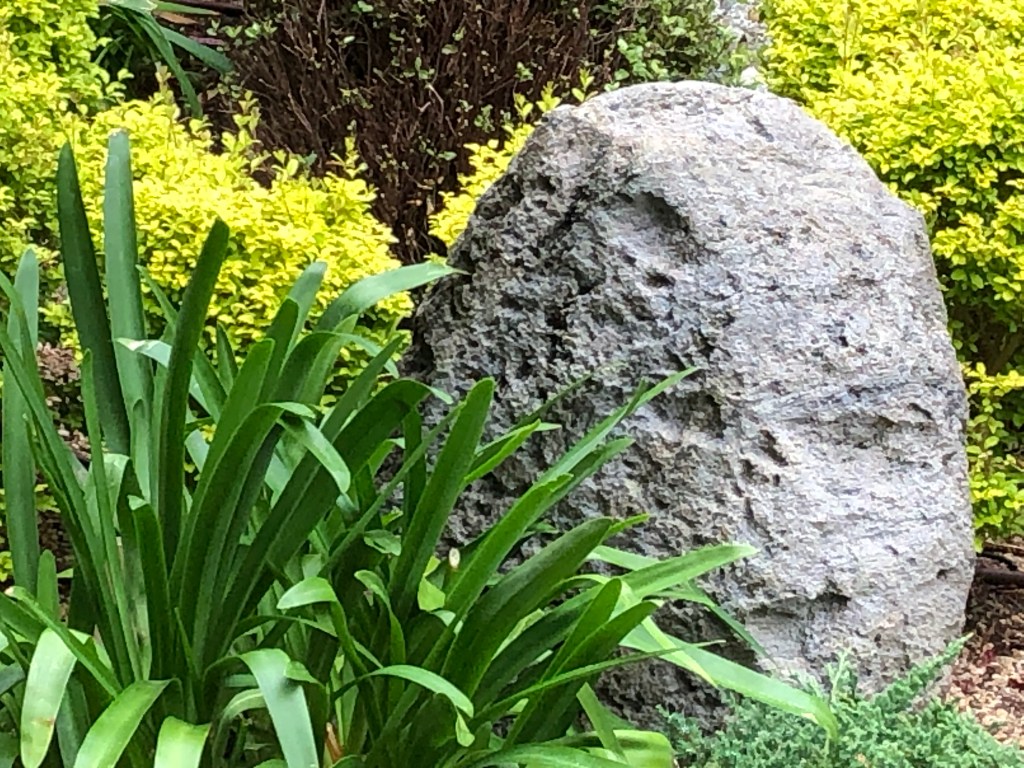
A piece of my yard in morning fog

Journeying through the Past

One box I go through today contains poems and articles I pulled out of magazines years ago.

I come to this poem by Cathleen Calbert from “The Woman Who Loved Things”.

“A woman finally learned how to love things, so things learned how to love her too as she pressed herself to their shining sides, their porous surfaces.  She smoothed along walls until walls smoothed along her too, a joy, a climax, this flesh against plaster, the sweet suck of consenting molecules.”

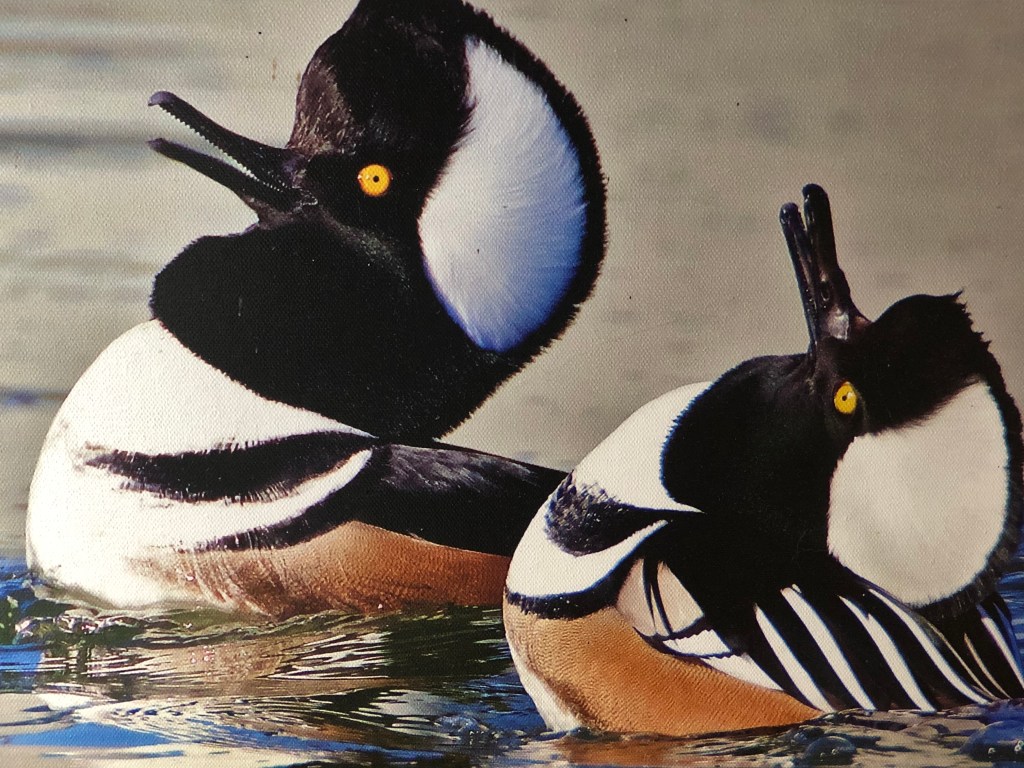
Photo of a photo taken by Bob Dresser of Hooded Mergansers

The Birds Are Back!

This morning I heard tweeting.  Perhaps the smoke dampened their calls, or they flew to a safer spot but it seems they’re back with the fog.

Last night I started reading The Return by Hisham Matar.  Matar returns to Libya after twenty-two years to discover what happened when his father disappeared when Matar was nineteen and studying in England.  His father’s political imprisonment probably ended with death, but we are with Matar in his exploration.

Perhaps that’s why today I open a box that I brought up from downstairs a few months ago.

I re-discover the autobiography I wrote when I was 9 and the wallet given back when my father crashed on his motorcycle in 1969.  He was 47 and I was 19.

Now, opening the scuffed wallet, scuffed when he was thrown and landed on his head  – no helmets in those days, I see a photo of myself, my high school graduation picture.  I was 17.  

My lungs fog up to match the view outside the window.  Grief.  

And then my grandson calls and I see him as he frolics about and lights up the screen and my heart.

Oh, my!   

What is release?  What is the clasp that connects us all?   I look at my grandson and see the past and future combined. In this moment, all is as precious as can be.

I put my father’s wallet back in the box.  I’m not ready to let it go, and my blood spins round and round twining ribbons to stars.   

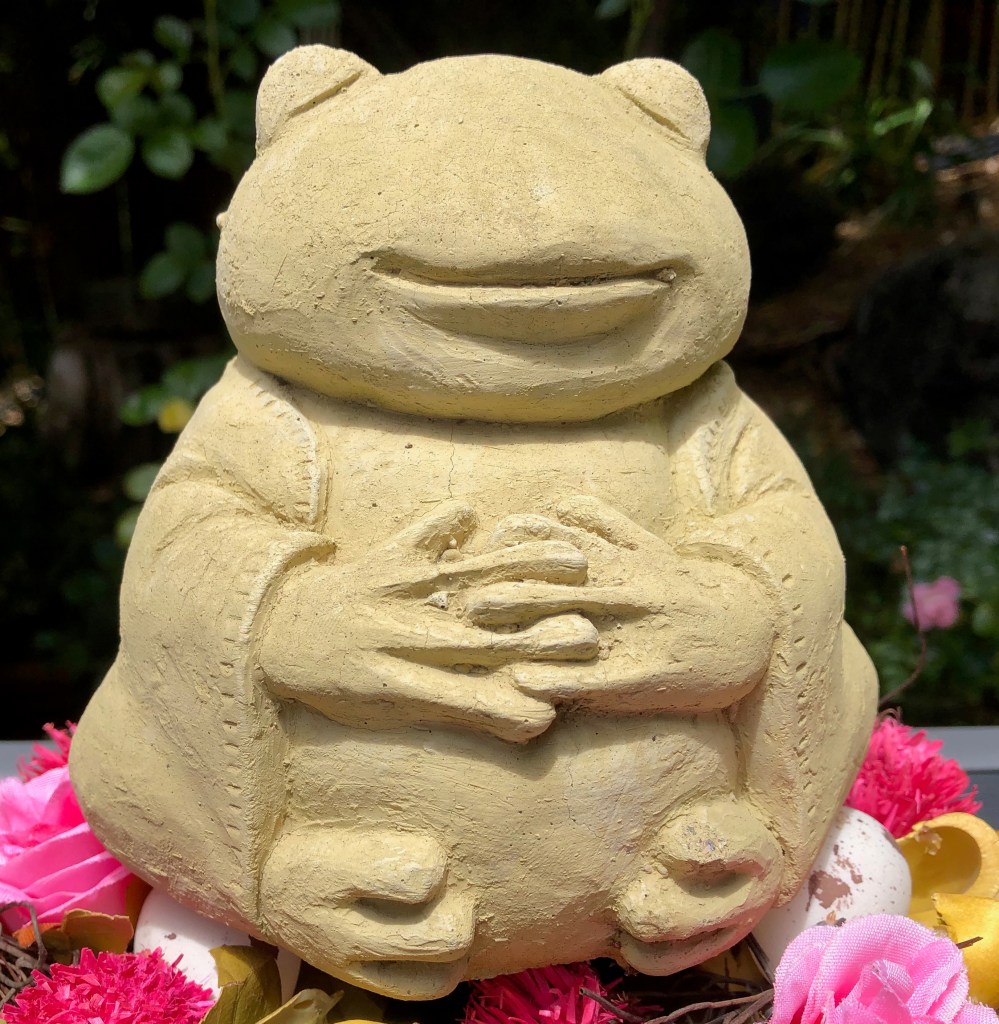
My Zen cat except when I want to sleep and he wants to play –