Benedictine monk David Steindl-Rast calls haiku “sacred sensuousness”. He says “The haiku is a scaffold of words; which is being constructed is a poem of silence; and when it is ready, the poet gives a little kick, as it were, to the scaffold. It tumbles and silence alone stands.”
I enjoy reading different translations of well-traveled poems. Basho’s haiku on the frog jumping into the pond plays with sound and silence. It leaves us panting, then resting in the pause of meaning.
Eliot Weinberger’s book 19 Ways of Looking at Wang Wei gives 19 ways of translating a four-line 1200 year old poem. Some I resonate to, and others not so much.
If, like me, you continue to look for ways to counteract the news of Trump’s daily corruption, I suggest reading, and even writing haiku and poetry as a spiritual practice, as a way to plop like a frog into a pond and ripple in what comes.
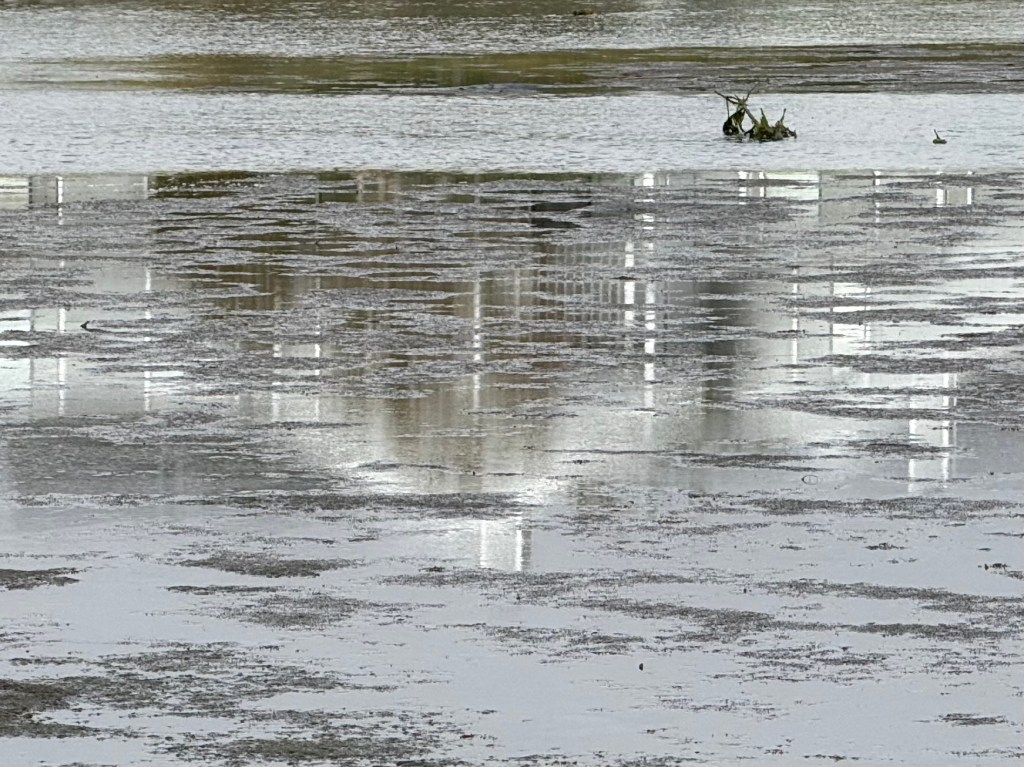
Yesterday I was by the bay at low tide, awaiting a medical appointment. I looked out and thought I saw a mother swan carrying babies on her back, but when I took the photo and magnified it, I saw it was sticks popping out of the mud. A visual haiku! Plop. I’m new!