This exquisite duck couple kept swimming, then, walking toward me as though to say protect this precious environment, this buffer zone, these oxygen producers that nourish your lungs.
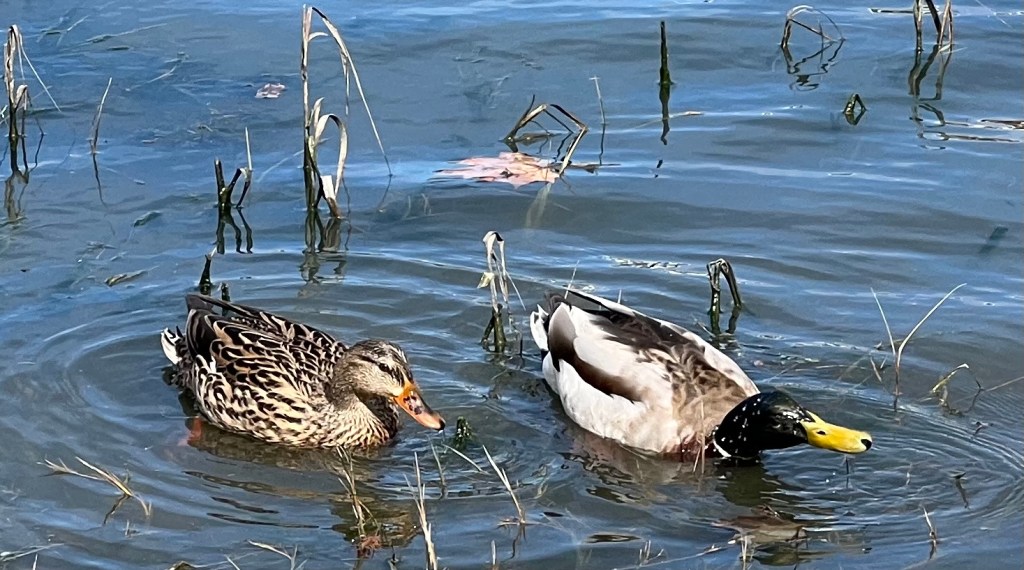
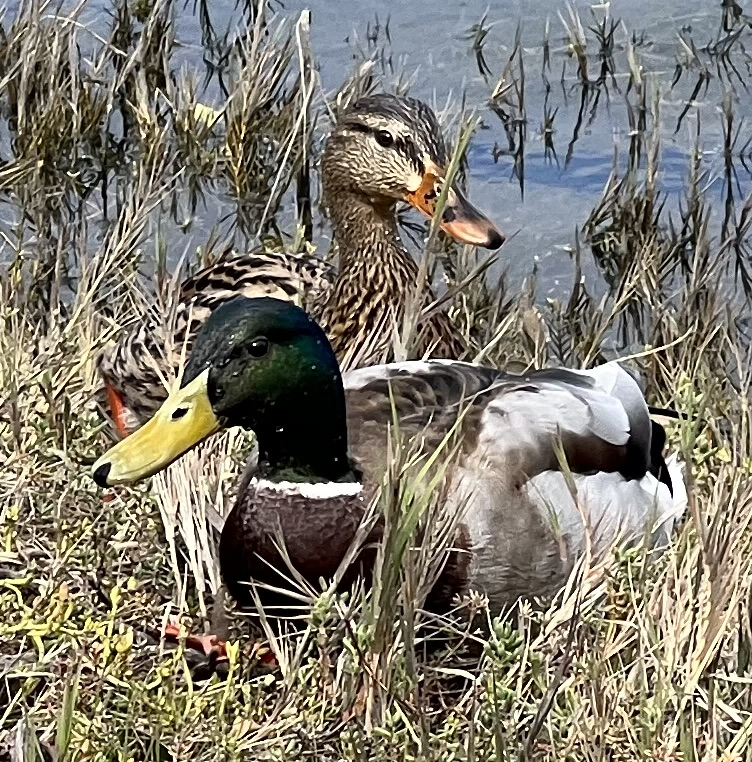
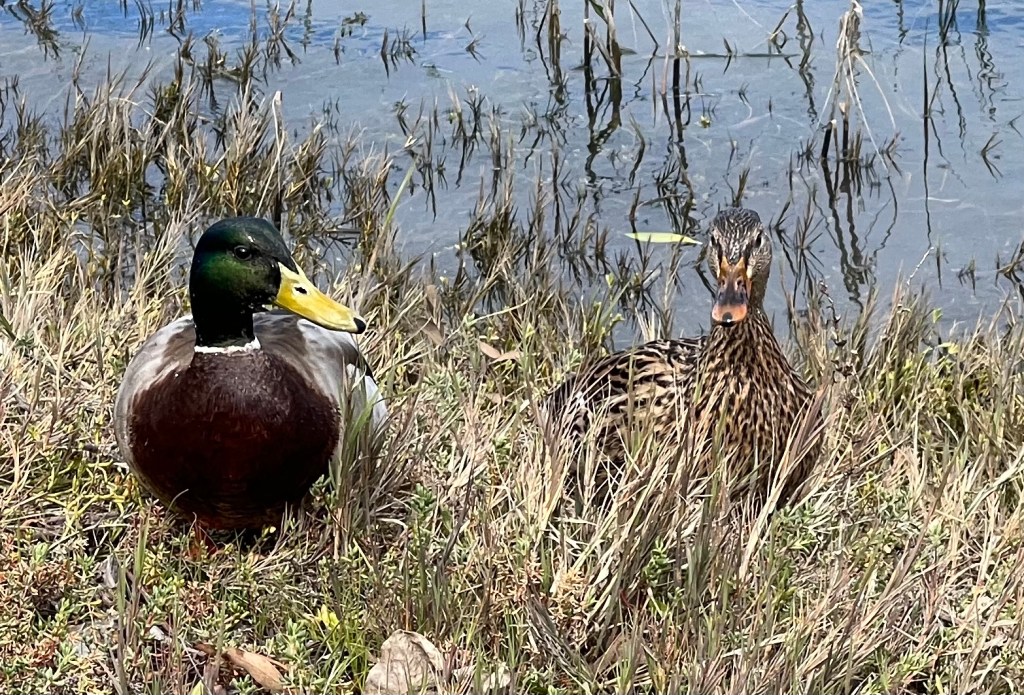

This exquisite duck couple kept swimming, then, walking toward me as though to say protect this precious environment, this buffer zone, these oxygen producers that nourish your lungs.
Today I’m reflecting on the birds I’ve met this last month and a half. Going through photos, I’m honoring the words of Martin Aylward:
If we can rest into being here and do nothing, then plenty can happen.
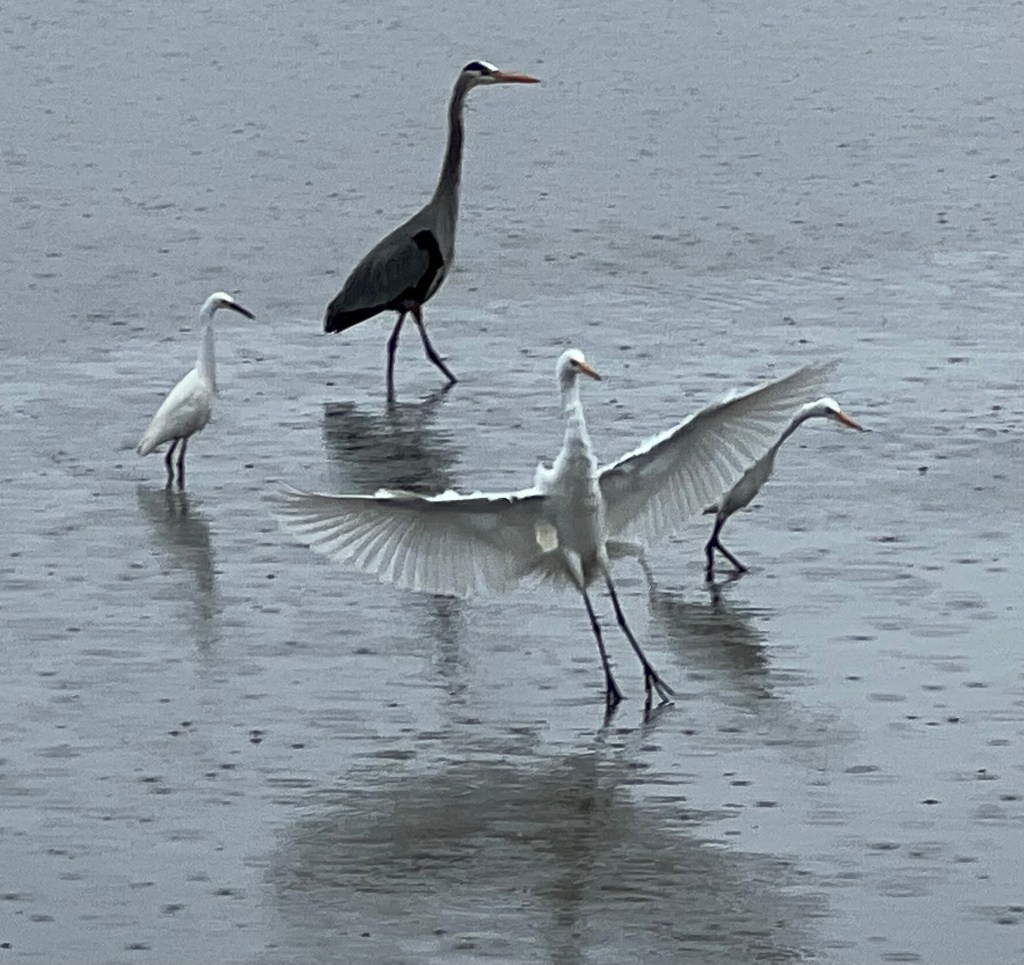
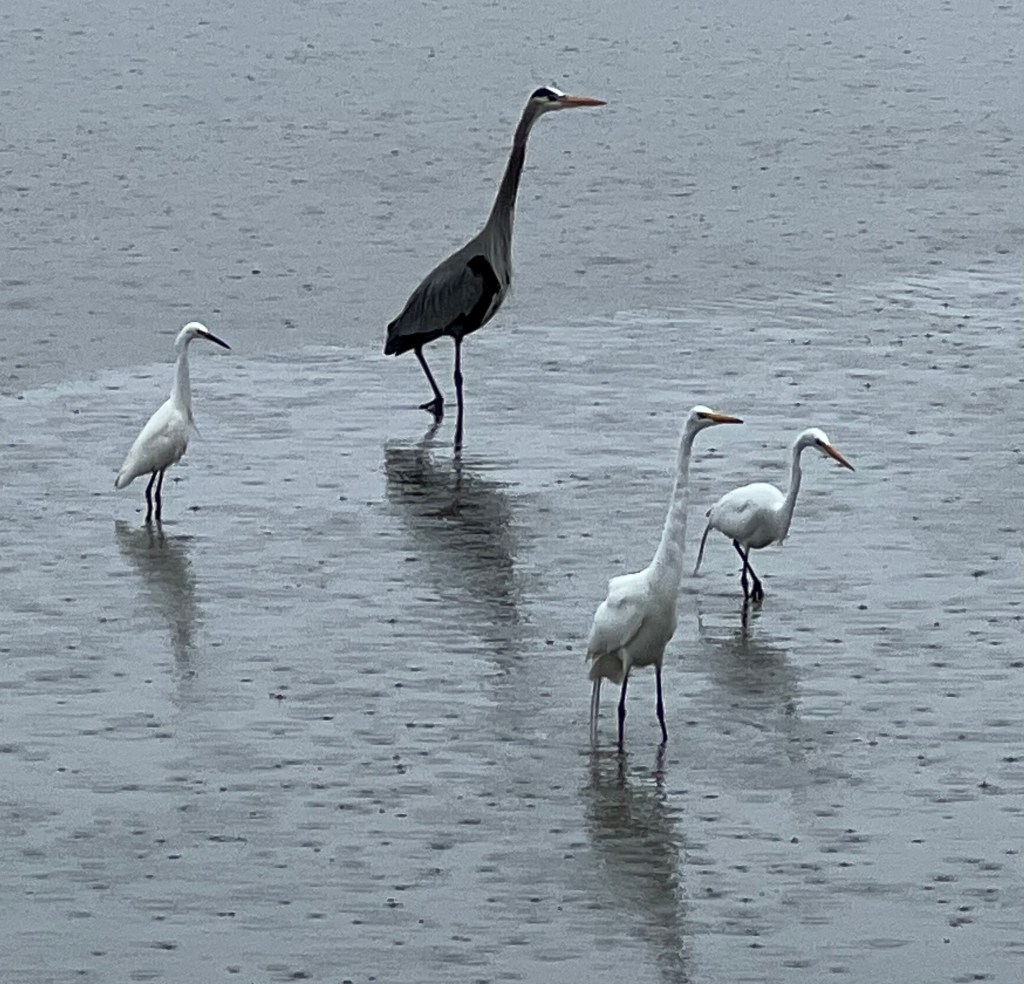
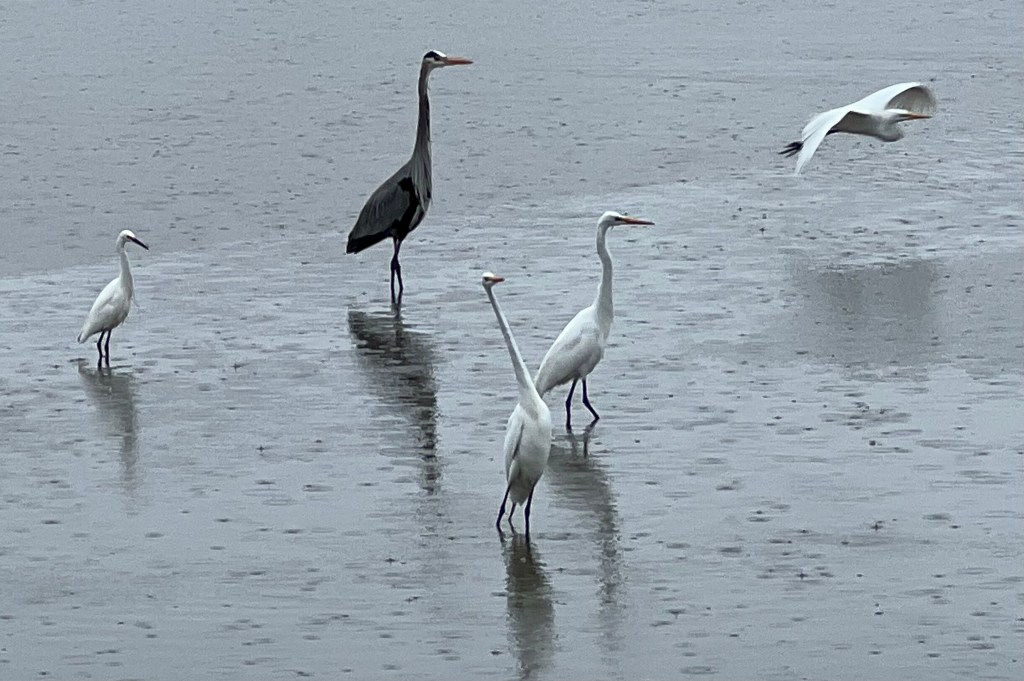
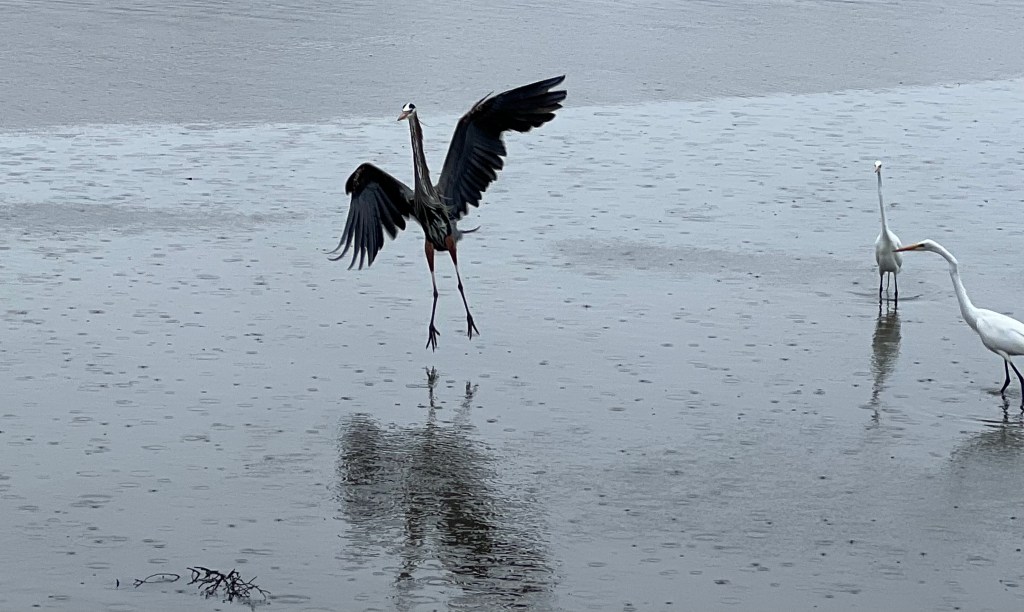
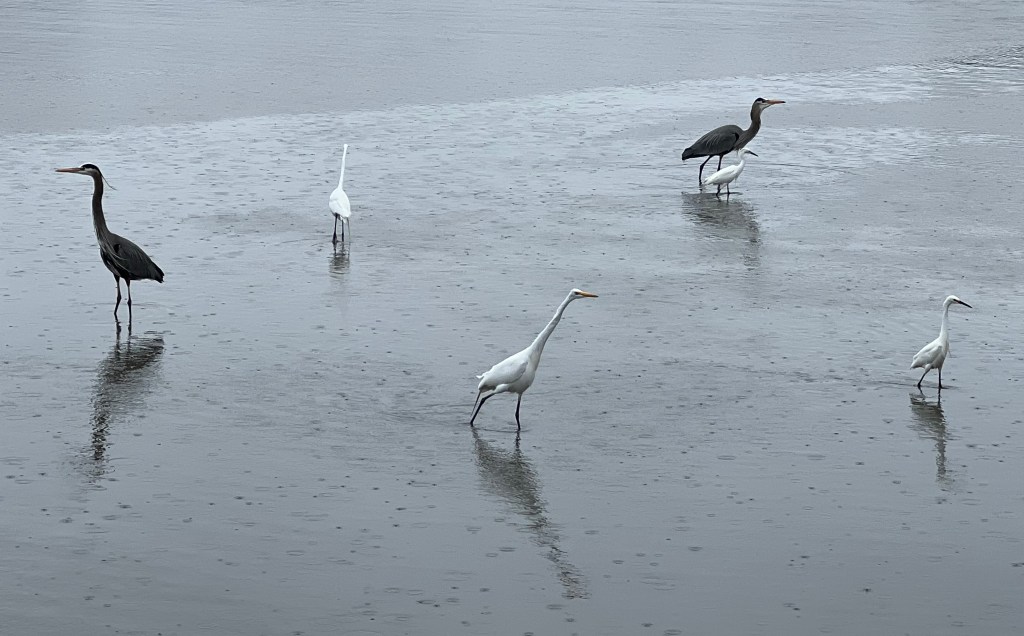
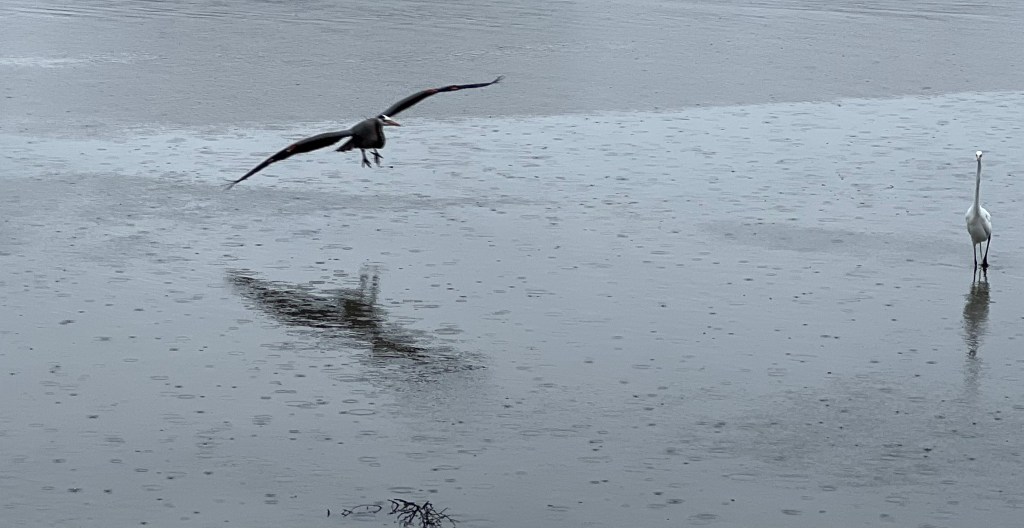
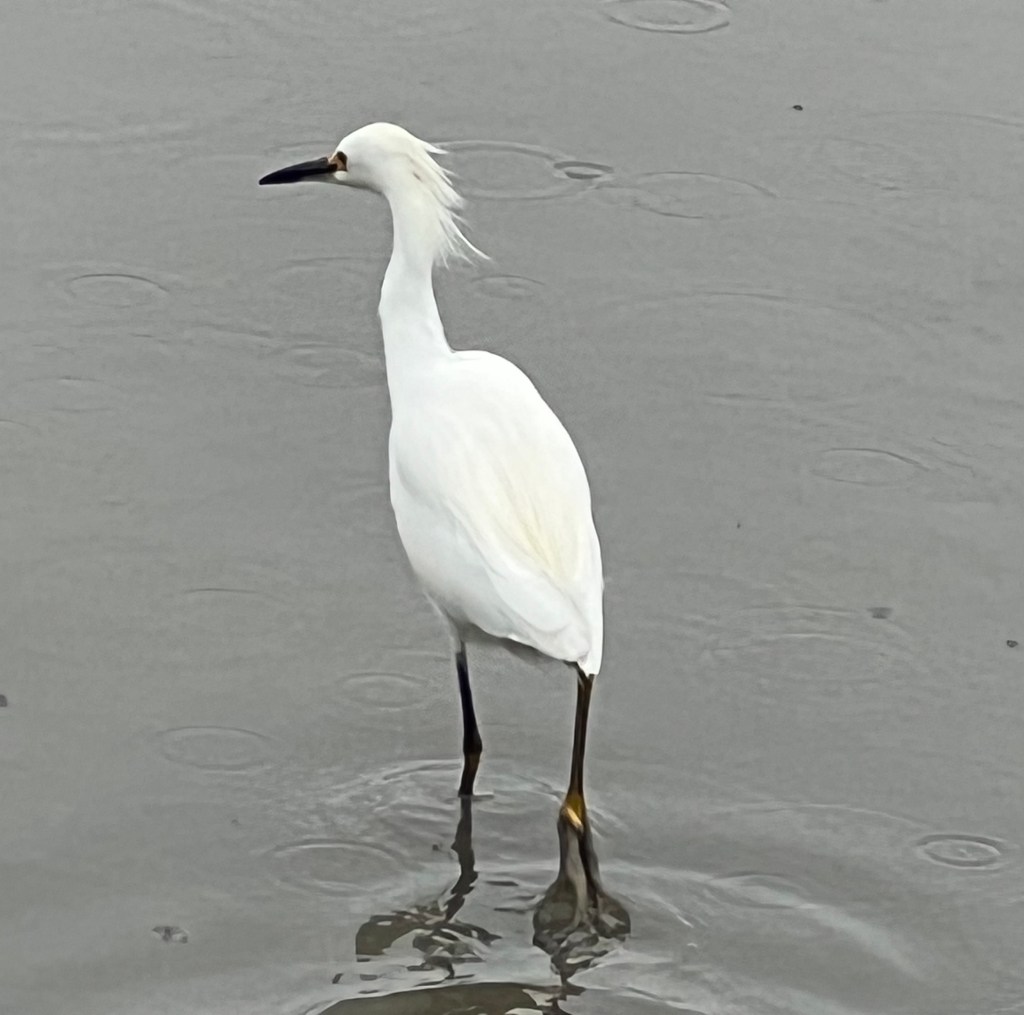
It’s raining. As I wait for an appointment, I’m intrigued with the drops as they slide down the windshield of the car. I’m not only seeing better but I’m hearing better too. It’s about awareness and sensitivity, about connecting.
I’m now approved for surgery on my left eye. Each eye has been a sturdy soldier in this process, and I’m excited as my vision continues to open, expand, and define.
I’m also seeing and appreciating how our inner vision is connected to how we bring the world in, relates to what we may have been taught about how to influence, and receive.
I continue to read Doris Kearns Goodwin’s book Lyndon Johnson and The American Dream.
It’s shocking to realize how Johnson’s perception and how he’d been raised led to an inability to see that the Vietnamese people had their own culture and viewpoint. His plan was to impose our views on them, to make them in “our image”, as we attempted to do with the Native people of this country.
“Americans didn’t realize that the war in Vietnam was an ideological struggle, a social revolution – the Vietnamese were interested in unanimity, not plurality – their culture embodied the moral principles of Confucius – they believed in finding the one true way of life – in Vietnam, morality, politics, and society were inextricably joined.“
For Johnson and his top advisors the “war was a revolutionary war, which promised to affect not only the political system but the entire structure of Vietnamese society – its ethos, its customs, its religious expression.”
Johnson looked upon the “Vietnamese wish to remain in the village of their birth as a confinement of the spirit; he saw their traditional customs as impositions; he viewed their sacralization of the past as an obstacle to the secular pragmatism needed for progress. Looking upon a system of individual competition as if it were a beneficent aspect of natural order, atomistic in his view of social relations, Johnson could not envisage a society in which the individual was an aspect of a more comprehensive organism. No word in the Vietnamese language corresponded exactly to the personal pronoun “I”. Individualism was seen as selfish and immoral. The traditional Vietnamese has no existence outside his community.”
I’m reminded of when I went to Nepal in 1993. At the time, there was no word in their language for thank you. It took me awhile to understand the beauty in that, the ease in offering and reception without competition, judgement, or division.
One didn’t clap at a performance because there was no separation between the performer and the audience. Art was sacred, religion, as was all life.
“Although Vietnam was ten thousand miles away, the psychic distance was far greater. So powerful was the American conception of individualism that it resisted even the barest consciousness that another society might conceive of freedom in precisely the opposite terms, viewing exaltation of the independent person as the denial of freedom, not its fulfillment. Endowed with the assumption that the desire for private property was a universal impulse, Johnson found it difficult to believe that in Vietnam private property did not really exist: the father was less an owner than a trustee of the land to be passed on to his children; to the Vietnamese, the land itself, not the individual ownership of it, was the indispensable element.”
These last few weeks I’ve been immersed in the lives of birds and tides. Now my vision is changed by surgery. How do I, and we as individuals and nations honor our own gifts within this world of Interdependence we share?
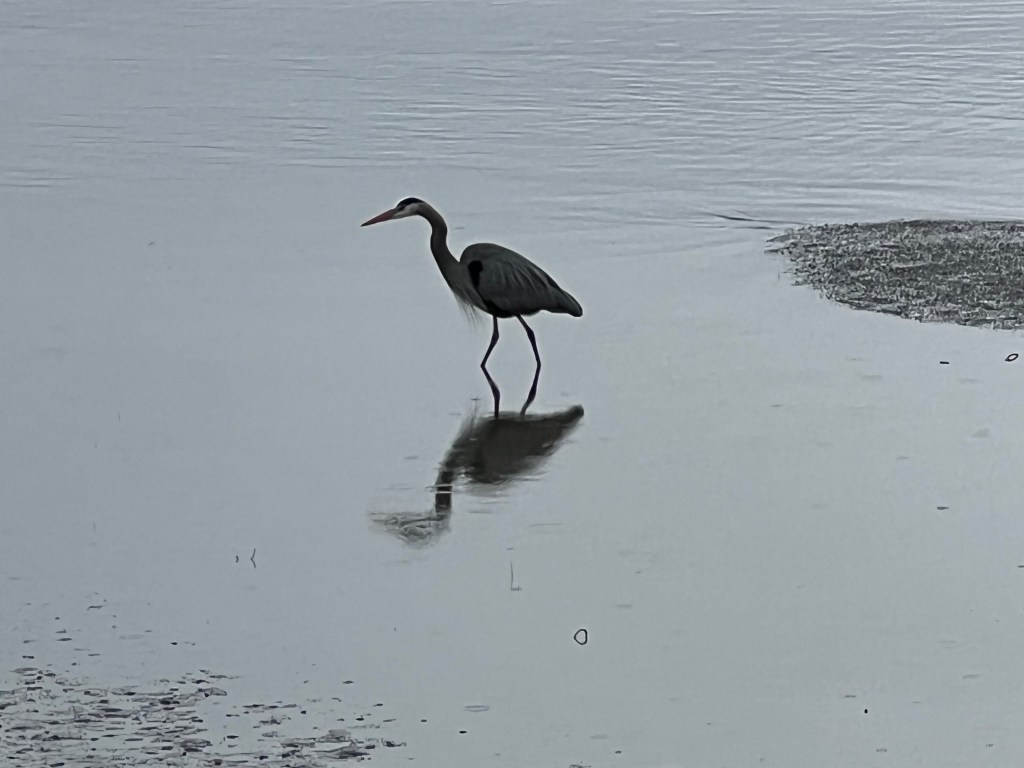
I continue to read Lyndon Johnson and the American Dream by Doris Kearns Goodwin.
Lyndon Johnson wanted to provide education and medical care to all, but he also knew if he let the Communists take over South Vietnam, he would be seen as a coward and the nation as an appeaser and then we couldn’t accomplish anything for anyone around the globe. He believed, as did my father at the time, in the Domino Theory, that if we’d stepped in sooner, we might not have had to fight World War II.
My father died before he might have changed his mind on that, but being a pilot of a B-17, he certainly knew what it was to be in a war. After innumerable missions, his plane was shot down on the border of Austria and Germany. After parachuting out and being captured, he was placed in a prisoner of war camp. He never judged the guards. They were all caught up in something bigger than themselves.
Johnson said, “Oh, I could see it coming all right. History provided too many cases where the sound of the bugle put an immediate end to the hopes and dreams of the best reformers: the Spanish-American War drowned the populist spirit; World War I ended Woodrow Wilson’s New Freedom; World War II brought the New Deal to a close. Once the war began, then all those conservatives in the Congress would use it as a weapon against the Great Society.”
He goes on to state his suspicion of the military, of “how they’re always so narrow in their appraisal of everything”. Of course, Eisenhower who knew the military inside experience warned of the “military-industrial complex”
On January 17, 1961, in his farewell address of less than ten minutes, President Dwight Eisenhower warned against the establishment of a “military-industrial complex.” It’s worth reading the transcript here. Yes, we need defense, and we need oversight and balance too.
https://www.archives.gov/milestone-documents/president-dwight-d-eisenhowers-farewell-address
I’ve stayed away from politics as much as is possible these last six weeks, but now I feel stepping stones emerging. May we balance on appreciation of this world we share.
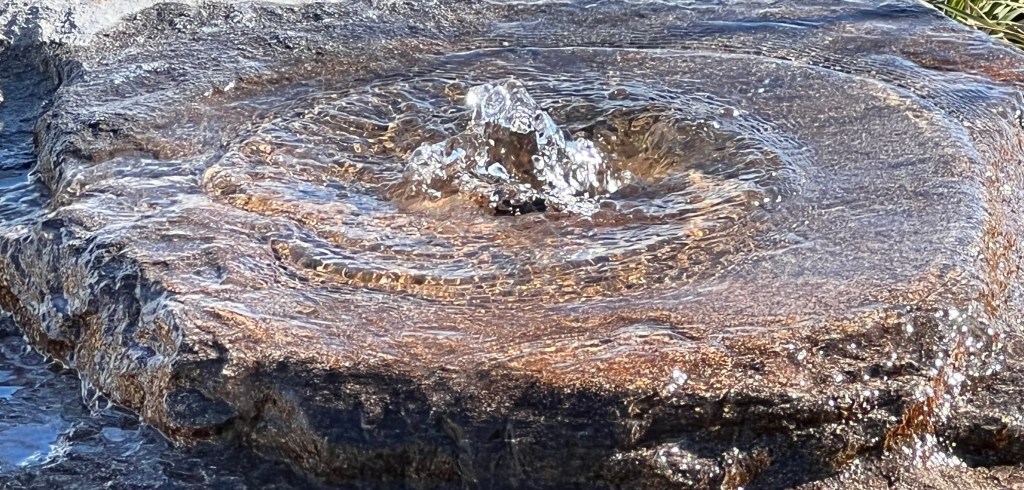
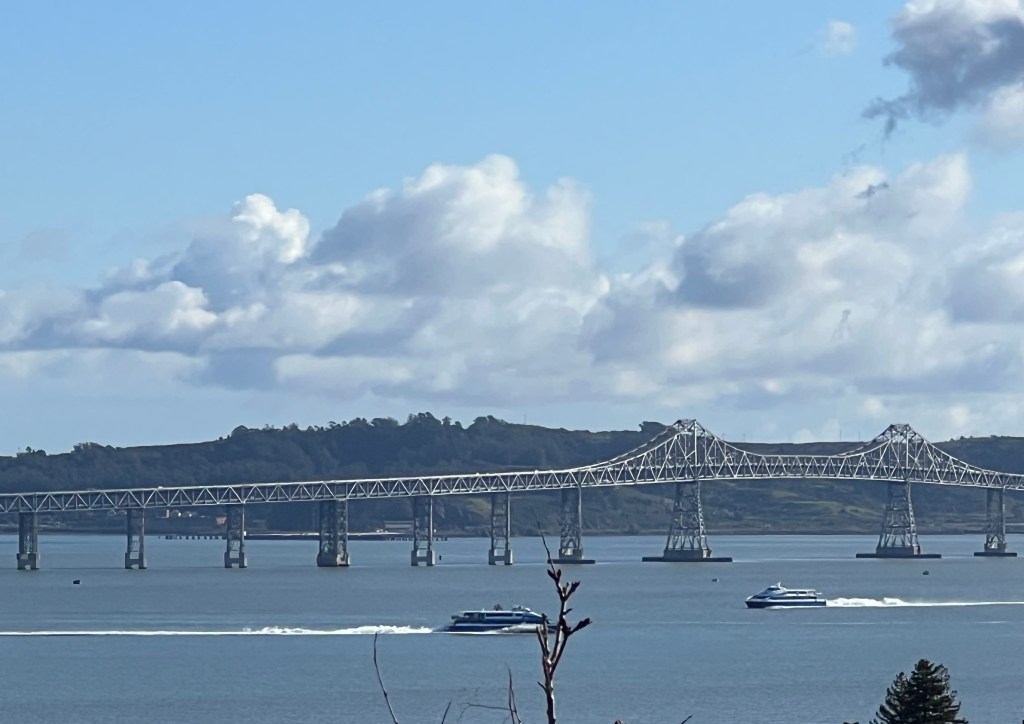
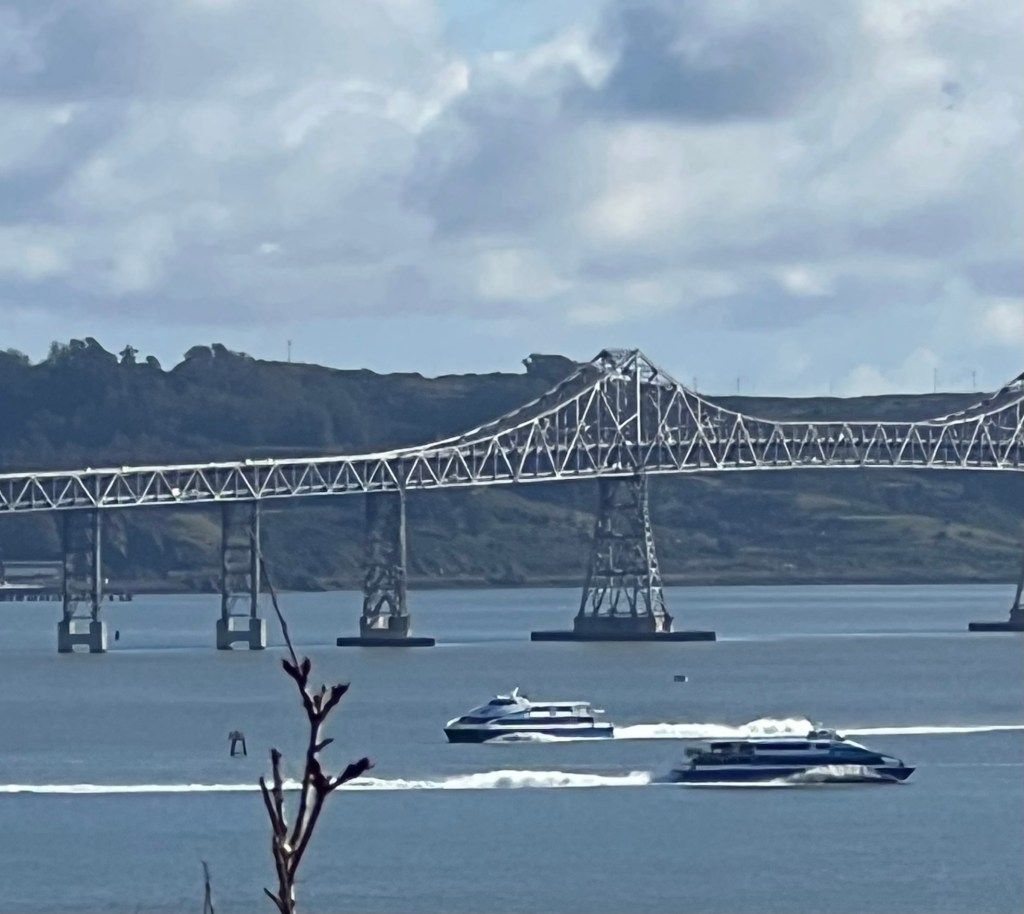
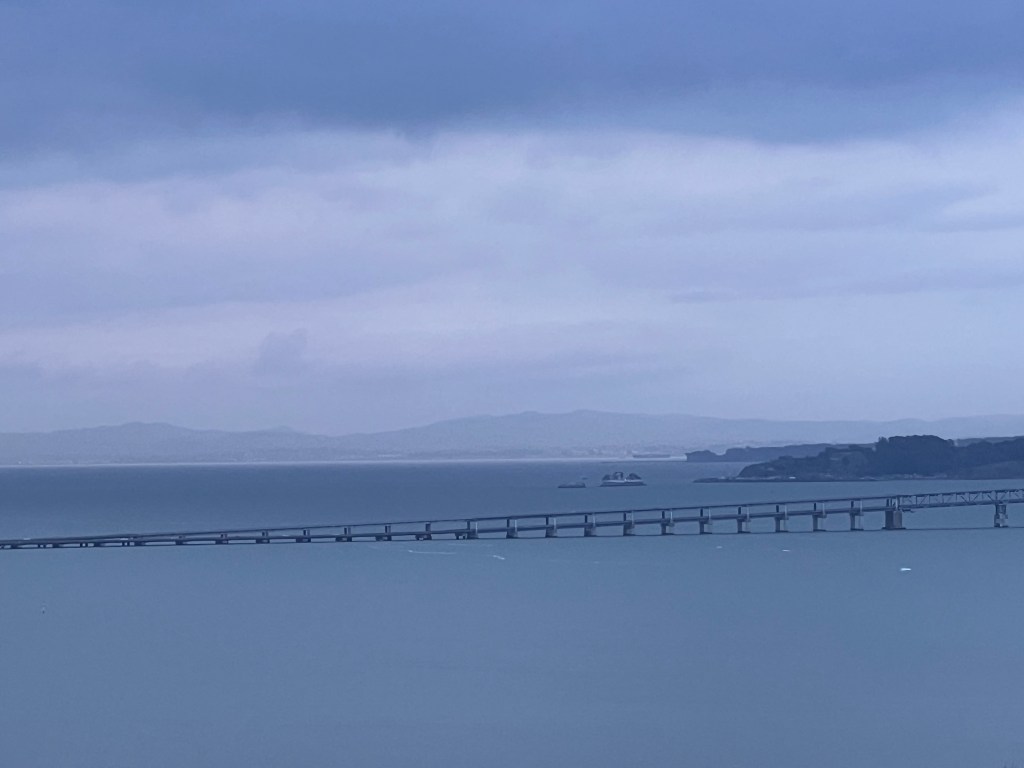
This is my last day housesitting, so there is extra reverence in rising, coming down stairs, making coffee and sitting in a chair to look out at the bay. I used to think a cloudy, rainy day was gray but now after being here and on the houseboat I see the intricacy in grays, the layers and interplay. This last almost six weeks has been an adventure I didn’t expect. It’s rained almost every day so I’ve been entertained by an elemental exchange and an awareness of the touch of light inside and out I didn’t have before.
Meanwhile a bird is chirping outside the window announcing very clearly it’s spring and it’s time to build a nest and reproduce.
I see how trees respond to a chirp of a bird. Oh, yes, let me bring out my leaves and buds and bloom. Now there’s a symphony of birds chattering, so one bird, then, many. Worms have been aroused by the full moon so there is food and aerated soil for all.
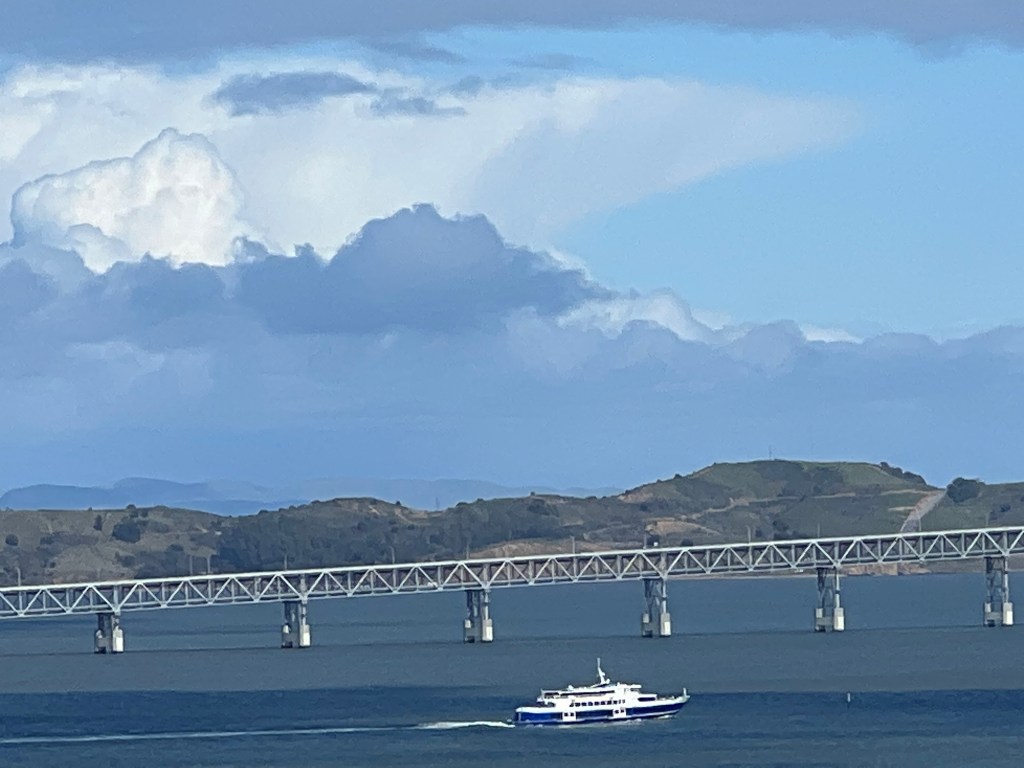
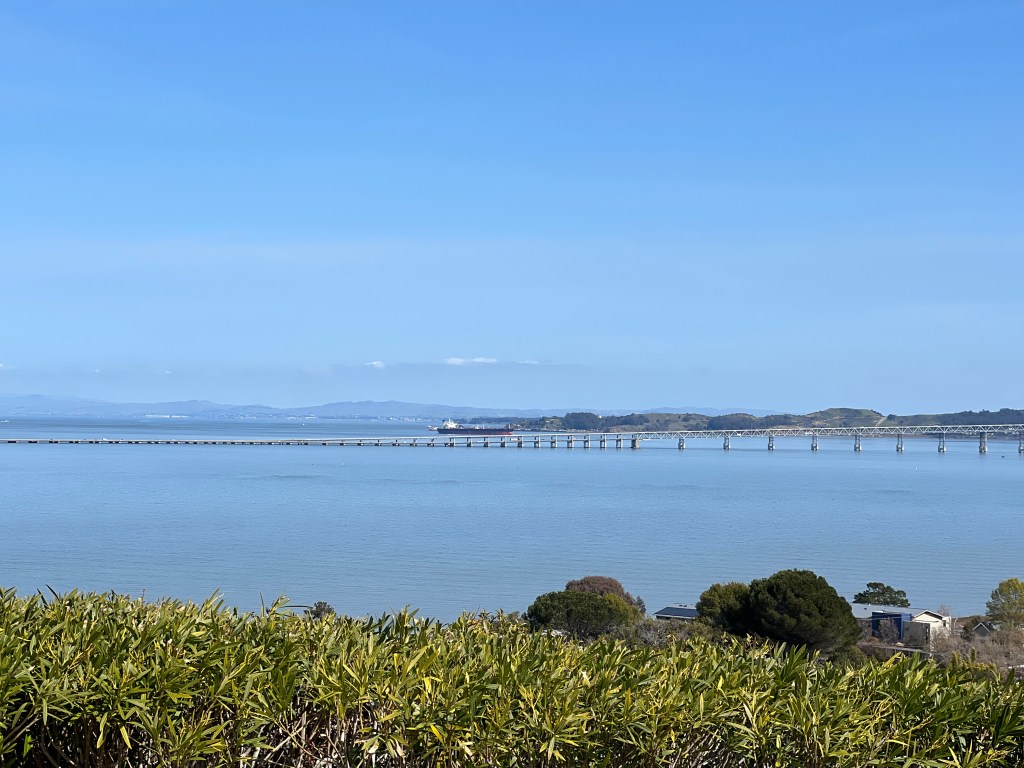
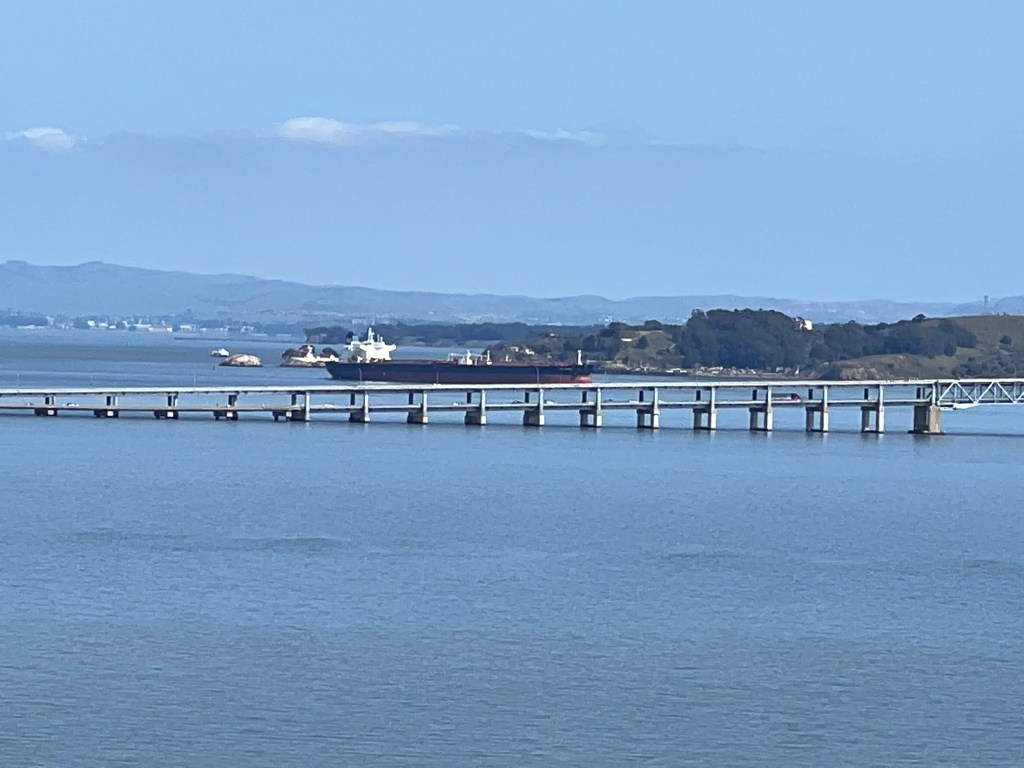
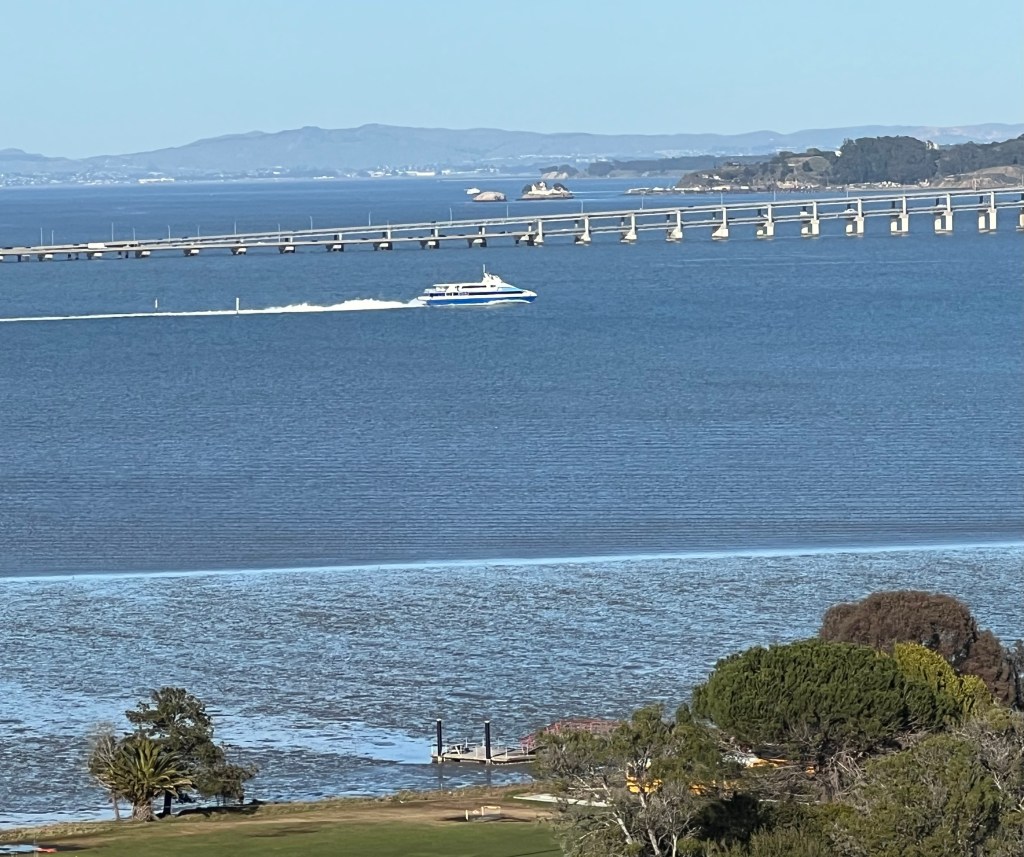
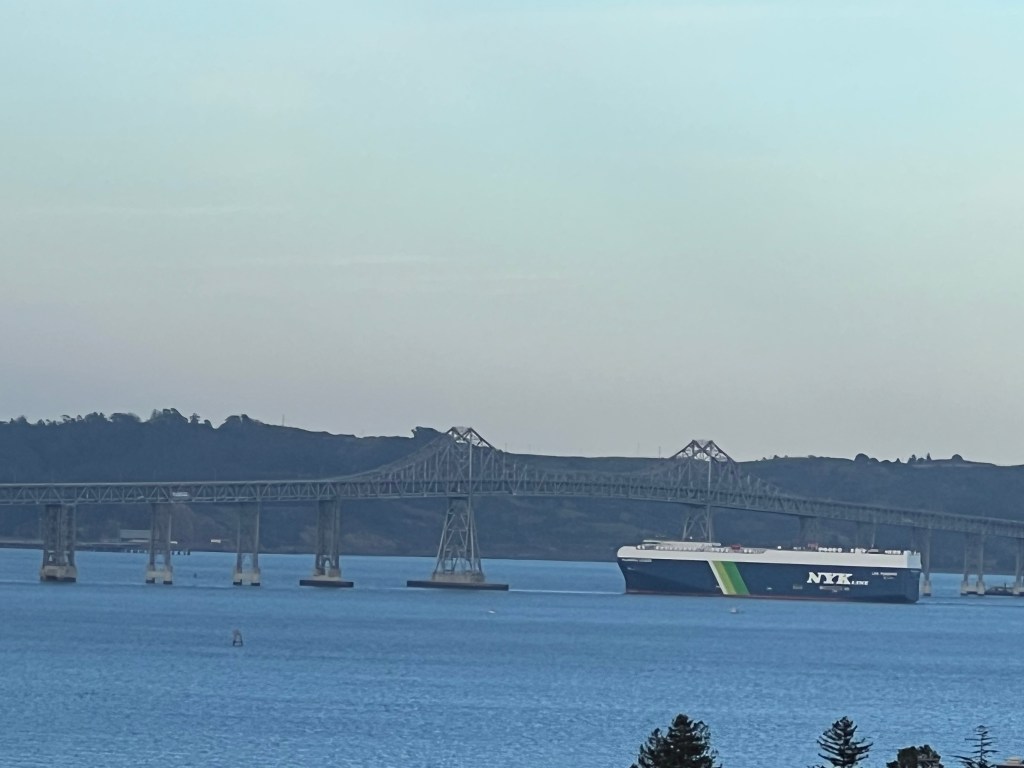
The Wednesday morning commute has begun. I see car lights traveling west on the bridge and the Larkspur ferry ventures out with an early load pass San Quentin and beyond. I look out on it all with awe, touched, noting how differently lives intertwine in what I’m seeing and hearing, people encapsulated, birds set free, and frogs singing in the fresh-water marsh on Ring Mountain.
And now the school bus comes to stop at the corner and pick up children ready for a new day.
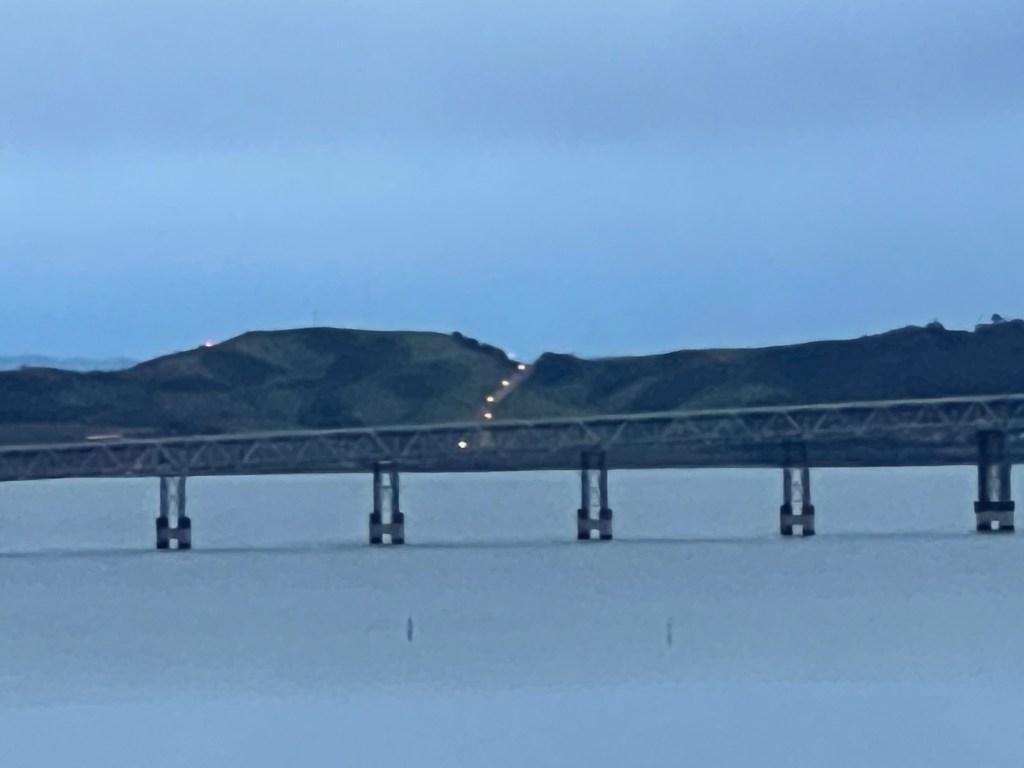
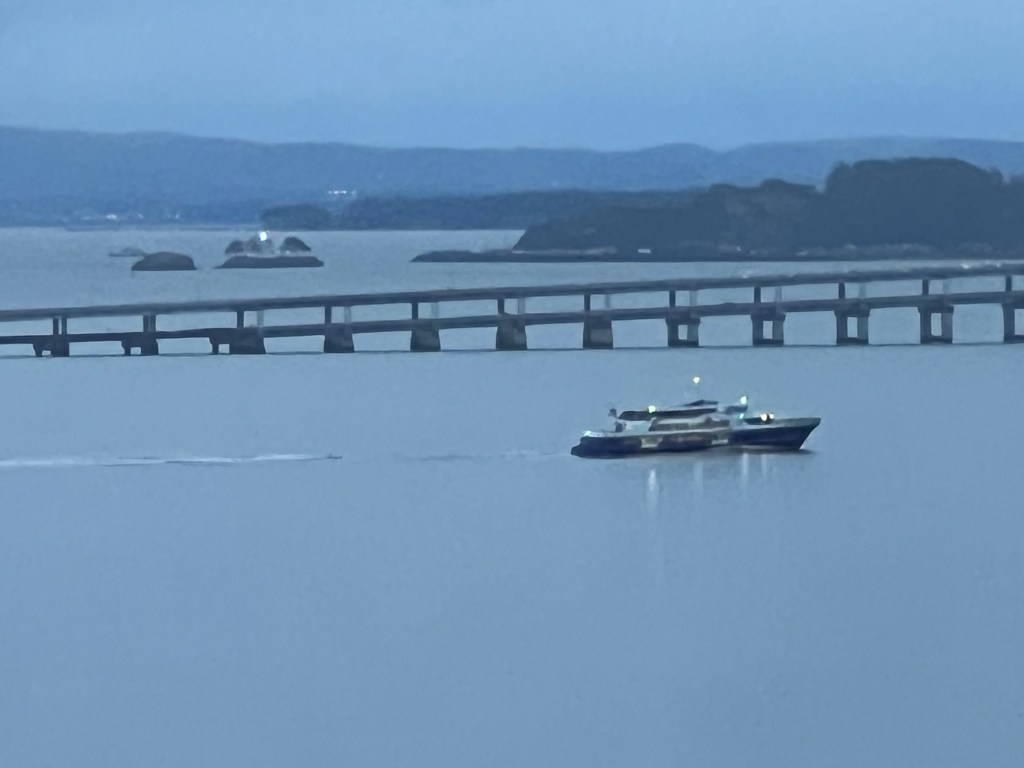
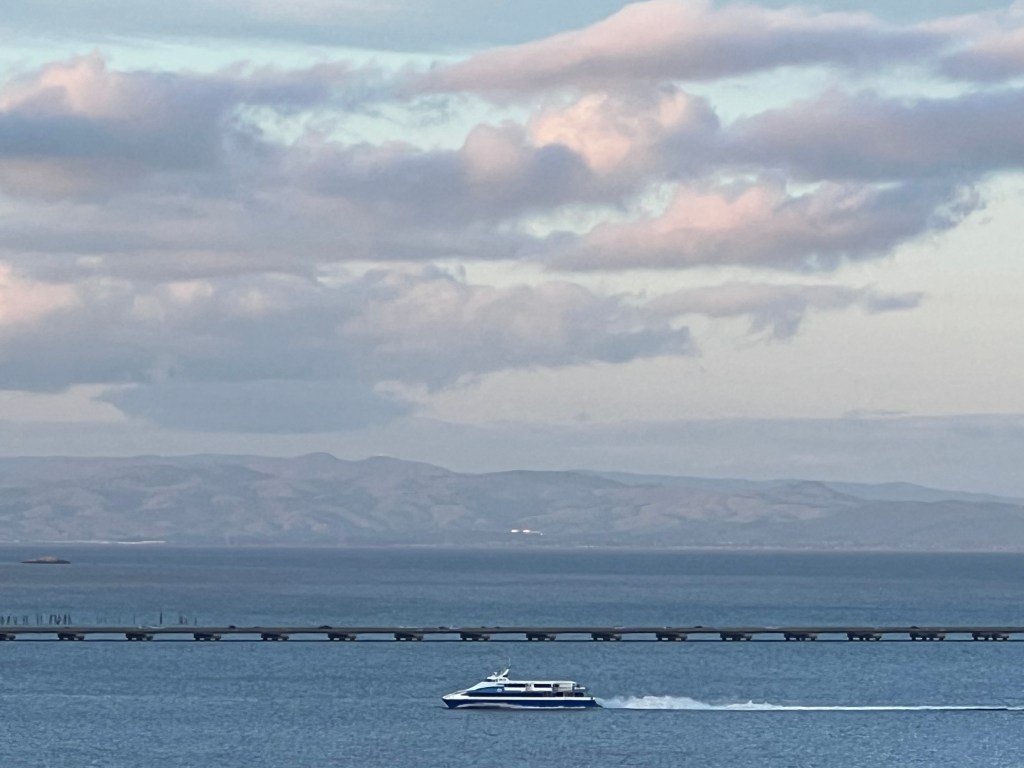
It’s a full moon, the worm moon, named for the time of year when in some places rain taps the soil to wake the earthworms to rise and aerate the soil.
We certainly have rain. Yesterday was dramatic in turning the moisture of the sky as earthworms turn and open the soil.
I become more and more aware of how differently each of us perceives and sees the world as my vision continues to open, pause, immerse, receive, and rest. It’s such an adventure, this living, an adventure of stimulation and change.
Pico Iyer: “Let Life Come to You” –
Like happiness or peace or calm, paradise is not found by looking for it. Instead, it comes upon us, or we put ourselves in the right place where it can visit us.
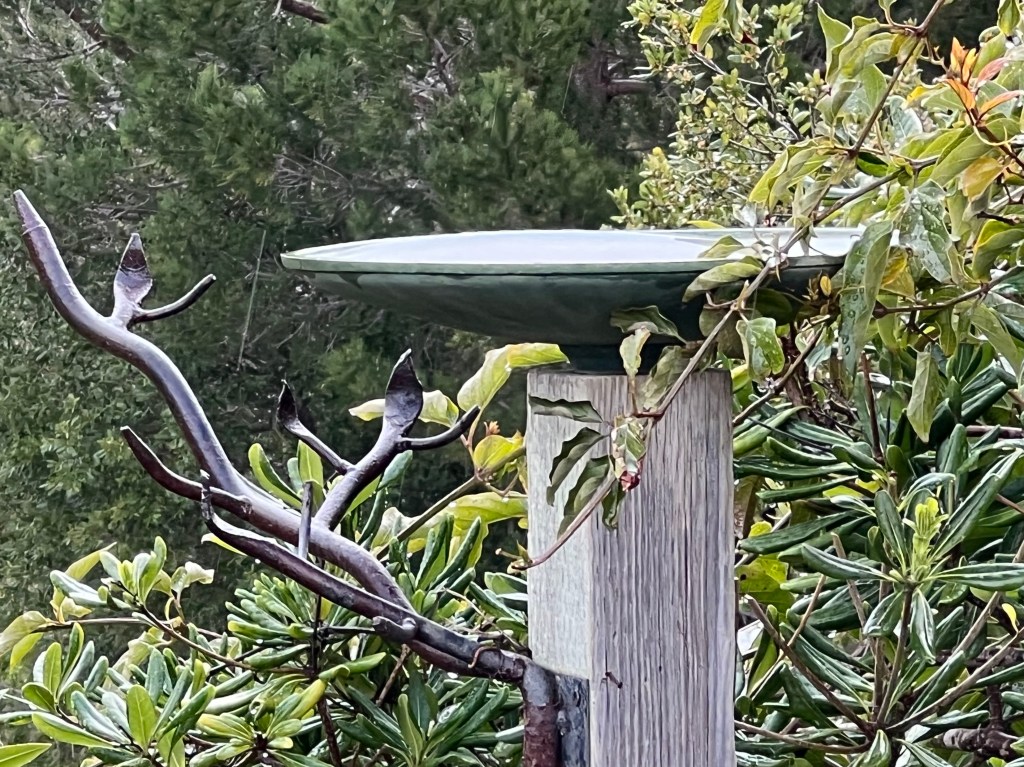
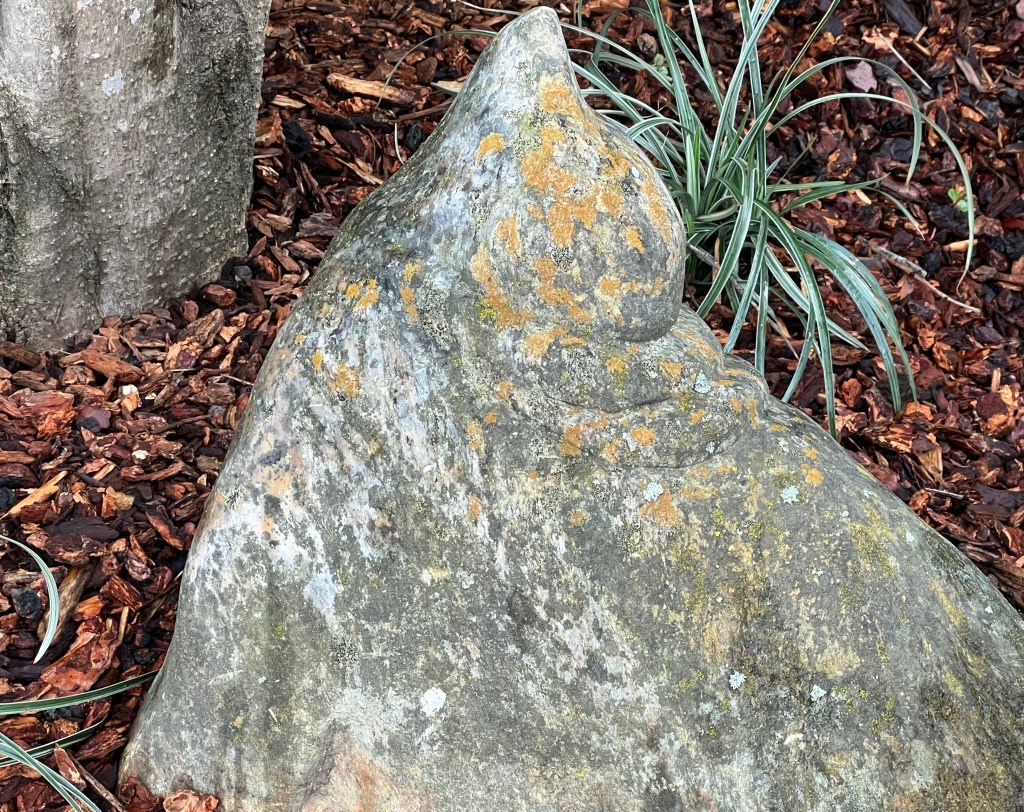

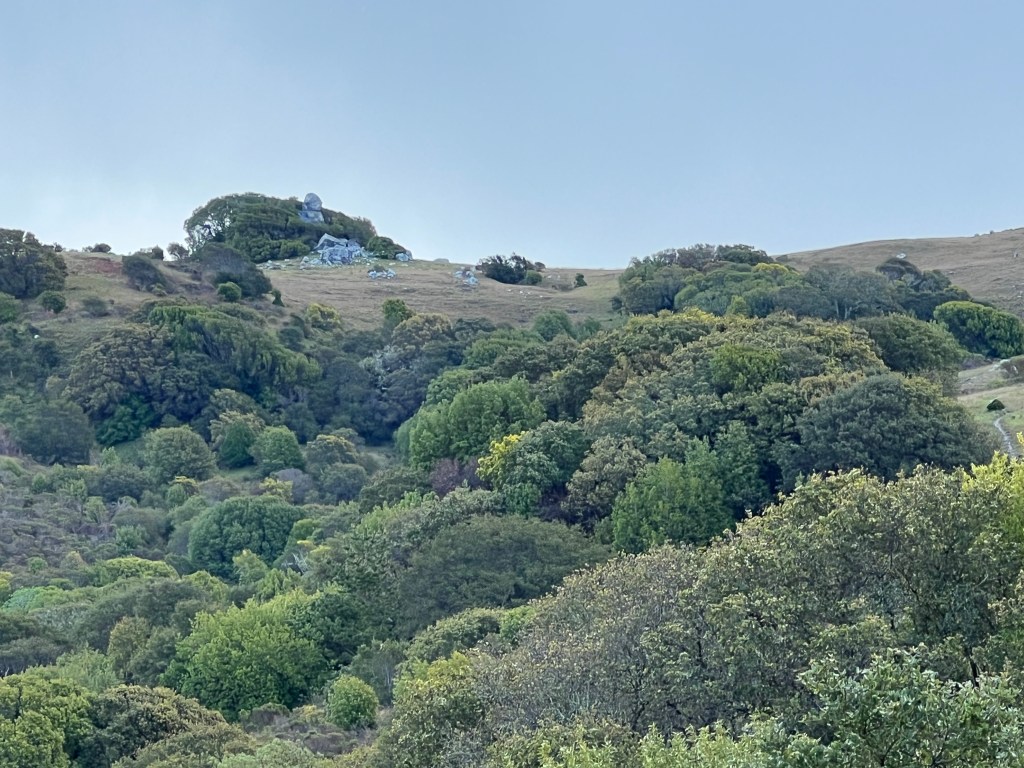
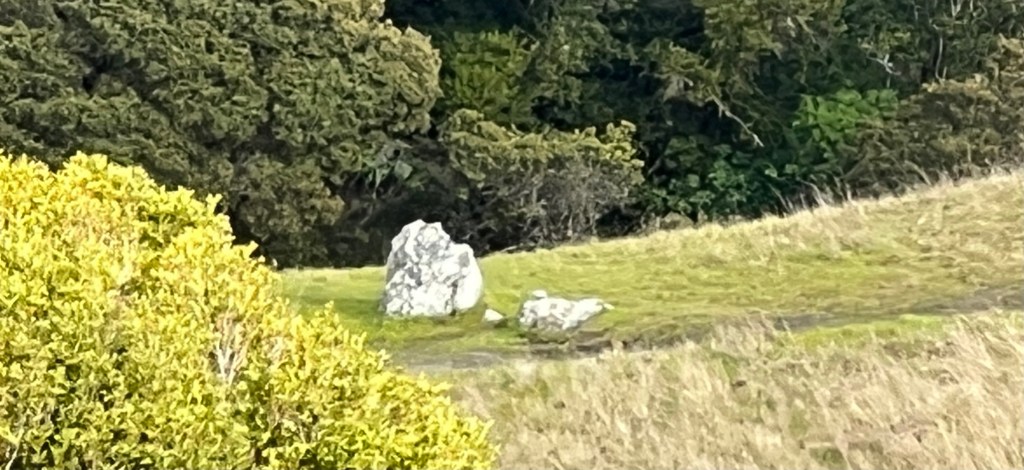

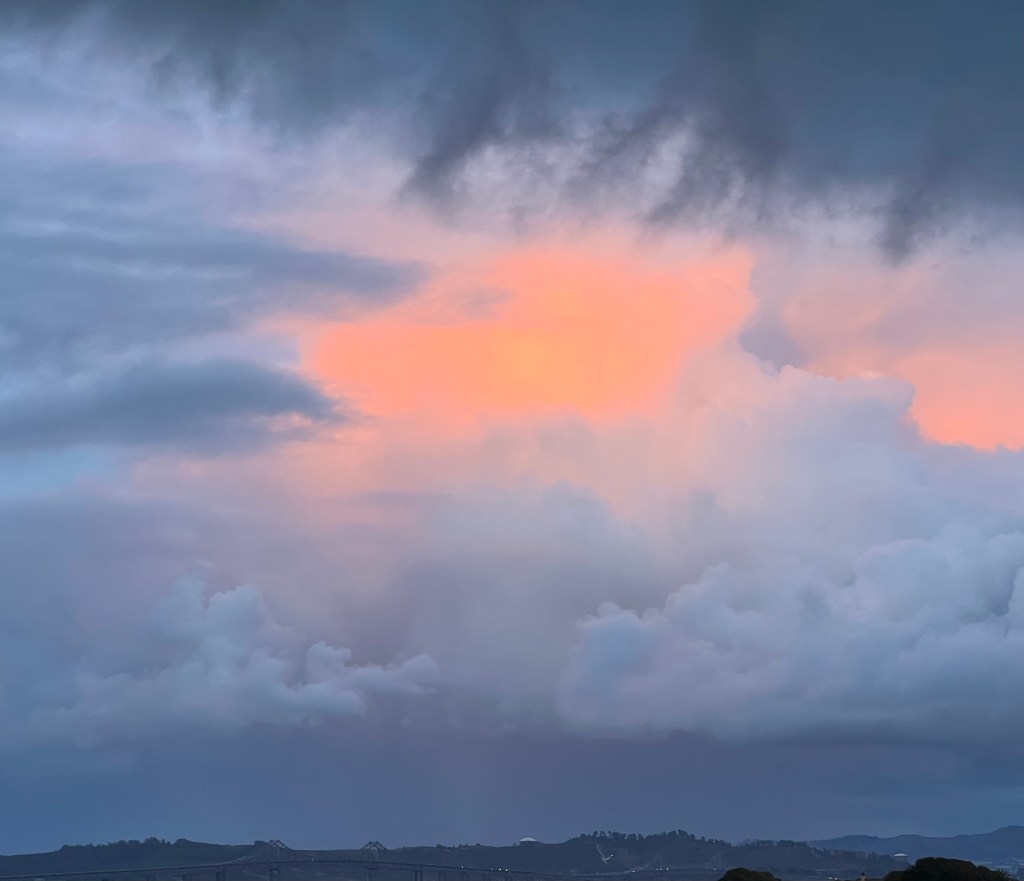
I wake and think I can’t see until I put my contacts in or put glasses on but I actually can see. The cataract and lens replacement surgery worked, and I’m slowly coming to believe it. It’s clear when I drive. I see road signs and lines that were blurs before. The world is edged with invitations I missed.
Sitting on the couch at home, I realized there is a gap in one tree and I can see through to the ridge, and yet I’m still in a somewhat state of disbelief as it’s become so clear how we create our world and focus.
I’m reading Doris Kearns Goodwin’s book Lyndon Johnson and The American Dream. It’s a fascinating look at all he accomplished and how influenced he was by his environment, parents and grandparents. We all are, of course, whether it’s to absorb, or push against, but he did what he did because of it, and then came to an inability to adapt. This issue of response is often with me. How do I respond to what comes now and now and now?
My iris plant isn’t yet blooming but I resonate to this poem and how when the flowers emerge I’ll see little vases holding flowers perhaps infinitum like fractals. I’m opening to see life the same way as patterns of curiosity open, close, and merge, like night and day.
This poem is from Billy Collin’s poetry book “Musical Tables”.
Six petals on each iris,
every other one
with a small yellow streak,
which resembles a tiny vase,
holding a few flowers of its own.
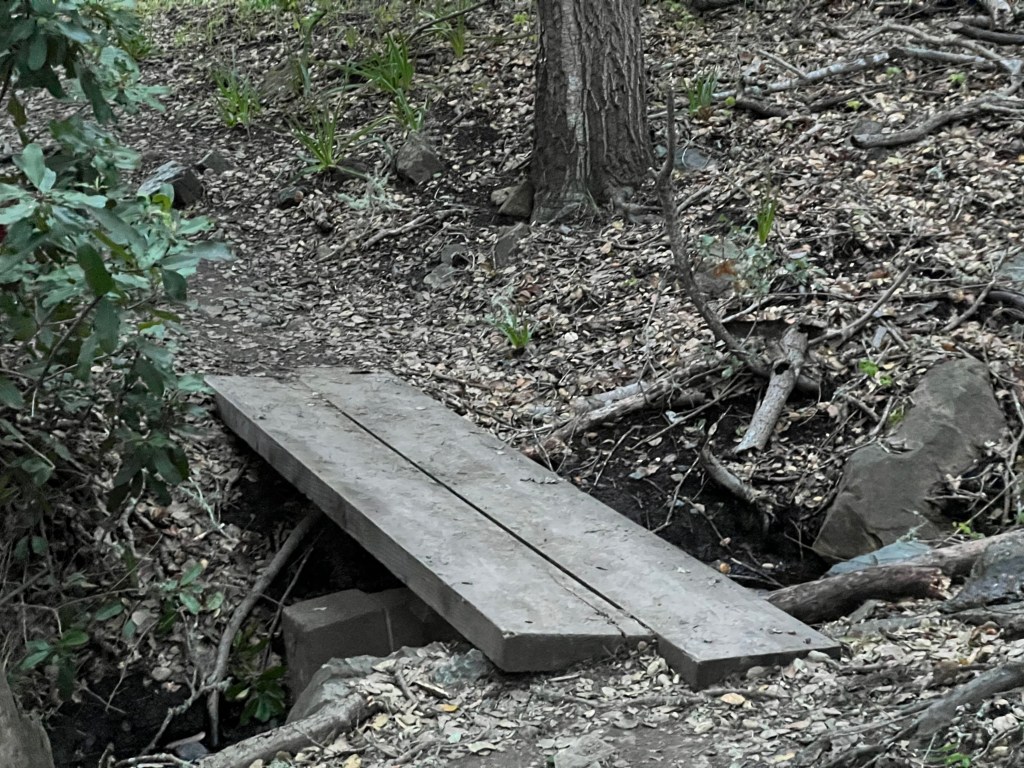
When my youngest started kindergarten, I trained to become a Terwilliger nature guide. My site was Ring Mountain, where I am now. This morning I stepped out and passed two houses to cross a stream and enter the sacred site.
This is Coast Miwok land. The Nature Conservancy bought it when the Tiburon Mariposa Lily was discovered to grow here and nowhere else. There is serpentine at the top surrounded by sandstone so flowers developed and then were caught as though planted to keep this land always open in honor of the native people and plants.
I couldn’t go far today because of the mud but I know there is a midden here and a hole in the rock where the Miwok people ground their acorns. It’s under a buckeye tree which loses its leaves in the winter and grows them back in the spring. Therefore sunlight is moderated, and it’s next to a stream, so acorns are leached so they can be pounded and eaten.
Salem Rice, an expert on Bay area geology, said that there were more different kinds of rocks on Ring Mt. than across half of the country. It’s a paradise of rocks and because there’s no pollution lichen grows luxuriously on the rocks.
In those days, I lead fifth and sixth graders on field trips on the mountain. I showed them how one could survive right here. Everything was provided. The bay provides clams, crabs, fish. Quail run free and can be caught in special traps. Boats can be built from the tule grasses if one wants to venture across the bay. Tule also provides housing, and soaproot provides soap. It’s a paradise and the road below is actually called Paradise.
With the children we also discussed the modern day. People need homes so how do we balance the natural landscape with that? The children understood. They are wise, like owls. Last night, I was entertained by the hooting of an owl.
At the top of the mountain are petroglyphs facing west. This is a sacred place. My photos only give a taste of a small part about 2/3rds up as I couldn’t walk very far along the trail with the mud, but more days come along with rain today.
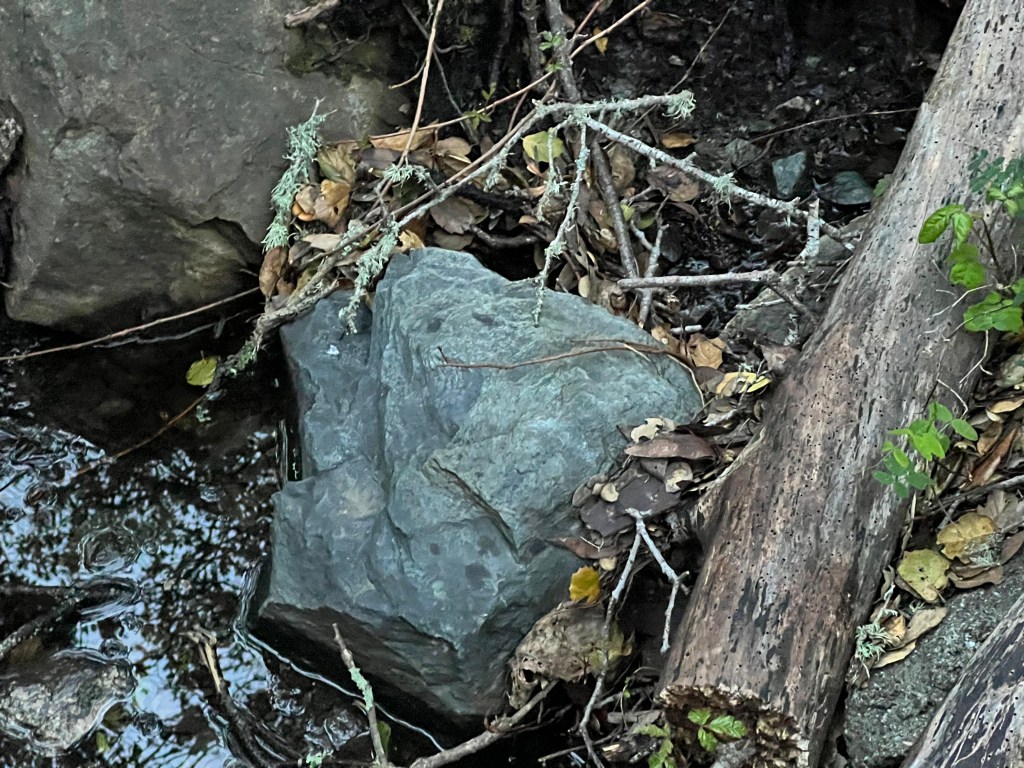
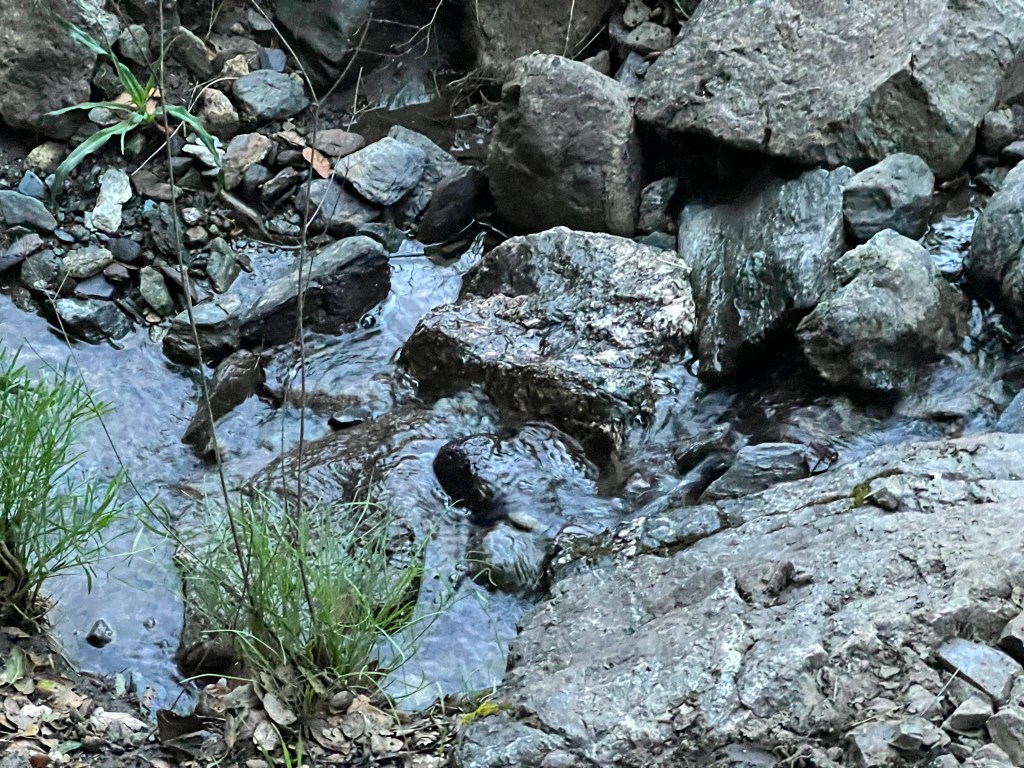

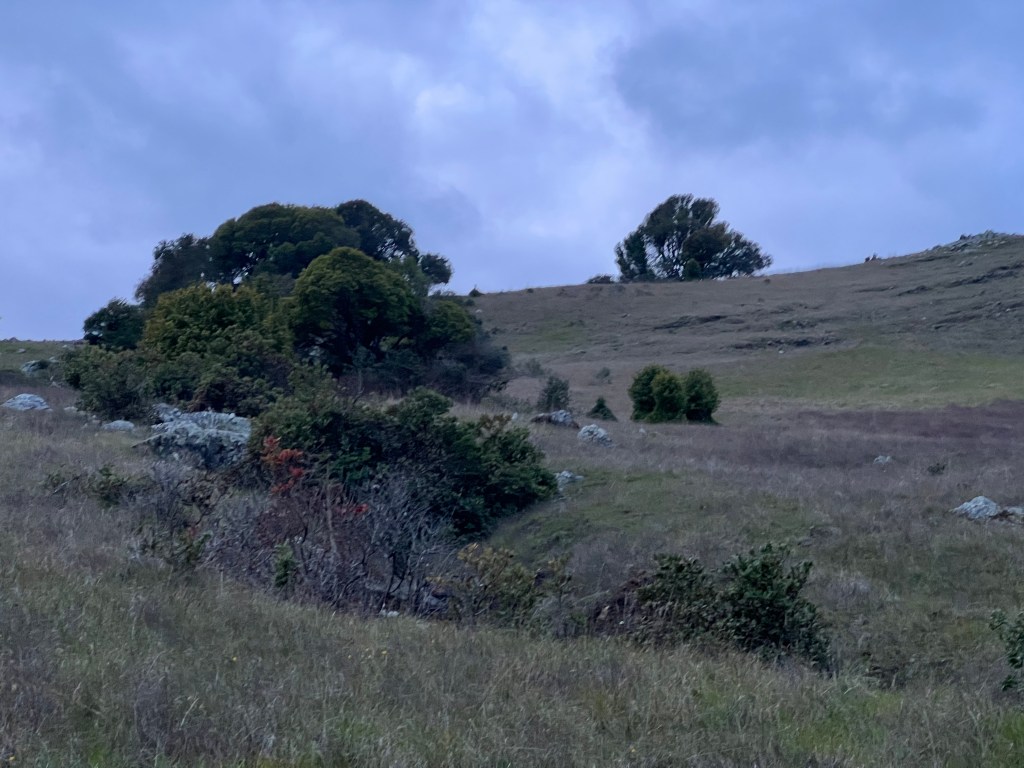

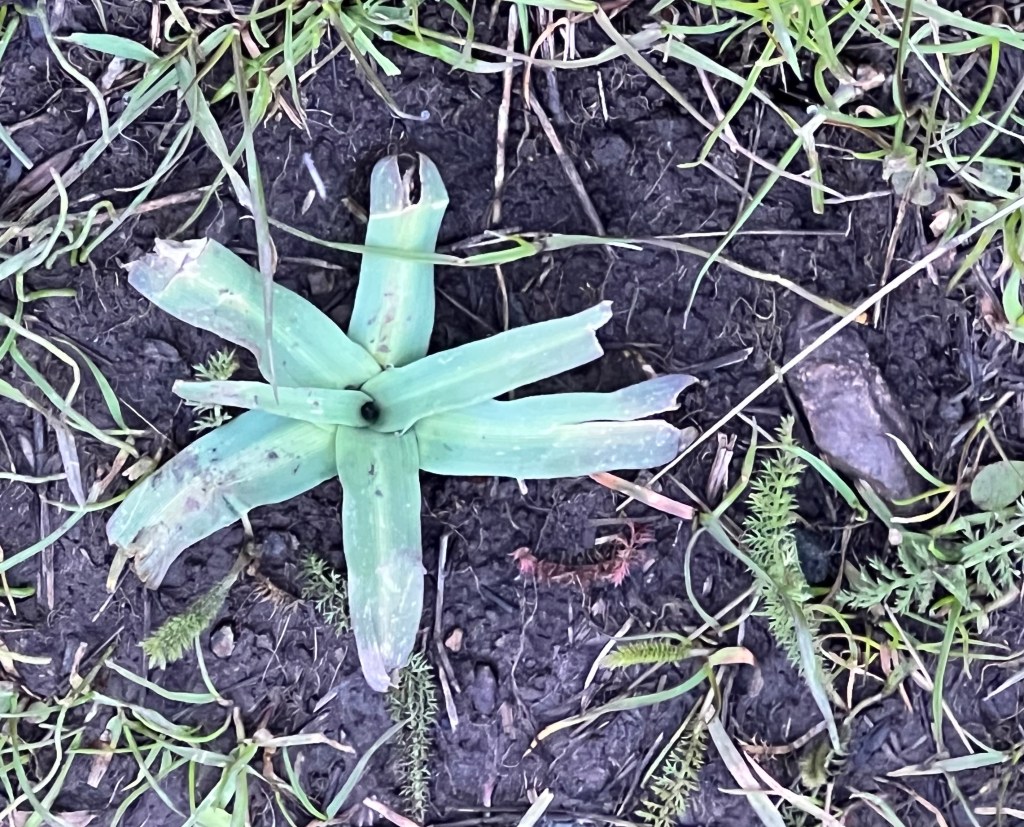
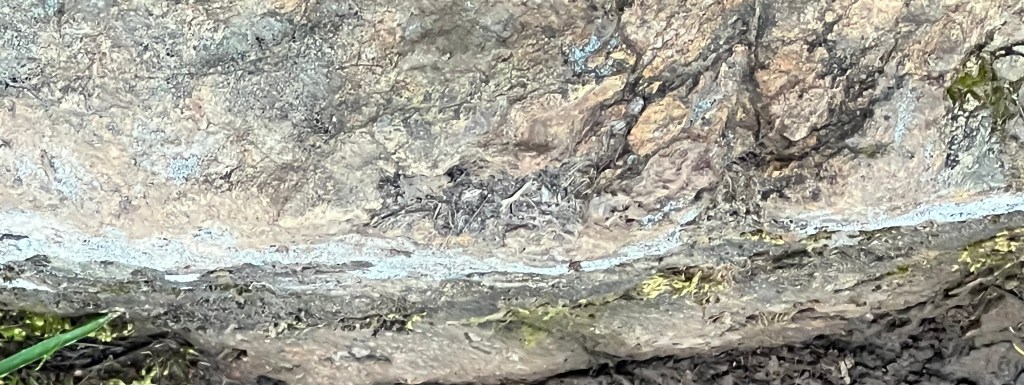
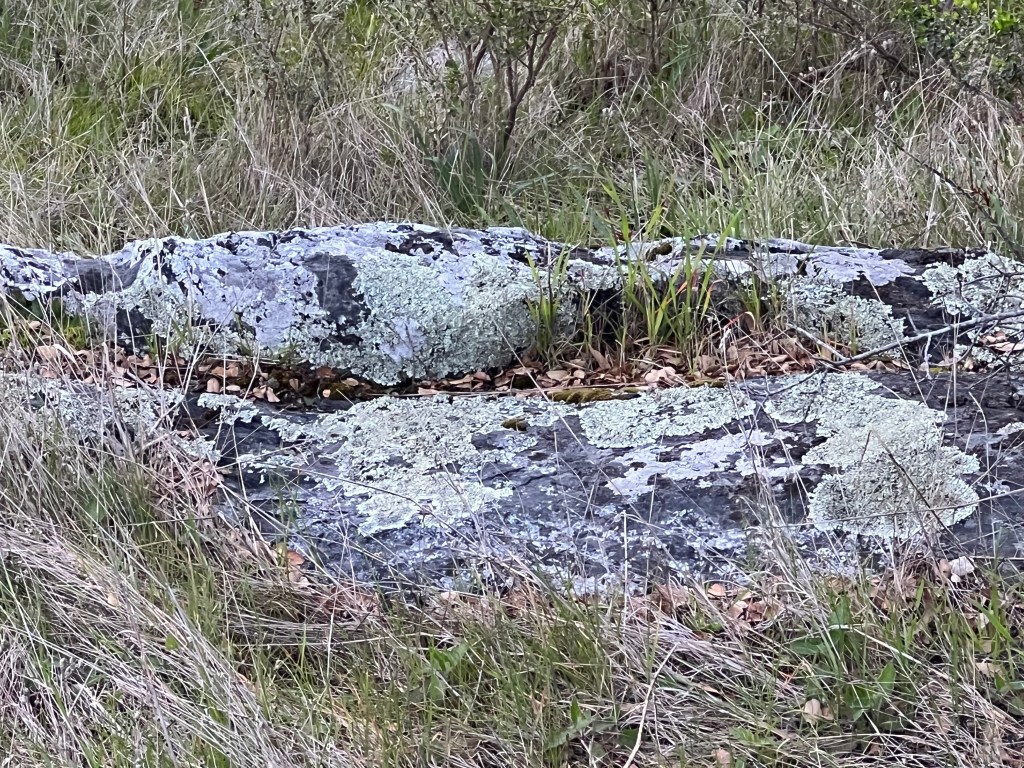
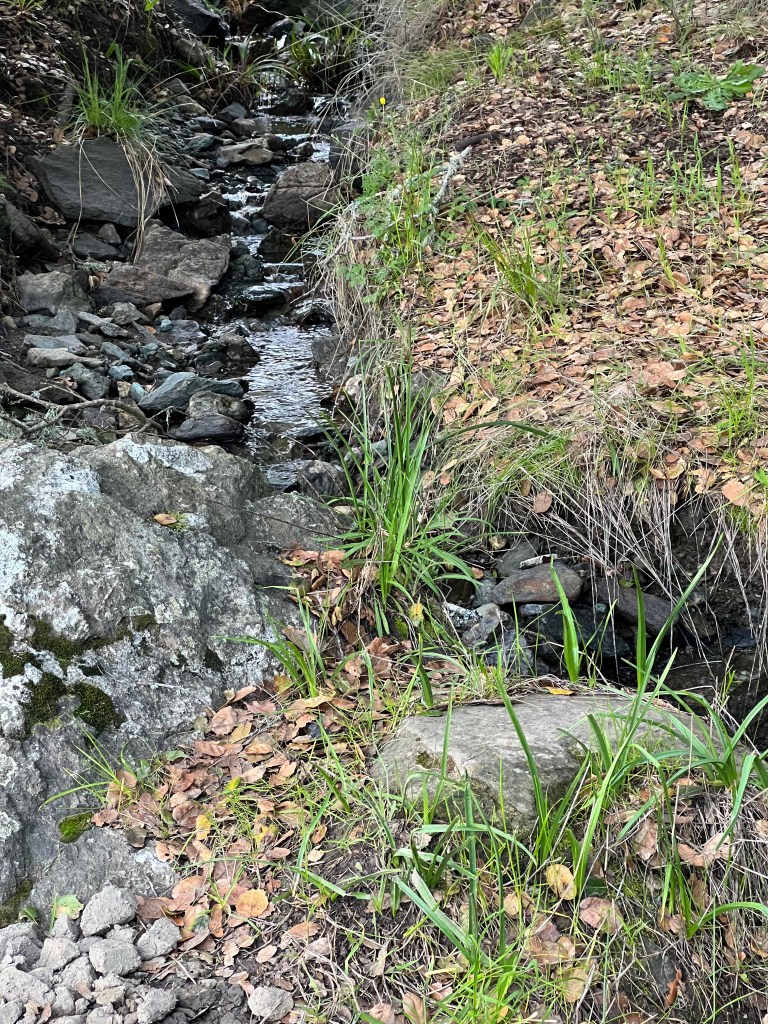
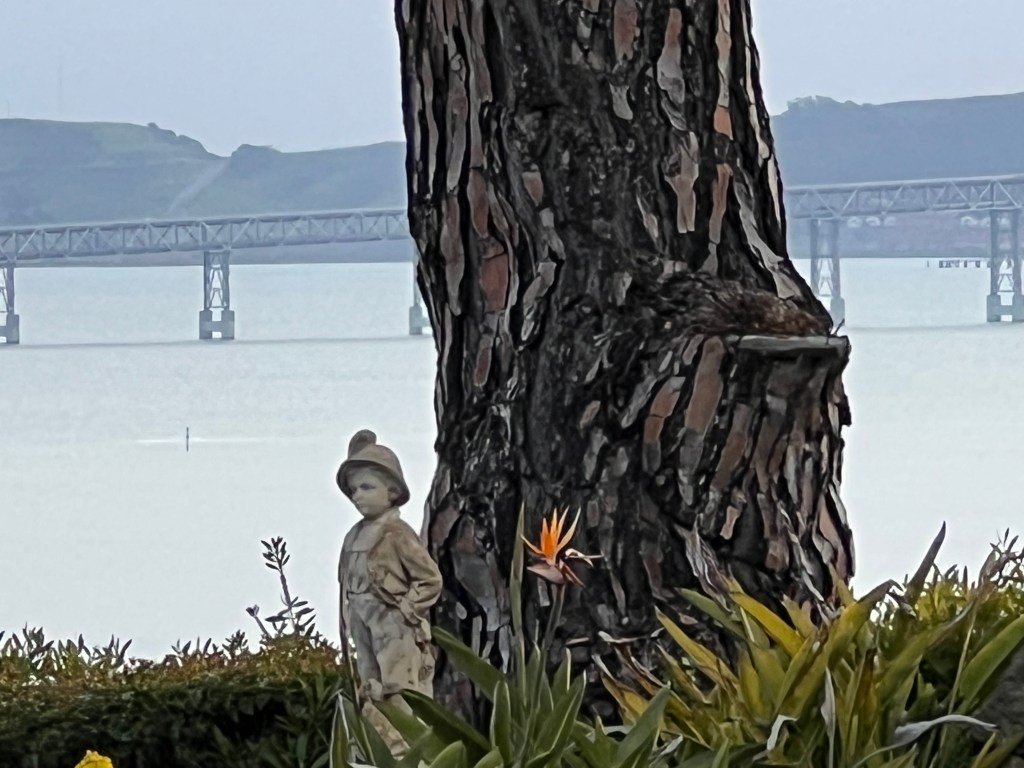
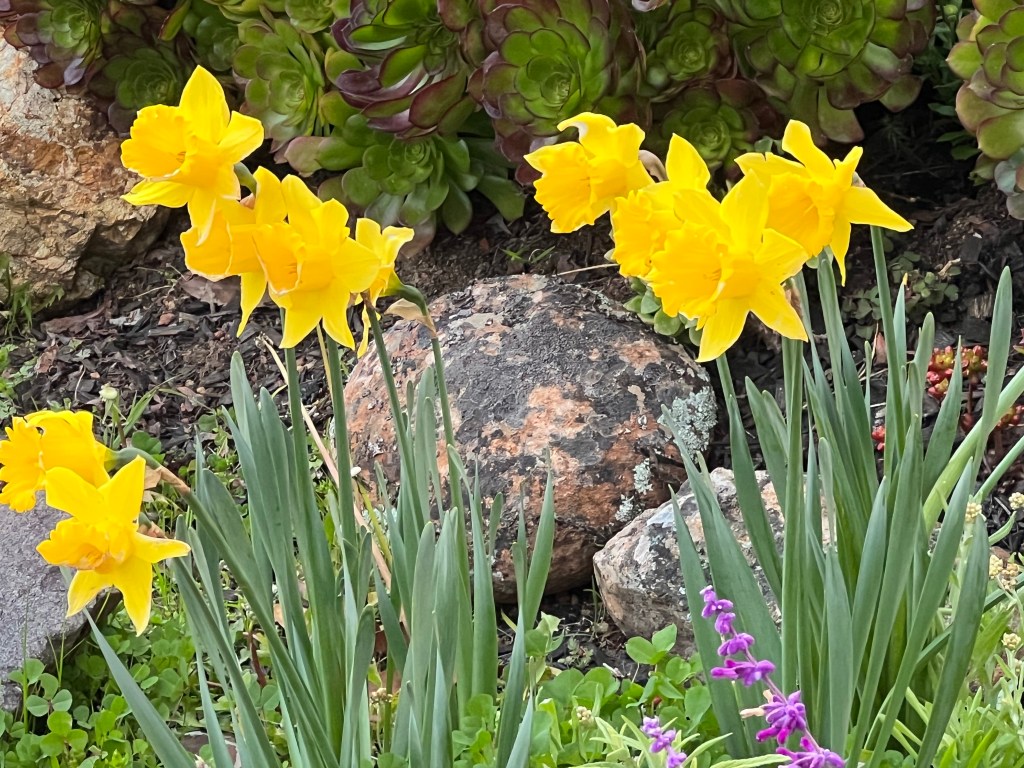
Today I drove for the first time since the surgery. What a thrill to see so clearly road signs and lines, to differentiate and define.
We lose sight gradually, and then, like that, the gift of return. I feel new, like a child, or a flower lifted in spring.
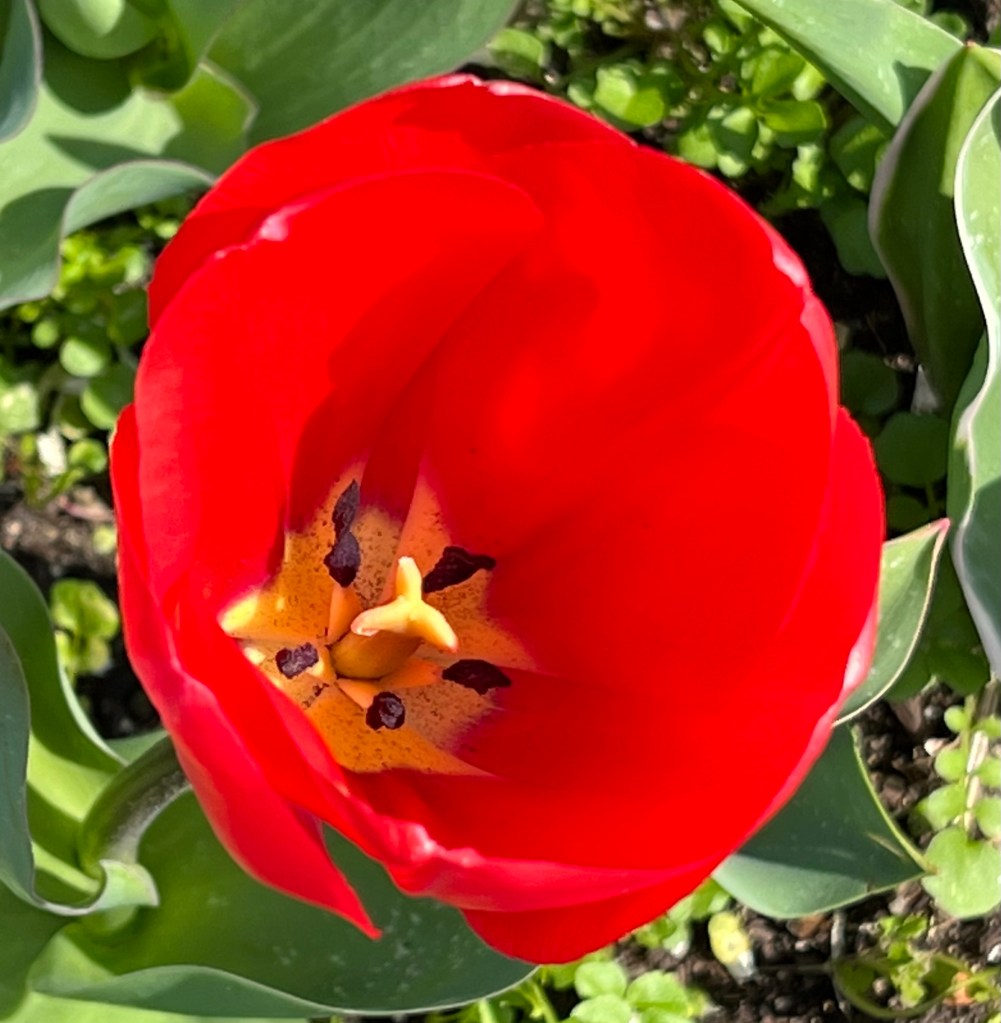
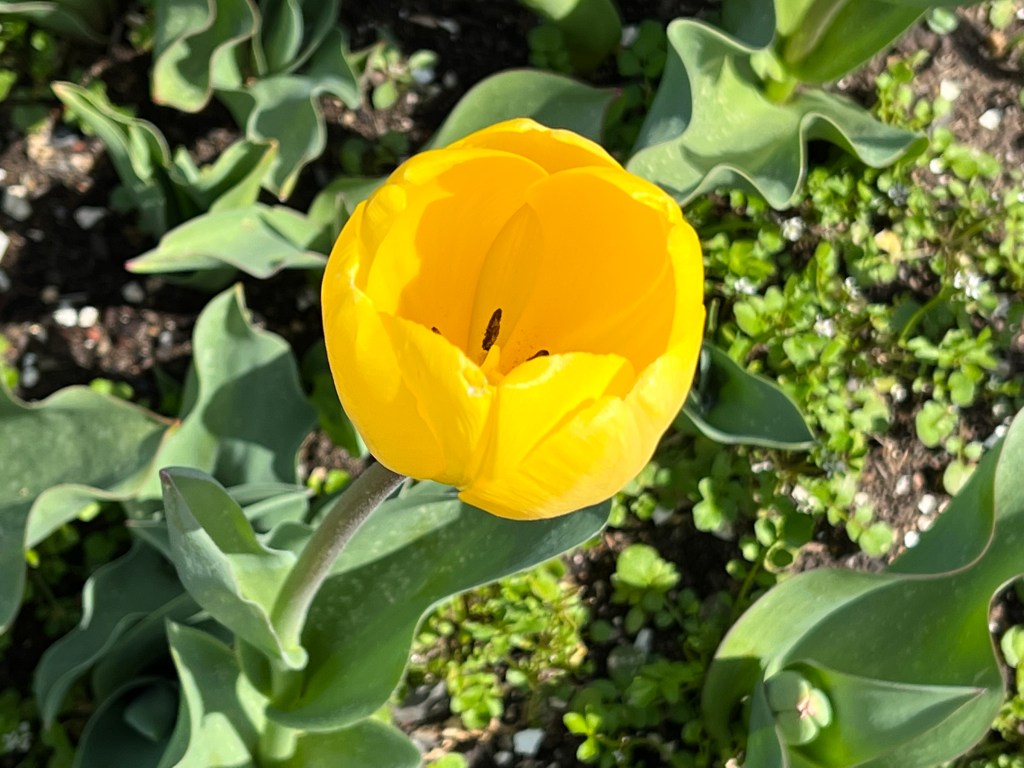
Those of us with my myopia as children were often enthusiastic readers. I loved my books, my inner world and drew vision in, held it close. I was in fourth grade when it was discovered I needed glasses, and then each year a new pair until I was 13 and got hard contact lenses which I wore for 60 years.
Now the right eye is corrected to “perfect” vision, and the left will soon have correction though not too far, to just about a foot in front. What I find puzzling is that I grumbled when I had to switch to glasses for seven months so my eyes could adjust to their natural shape.
Now, I want to wear them. They have become a crutch, a measure of safety or perhaps protection. They cover a large part of my face. Am I hiding? Do I find comfort there?
We are very strange creatures in how we adapt, and where and when we hold on, and where and when we let go. I think when I see so much detail, I find it puzzling. Where do I focus? Do I take the world in whole, or in pieces? How do I receive this universe of which I’m part? And then there is the seeing that has nothing to do with the eyes. I can sense 360 degrees around like a tree, and perhaps that’s the division. This feels so precise. I think of the poem “Monet Refuses the Operation” by Lisel Mueller. Despite any reluctance, fear, or concern, Monet had successful eye surgery in 1923, and it’s a beautiful poem.
I think Mueller’s poem gives a sense of my struggle. What is seeing? Where do we focus, and when? Where and when do we attach, and let go? How do we give and receive?
How will this change in perception change my life? I can only wait and see, and I’m grateful as can be for this opportunity to play with change and response and immersion in this life and giving we share.
 Cathy's Blog!