Attention is the rarest and purest form of generosity.
Simone Weil
Attention is the rarest and purest form of generosity.
Simone Weil
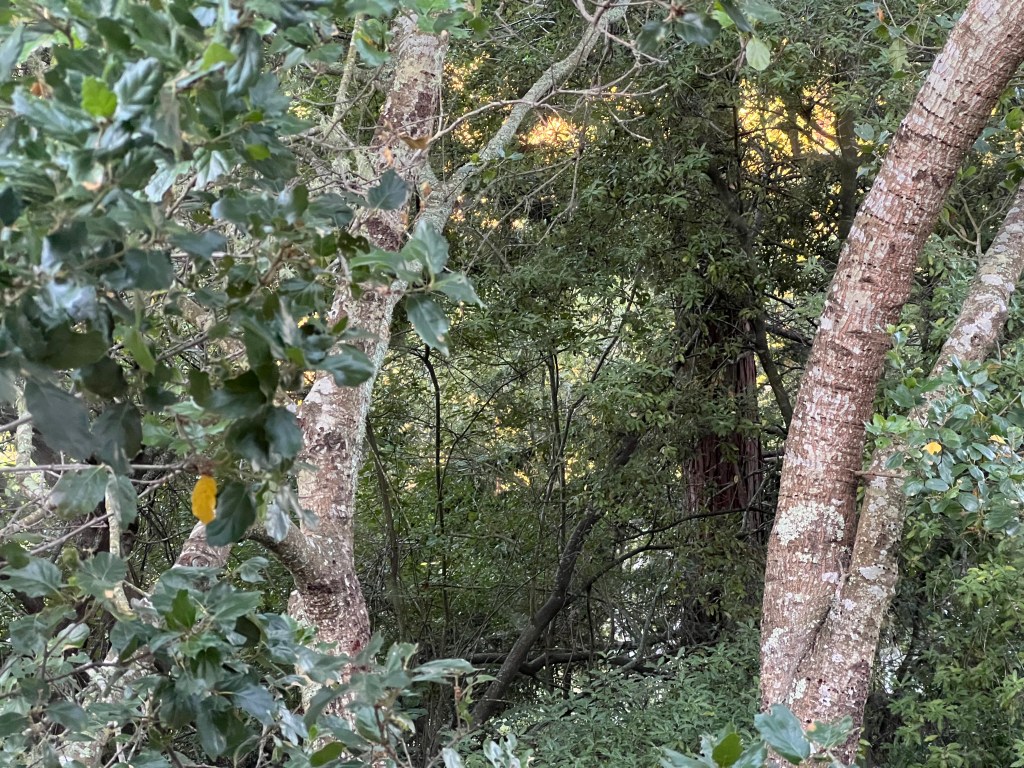
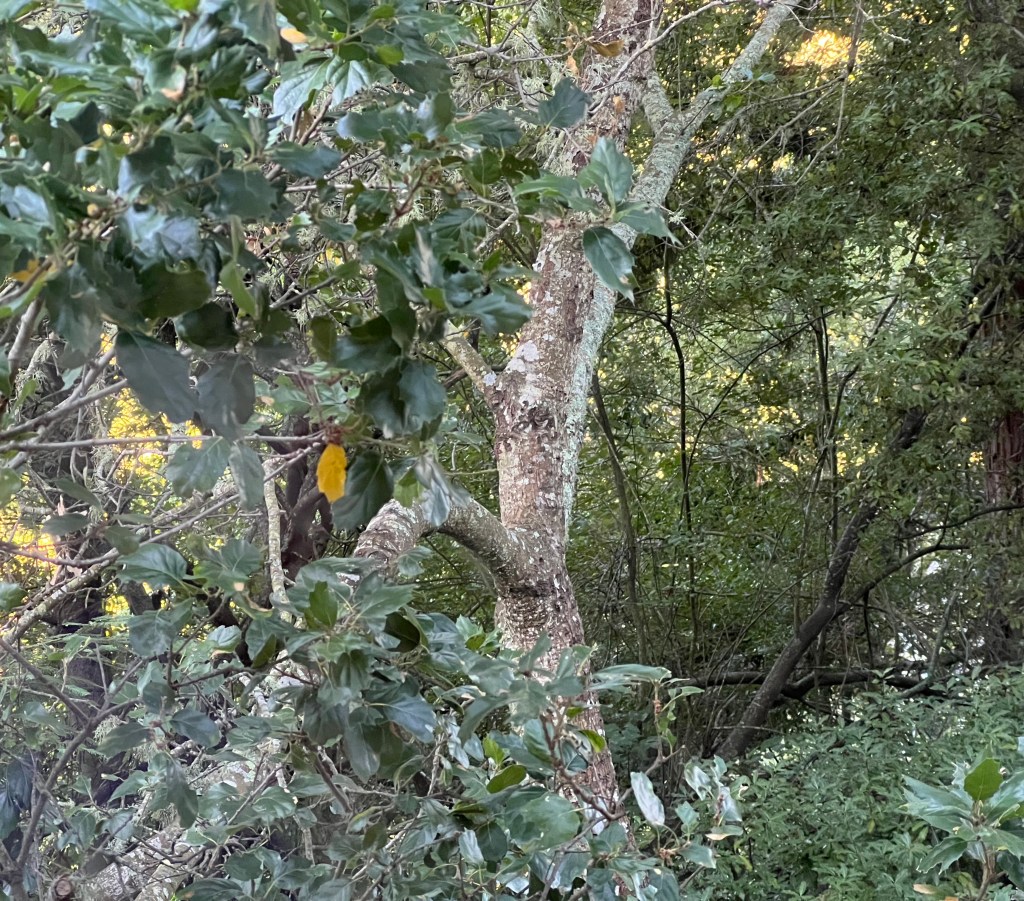
This morning I was using seeing as part of my meditation, so focusing on an object. I was focused on the oak tree outside my window which sits in front of the redwood tree. I could see morning light through the trees still untouched by light as our house faces south on a hill on the side of a valley.
When I closed my eyes to rest them from seeing, and then opened them I saw a squirrel sitting outside the window on a branch looking in at me. He or she then scampered away. Perhaps my attention scampered, too, as I reflect now on the gifts of pausing to see the dimensions in liveliness, to honor and savor the connected realms in which we live.
I was so focused on the tree and dimensions and light that I had forgotten all that hosts where I live and how we twine. Of course, my pause might be of interest to a squirrel outside, and it could have been my imagination, but I don’t think so. It was part of a bond, a momentary branch.
Pema Chodron:
If your everyday practice is to open all your emotions, to all the people you meet, to all the situations you encounter, without closing down, trusting that you can do that – then that will take you as far as you can go. And then you’ll understand all the teachings that anyone has ever taught.
When my youngest entered kindergarten, I went through the Terwilliger training to become a nature guide. Each week we learned from a naturalist. We passed around a snake and felt the heartbeat of a sparrow. I learned what science could be about, a living interdependence of niches and variety. I was in awe.
I became the site guide for Ring Mountain, a place near me owned by Nature Conservancy. It was preserved because a plant grew only there: the Tiburon Mariposa Lily. It had sprung up in serpentine soil, and survived isolated by sandstone. A geologist said one could walk across the country to experience the variety of rocks on Ring Mountain.
We guided groups of children in fourth and sixth grade up and then down the mountain. We showed them how the Coast Miwok survived there, how everything they needed was here. Living under a buckeye tree, next to a stream, there is summer shade and winter sun. We made a grocery list. The bay provided an abundance of food as did the oak trees. Quail were easy to trap. There was soapwort for cleansing, and mint for tea.
We ground acorns in the rock worn by centuries of grinding, and saw pieces of clam shell left in the midden. As we looked out at the bay, we spoke of how we balance the need for housing with land that is preserved.
At the top we saw petroglyphs, carvings to honor looking west where the sun sets.
Mrs. T. would have us raise our arms in a V like a vulture, and hold them straight out for a hawk.
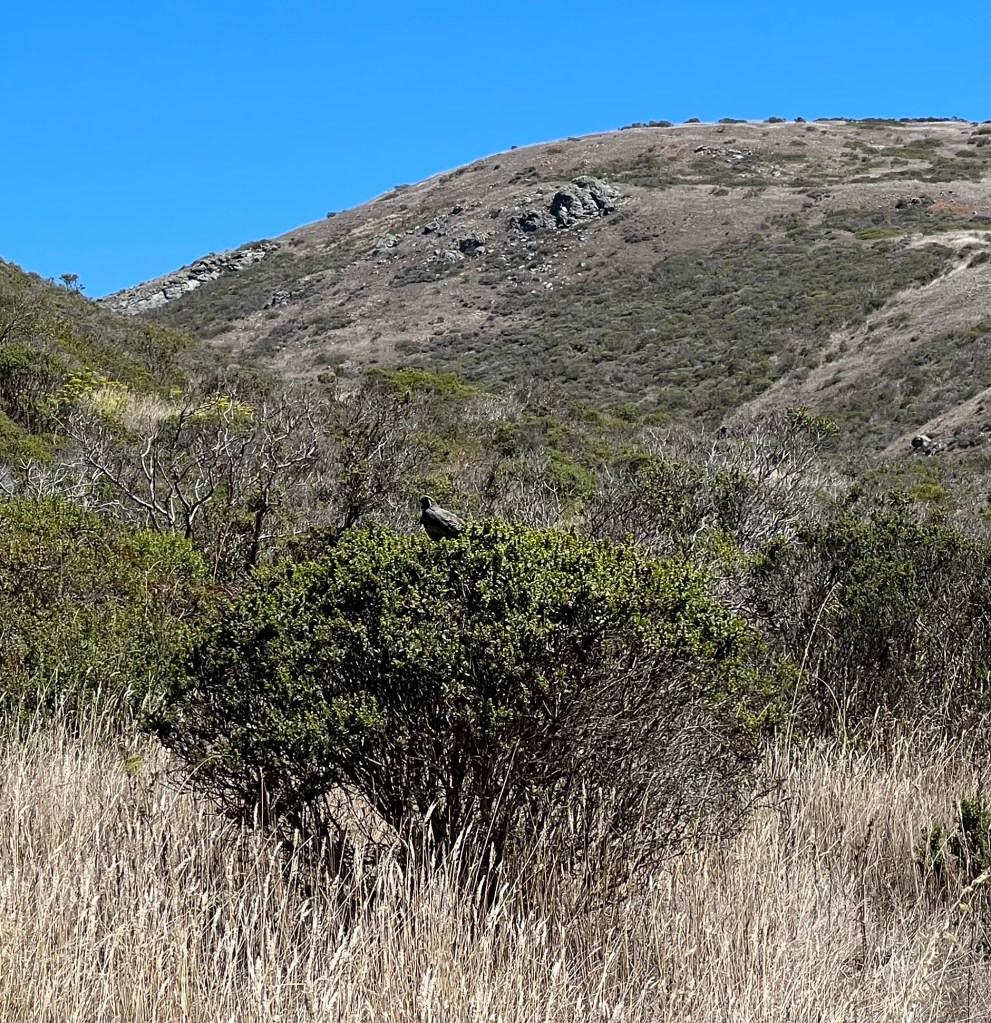
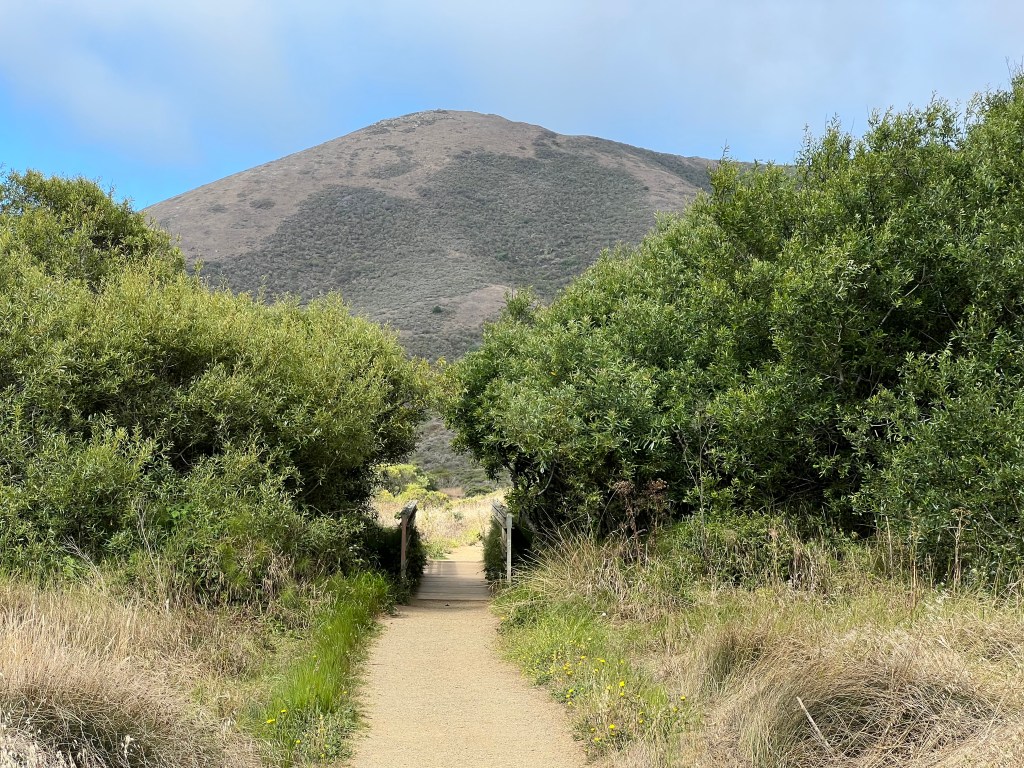
Yesterday on a walk at Tennessee Valley I saw a quail perched as sentry. The quail knew I wasn’t a threat. I knew the sound of the quail from Mrs. T. – quaquerko – quaquerko.
Today I’m surprised to see myself in the background of this photo promoting and honoring Terwilliger films. I’m wearing blue, and I see my son, and in the video both sons. It was many years ago, and now, the past is preserved as we carry forward as gently as possible our footprint on planet earth, our home.
Here’s the video:
https://www.terwilligerfilms.org
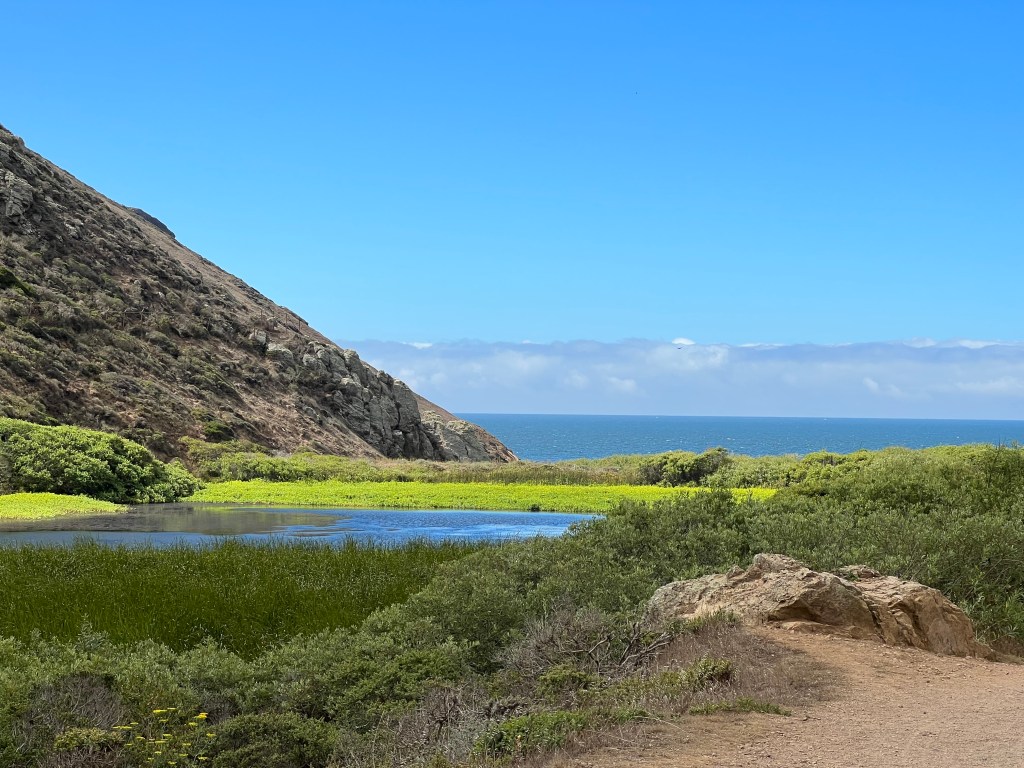
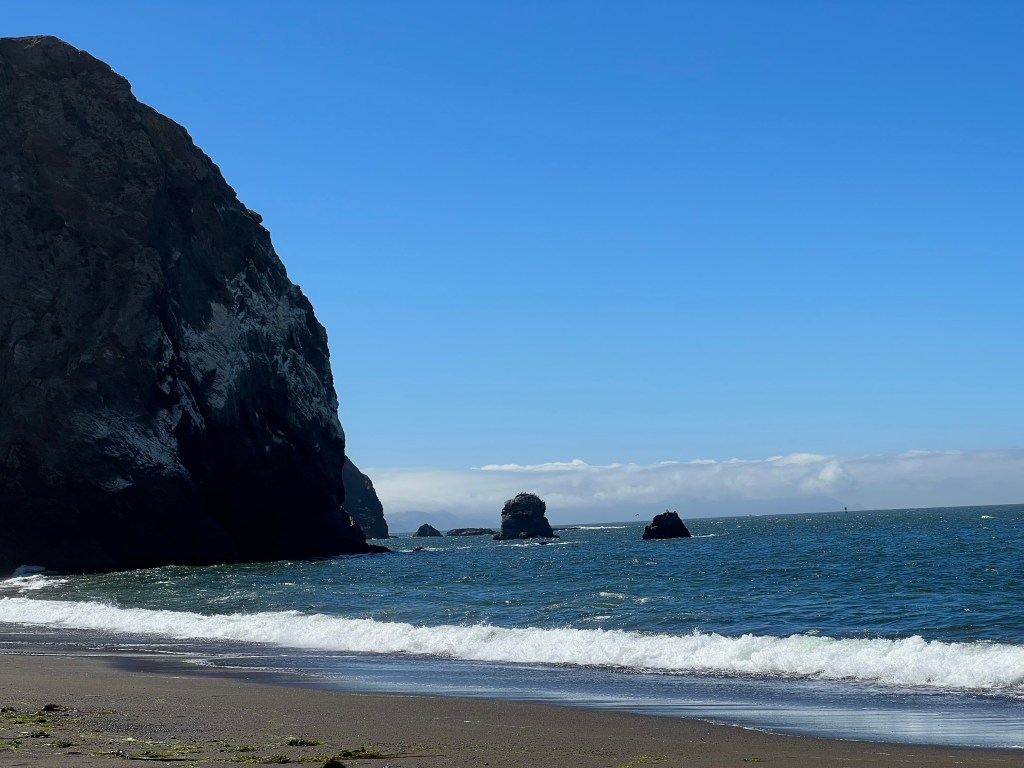

This morning I notice that I feel differently than yesterday morning. Impermanence is beginning to land in me, to float, in this moment anyway. The tides move in and out four times a day – high, low, high low – each day different, each moment, and so this morning I look out on sunshine and feel reflectivity guiding me. I allow myself to feel the moon moving toward Thursday fullness, the sturgeon moon, a Supermoon, the last Supermoon of this year.
Thoreau:
The true harvest of my daily life is somewhat as intangible and indescribable as the tints of morning or evening. It is a little star-dust caught, a segment of the rainbow which I have clutched.

My son and I are doing an on-line course in Tibetan meditation. I’m noticing a difference in my responses and so I was feeling a little self-congratulatory, which is certainly not part of the course, but then I hit the roadblock of judgment because I’m not as “mindful” as I want, or think, I should be. At least I’m noticing, and of course, the course is about non-judgment and non-criticism.
Synchronously, I had just read this quote from Thich Nhat Hanh:
“Sometimes your joy is the source of your smile, but sometimes your smile can be the source of your joy.”
I read it and then my son responded to my text lamenting that I’m not “mindful” more often. Without knowing I’d just read the wisdom of Thich, he replied:
Whenever you notice, smile even if you’re disappointed or annoyed. Smiling works both directions: you do it when mood is positive and it can also cause positive mood. So it reinforces that noticing is good.
Wisdom. Ease.
I’m reminded of what Marion Rosen, my beloved Rosen Method teacher, demonstrated when she’d spread her arms wide like a bird, and now try to say, “I’m sad or unhappy.”
Try it!!
Spreading arms out wide, head flung back, the heart opens, and it’s easy to say and feel in perfect harmony, “I’m Happy! I’m Joy!”.
And so today, well, this moment, my arms are spread wide to reflect the smile on my face.
On another note, I’m reading a book by Julie Cruikshank. Do Glaciers Listen?
It’s another entry into understanding our relationship with the environment we are and share.
Indigenous people knew and know. We can know and honor too.
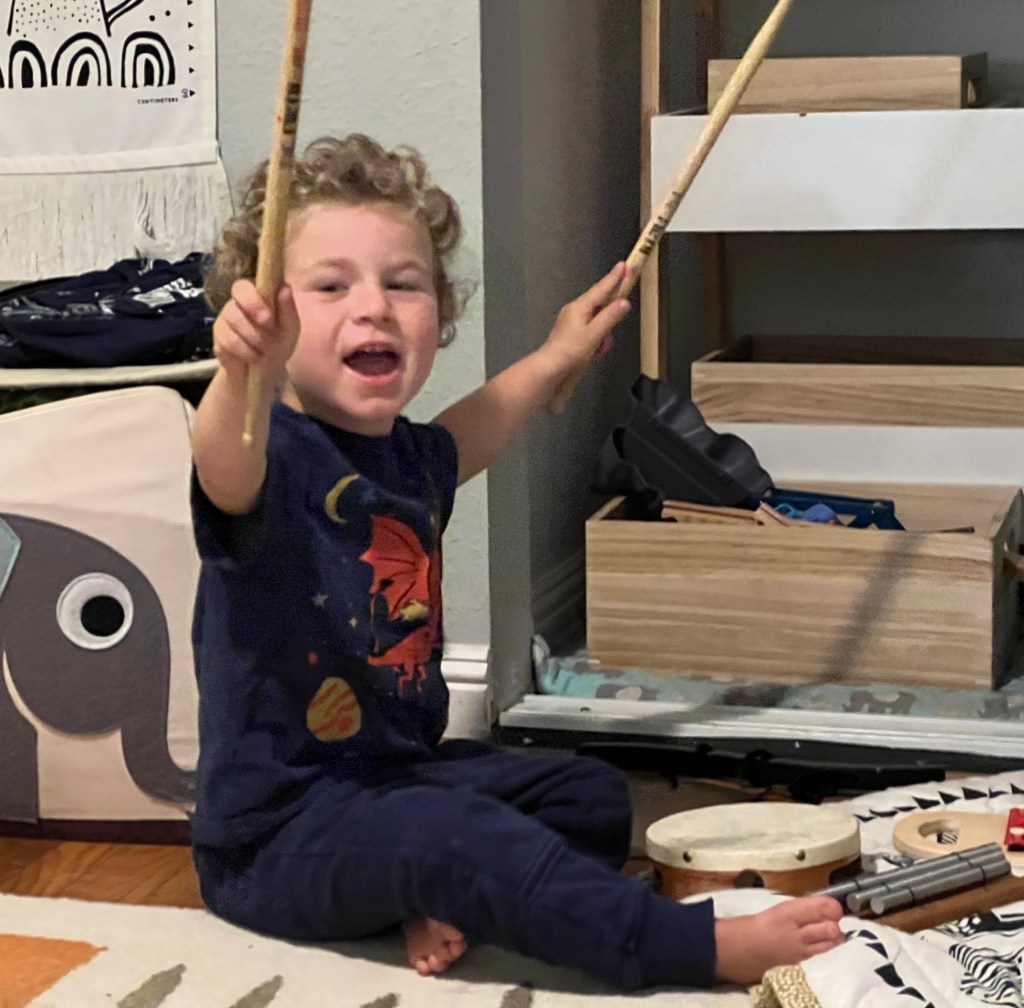
In meditating today, I hear the sounds of children playing. Generosity of sound comes to mind.
There must be a party as adult voices provide a background for the textured aliveness and enthusiasm in the voices of children.
Generosity touches the air, strokes connection moving and shared.
Ears open, clear, and stretch in the generous outpouring and generation of sound.
In his book The Joy of Living by Yongey Mingyur Rinpoche writes about perception using the example of an experiment with a T. Individuals are shown a T, a T with both segments the same length, but people see the segments differently.
Those who live in flat areas like the Netherlands see the horizontal line as longer. Those raised in mountainous regions like Nepal see the vertical line as longer. I live where it’s flat and there’s a mountain, so I wonder how my eye integrates the expanse in the arm and leg of the T.
Right now, I listen to the sounds of children as their voices rise and fall like waves landing and sinking into the sand of my day.
On August 6, 1945, at 8:15 AM, the first atomic bomb was dropped on Hiroshima, Japan. This weekend we pray for peace. A few years ago my husband was in Japan with a Japanese man with whom he worked. They stood at Hiroshima Peace Memorial Park, and paused to honor and reflect on how their fathers fought on different sides of the war, and now they, their sons, worked together. May that continue. You can find your way to pray on-line or simply settle into your own way of adding peace to the world today, as everyday, of course.
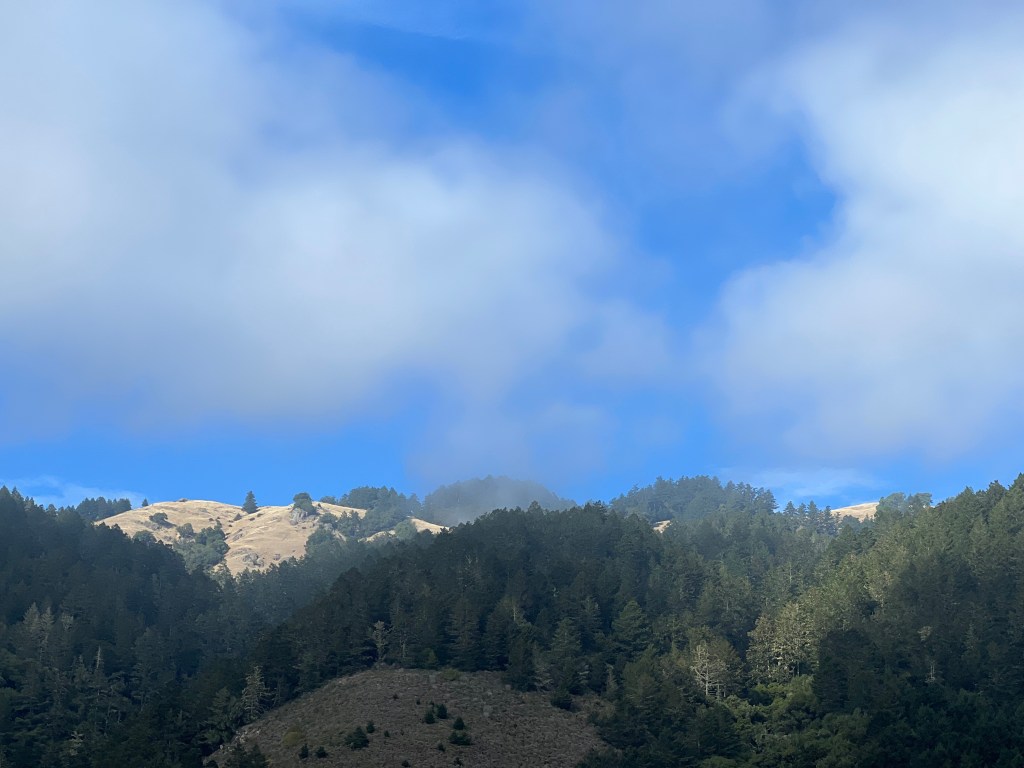
The fog has been a gentle blanket. Yesterday around 5:30 PM, I was at Stinson Beach and when I looked up I saw sun on the hills. May we balance on peace, knowing even amidst the current difficulties, the sun shines her light on us.
If you’re looking for inspiration read The Hummingbird’s Gift by Sy Montgomery.
“Hummingbirds are less flesh than fairies. They are little more than bubbles fringed with iridescent feathers – air wrapped in light.”
Hummingbird nests are woven with spider silk so the nest stretches to fit the tiny creatures as they grow.
“These little bubbles of spunk inspire extraordinary tenderness. One autumn, a ruby-throat, on its lonely, five-hundred-mile migration – a journey across the Gulf of Mexico, which can demand twenty-one hours of non-stop flight – landed, spent, on a drilling platform on the Mississippi coast. It was too exhausted to continue. The oil company dispatched a helicopter to fly it to shore. The hummingbird spent the winter in a gardener’s greenhouse, then left fat and healthy, on its spring migration.”
Watch this video and be inspired.
Accompanied by two quotes, I head out the door for a walk in my neighborhood.
Stanley Kunitz: “It is out of the dailiness of life that one is driven into the deepest recesses of the self.”
Kabir: I felt in need of a great pilgrimage, so I sat still for three days.

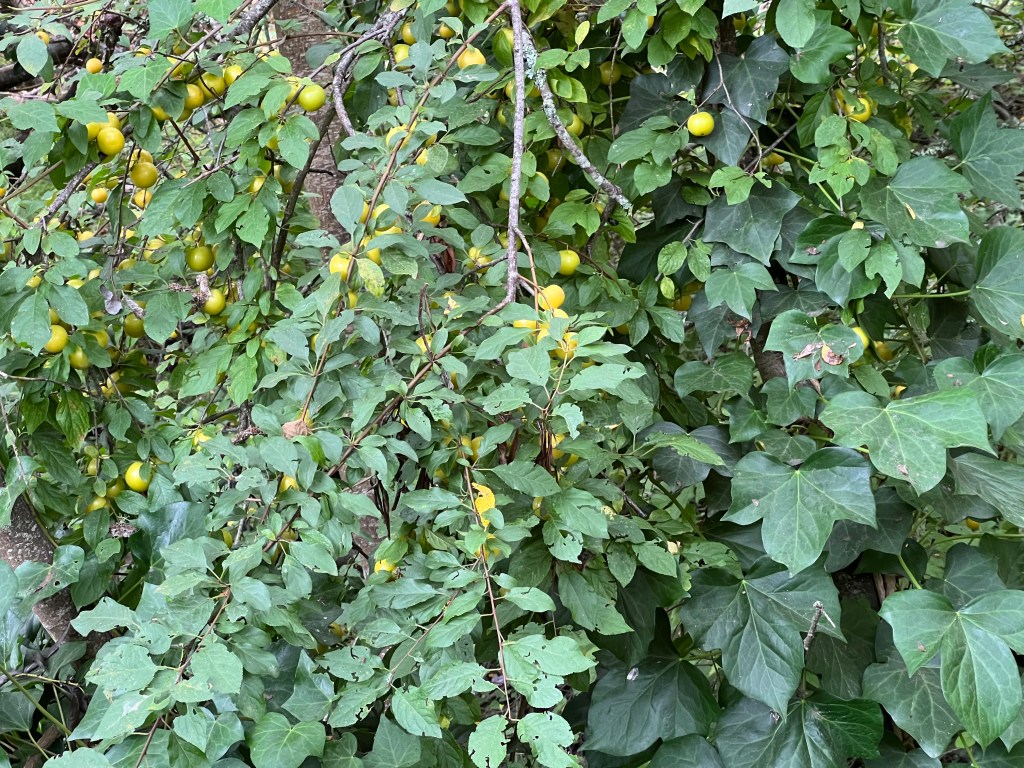
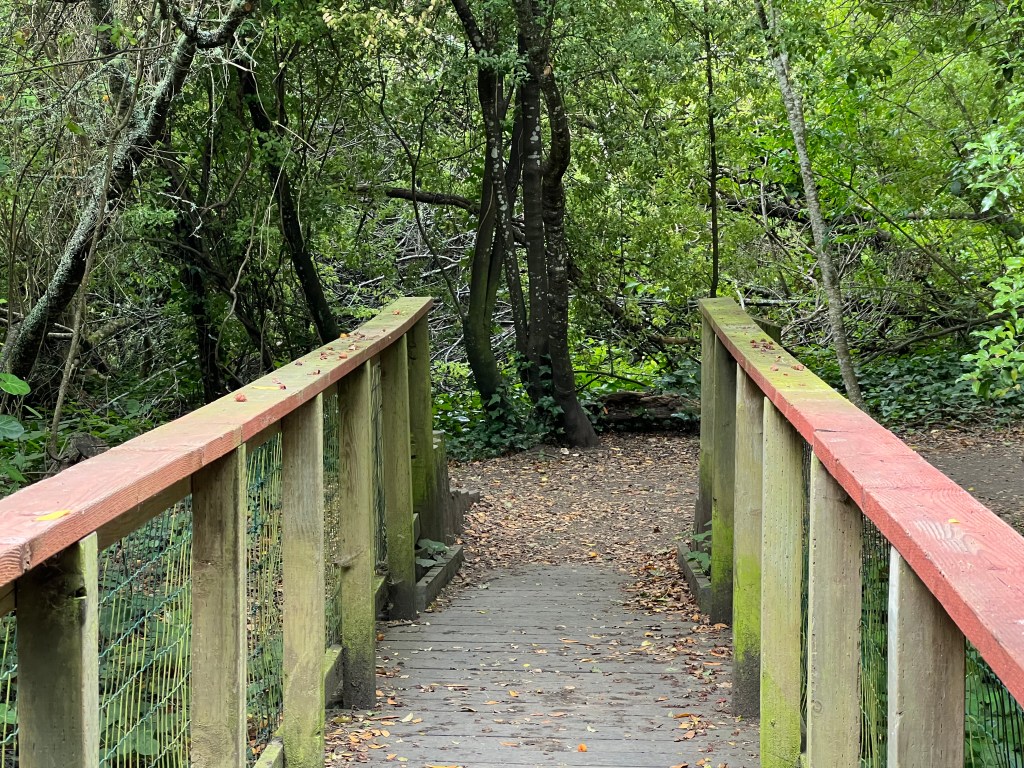
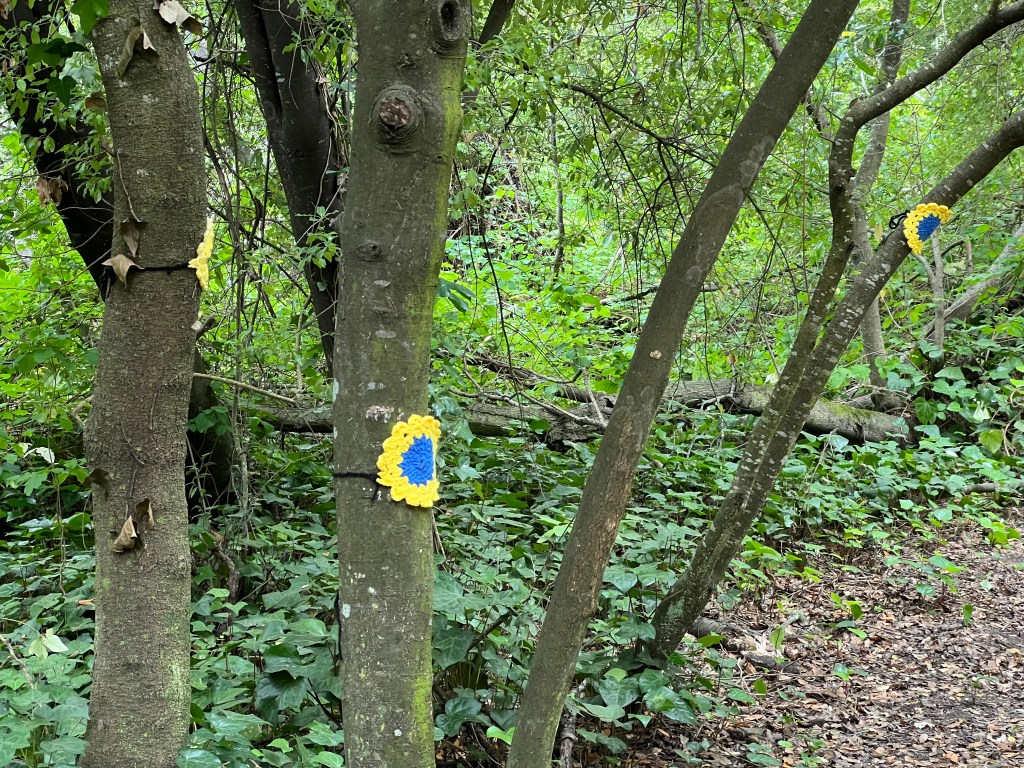



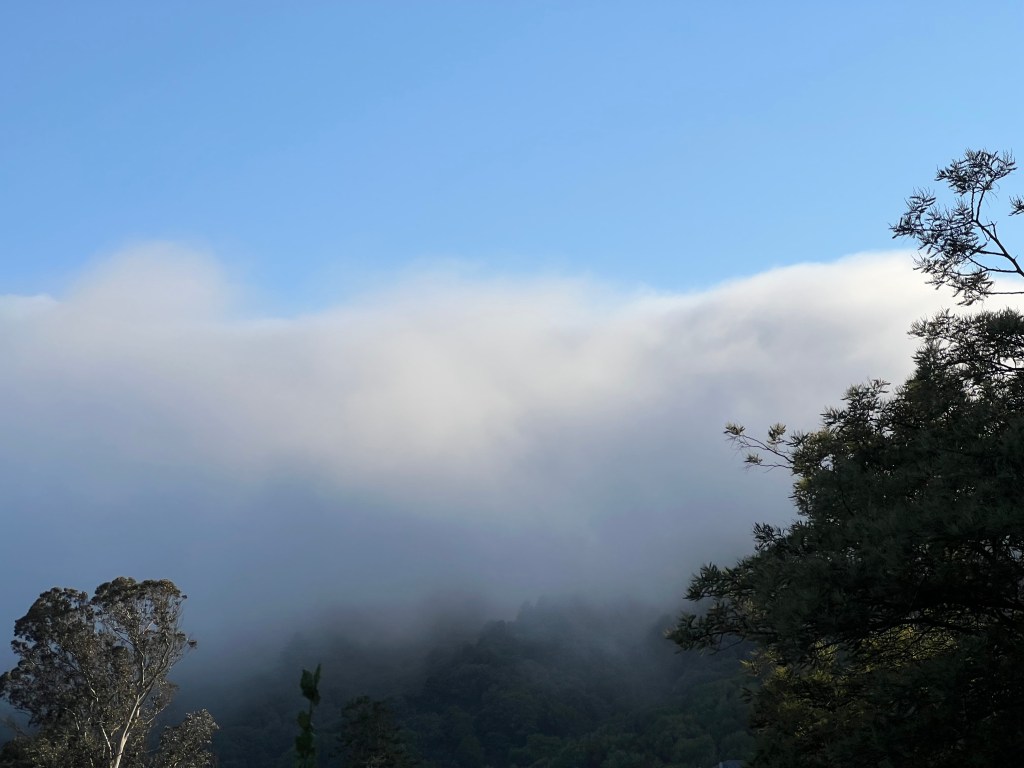
Yesterday afternoon I sat on the couch enjoying the dance of the fog as it moved in and out. This morning we’re wrapped.
Last night I finished reading The Memoirs of Stockholm Sven by Nathaniel Ian Miller. It was recommended and as I adventured in, I wasn’t clear why, and then I was drawn in to life in the far north and how even in seclusion, politics and boundaries intrude.
The narrator lives and survives in the Arctic, near the North Pole. He has moved there in a search for solitude. He writes:
“At first I watched the weather obsessively, for it moved, changed, and spoke with something like the speed I expected from the society of man. But soon it became one seamless movement instead of a series of staccato events.”
“Now I merely took note of subtle changes. Minute shifts in scent and stone. I felt that Eberhard, (his dog) and I had found an even greater communion than ever, for now both of our minds were clear.”
He has read the classics before but, “Now my brain was a rock-pool at low ebb, empty and brackish and yet perfectly shaped to welcome the incoming tide.”
His house burns down. He builds a new one and says, “So the rock is abraded by storm, and thinks little of it.”
I’m reminded of this poem by Octavio Paz.
The water hollowed the stone,
the wind dispersed the water,
the stone stopped the wind.
Water and wind and stone.
The wind sculpted the stone,
the stone is a cup of water,
The water runs off and is wind.
Stone and wind and water.
The wind sings in its turnings,
the water murmurs as it goes,
the motionless stone is quiet.
Wind and water and stone.
One is the other and is neither:
among their empty names
they pass and disappear,
water and stone and wind.
~ Octavio Paz ~
(Translated by Mark Strand, The Collected Poems of Octavio Paz, 1957-1987)
John Muir wrote:
In every walk with nature, one receives far more than they seek.
I agree.
I also believe that we need a social network of support.
From Writer’s Almanac today:
On this day, President Lyndon Johnson signed the Social Security Act of 1965 into law, creating the Medicare and Medicaid programs. It was the country’s first national health insurance program.
 Cathy's Blog!